• About
  • Special Reports
  • Topics
    • Climate
    • Earth Science
    • Oceans
    • Space & Planets
    • Health & Ecosystems
    • Culture & Policy
    • Education & Careers
    • Opinions
  • Projects
    • Postcards From the Field
    • ENGAGE
    • Editors’ Highlights
    • Editors’ Vox
    • Eos en Español
    • Eos 简体中文版
    • Print Archive: 2015–2025
  • Policy Tracker
  • Blogs
    • Research & Developments
    • The Landslide Blog
  • Newsletter
  • Submit to Eos
  • AGU.org
  • Career Center
  • Join AGU
  • Give to AGU
  • About
  • Special Reports
  • Topics
    • Climate
    • Earth Science
    • Oceans
    • Space & Planets
    • Health & Ecosystems
    • Culture & Policy
    • Education & Careers
    • Opinions
  • Projects
    • Postcards From the Field
    • ENGAGE
    • Editors’ Highlights
    • Editors’ Vox
    • Eos en Español
    • Eos 简体中文版
    • Print Archive: 2015–2025
  • Policy Tracker
  • Blogs
    • Research & Developments
    • The Landslide Blog
  • Newsletter
  • Submit to Eos
Skip to content
  • AGU.org
  • Career Center
  • Join AGU
  • Give to AGU
Eos

Eos

Science News by AGU

Support Eos
Sign Up for Newsletter
  • About
  • Special Reports
  • Topics
    • Climate
    • Earth Science
    • Oceans
    • Space & Planets
    • Health & Ecosystems
    • Culture & Policy
    • Education & Careers
    • Opinions
  • Projects
    • Postcards From the Field
    • ENGAGE
    • Editors’ Highlights
    • Editors’ Vox
    • Eos en Español
    • Eos 简体中文版
    • Print Archive: 2015–2025
  • Policy Tracker
  • Blogs
    • Research & Developments
    • The Landslide Blog
  • Newsletter
  • Submit to Eos

Donald Wuebbles

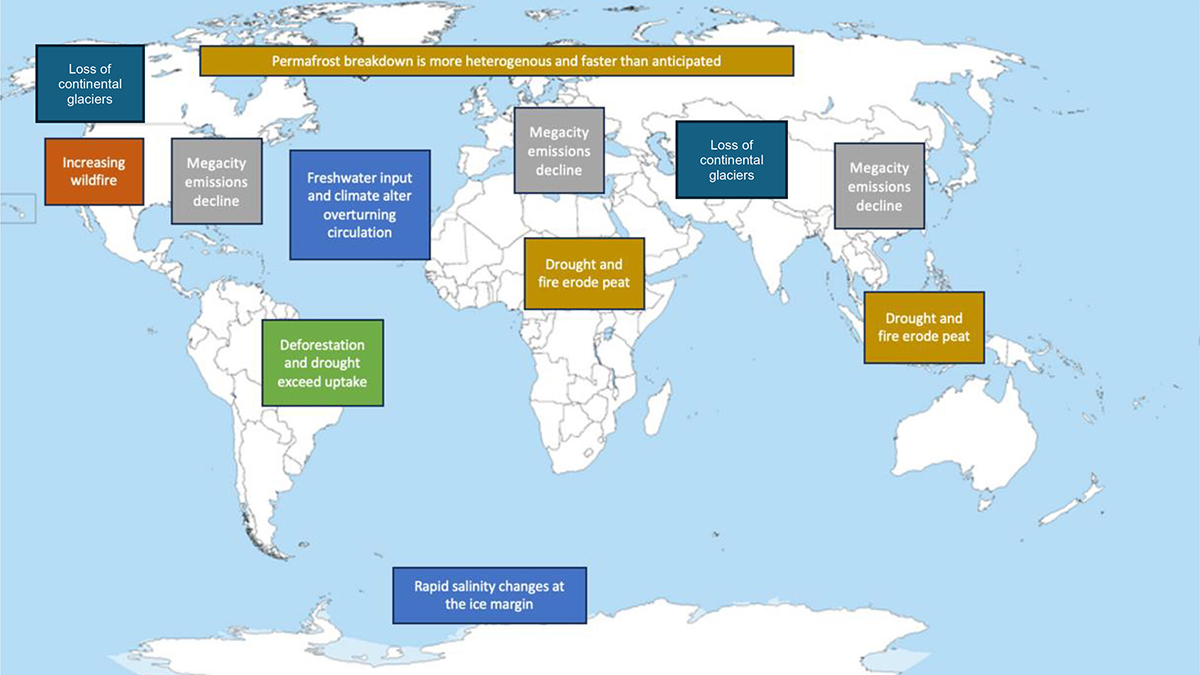
World map with showing plausible transitions in a non-stationary world.
Posted inEditors' Highlights

Framing the Next Decadal Survey for a Warming World

by Donald Wuebbles 26 March 202422 March 2024

The next decadal survey (DS28) will be framed by a rapidly changing world, and will be critical to consider observational needs of the 2030s-2040s, a world increasingly dominated by climate extremes.

Satellite image of a large dust storm over North Africa.
Posted inEditors' Highlights

Using Machine Learning to Reconstruct Cloud-Obscured Dust Plumes

by Donald Wuebbles 2 February 20241 February 2024

Satellite-observed dust plumes from North Africa are frequently obscured by clouds, but a new study uses machine learning to reconstruct dust patterns, demonstrating a new way to validate dust forecasts.
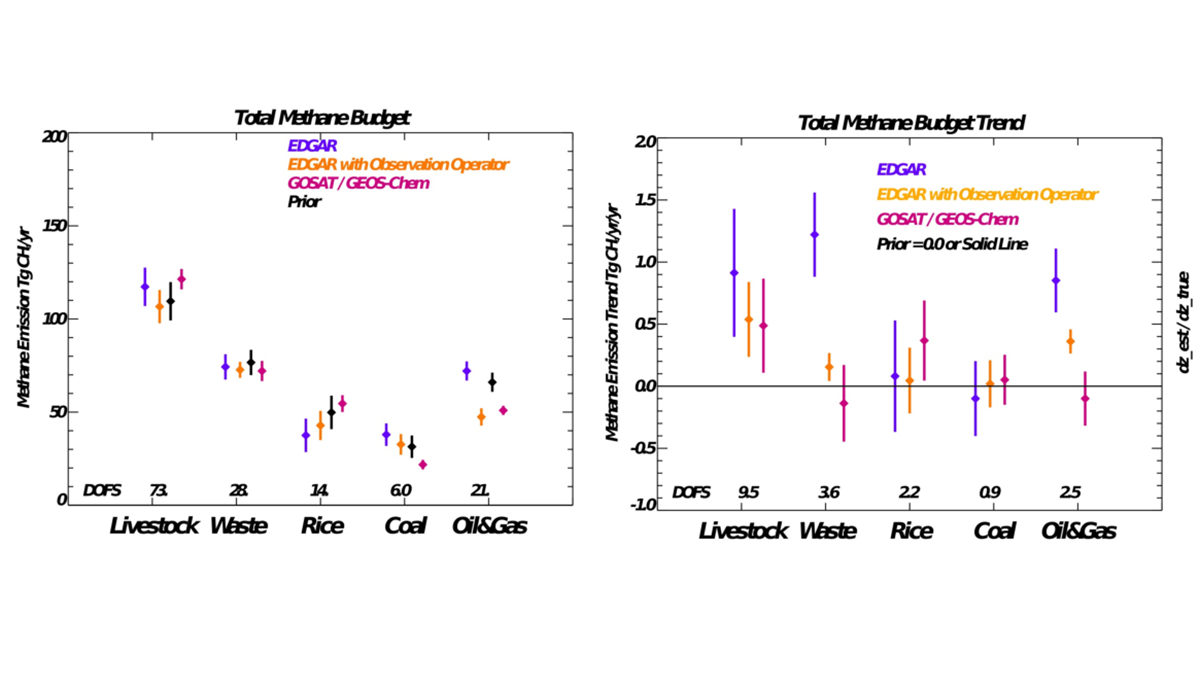
Two graphs from the paper.
Posted inEditors' Highlights

Using Bayesian Estimation to Improve Methane Inventories

by Donald Wuebbles 21 August 202315 August 2023

A Bayesian, optimal estimation evaluation of state-of-the-art methane inventory with satellite-based emissions from 2009 to 2018 finds substantial differences for livestock, rice, and coal emissions.
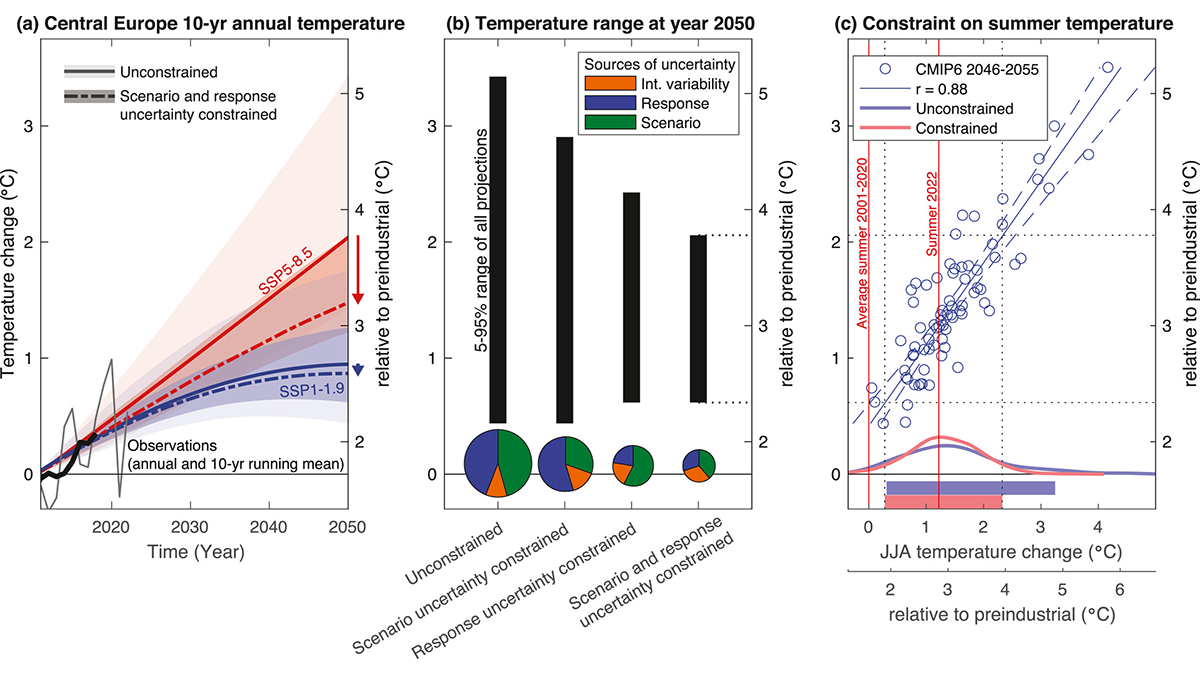
Graphs from the paper
Posted inEditors' Highlights

Constraints Can Reduce Regional Climate Projection Uncertainty

by Donald Wuebbles 26 July 202325 July 2023

Climate projections are uncertain because we don’t exactly know how the climate system responds to human actions, but combining interdisciplinary results can reduce uncertainty in future planning.

Flowchart to choose priority areas for urban forest management.
Posted inEditors' Highlights

Confronting Water Use and Heat Exposure in Urban Sustainability 

by Donald Wuebbles 6 March 20237 June 2023

A framework is proposed for urban forest management to mitigate heat exposure, lessen drought issues, and conserve water use for urban heat mitigation and resilience in environmentally stressed cities. 
Posted inEditors' Highlights

A New Approach to Sea Spray Aerosol Production and Prediction

by Donald Wuebbles 9 January 202322 March 2023

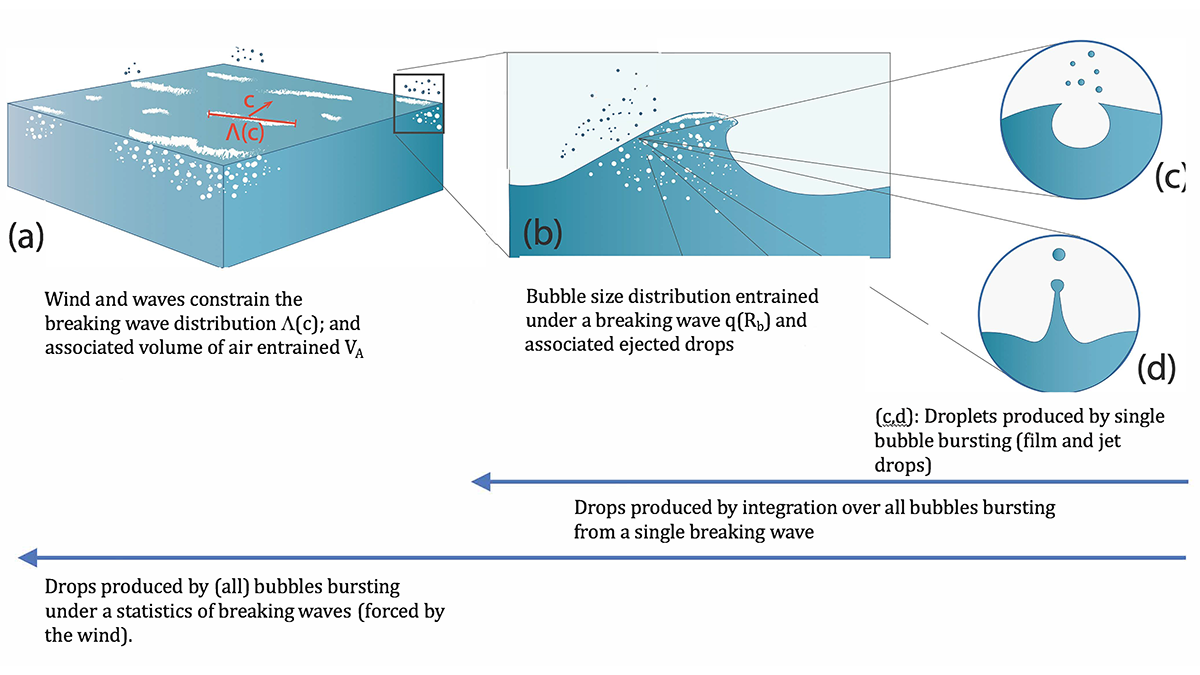
Sea spray aerosols play a critical role in atmospheric processes. A new approach is in strong agreement with observations, paving the way for improved models of atmospheric aerosols of oceanic origin.

Posted inEditors' Highlights

Winter Arctic Heatwave Drives Summer Impacts in Siberia

by Donald Wuebbles 21 December 202221 December 2022

A cascade of land-atmosphere interactions resulting from a winter heatwave in Siberia led to significant summer impacts that further exacerbated the heatwave effects on the region.
Posted inEditors' Highlights

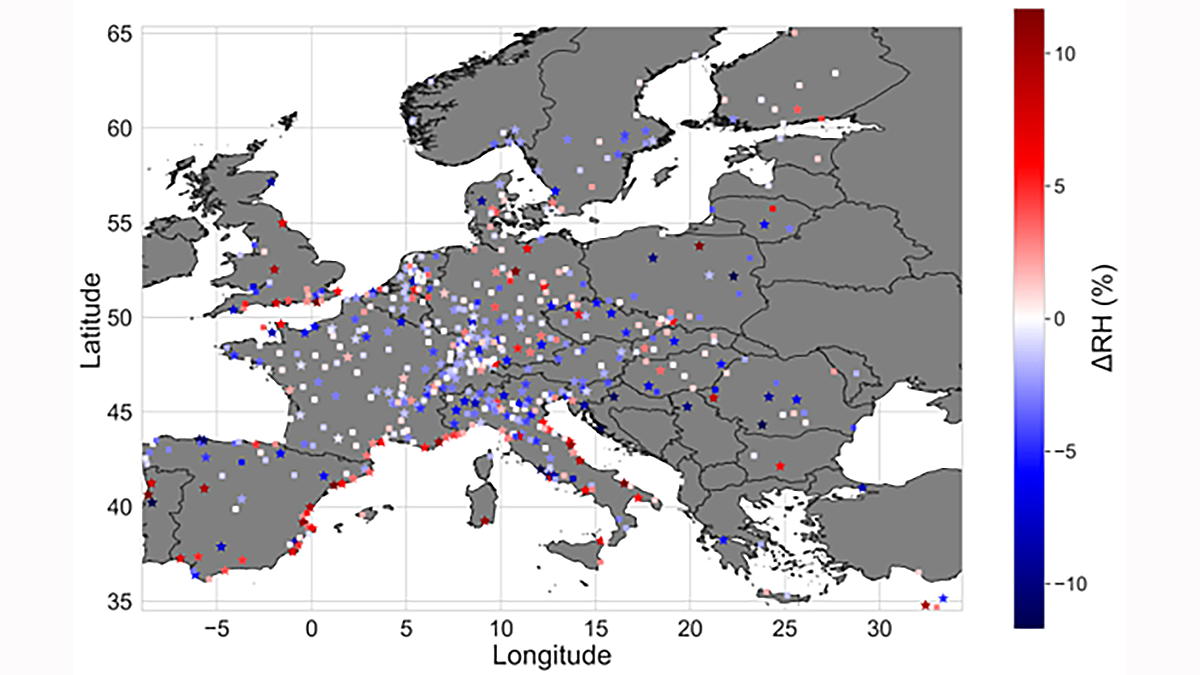
The Lower Humidity of Urban Areas Moderates Outdoor Heat Stress

by Donald Wuebbles 31 October 20222 February 2026

Data scarcity of traditional observations cannot reveal whether surface temperature capture the potential for urban heat stress. This study improves the dataset with 40,000 citizen weather stations.

Posted inEditors' Highlights

Air Pollution Was Reduced During the COVID-19 Pandemic

by Donald Wuebbles 4 March 20228 September 2022

A decrease in emissions of ozone precursor gases during the COVID-19 economic downturn likely explains the unusual reduction in ozone concentrations observed during the spring and summer of 2020.

Posts pagination

Newer posts 1 2
Over a dark blue-green square appear the words Special Report: The State of the Science 1 Year On.

Features from AGU Publications

Research Spotlights

What Makes Mars’s Magnetotail Flap?

20 April 202620 April 2026
Editors' Highlights

How Space Plasma Can Bend the Laser of Gravitational Wave Detectors

24 April 202623 April 2026
Editors' Vox

Hydrothermal Heat Flow as a Window into Subsurface Arc Magmas

28 April 202628 April 2026
Eos logo at left; AGU logo at right

About Eos
ENGAGE
Awards
Contact

Advertise
Submit
Career Center
Sitemap

© 2026 American Geophysical Union. All rights reserved Powered by Newspack