• About
  • Sections
  • Topics
    • Climate
    • Earth Science
    • Oceans
    • Space & Planets
    • Health & Ecosystems
    • Culture & Policy
    • Education & Careers
    • Opinions
  • Projects
    • Postcards From the Field
    • ENGAGE
    • Editors’ Highlights
    • Editors’ Vox
    • Eos en Español
    • Eos 简体中文版
    • Print Archive: 2015–2025
  • Science Policy Tracker
  • Blogs
    • Research & Developments
    • The Landslide Blog
  • Newsletter
  • Submit to Eos
  • AGU.org
  • Career Center
  • Join AGU
  • Give to AGU
  • About
  • Sections
  • Topics
    • Climate
    • Earth Science
    • Oceans
    • Space & Planets
    • Health & Ecosystems
    • Culture & Policy
    • Education & Careers
    • Opinions
  • Projects
    • Postcards From the Field
    • ENGAGE
    • Editors’ Highlights
    • Editors’ Vox
    • Eos en Español
    • Eos 简体中文版
    • Print Archive: 2015–2025
  • Science Policy Tracker
  • Blogs
    • Research & Developments
    • The Landslide Blog
  • Newsletter
  • Submit to Eos
Skip to content
  • AGU.org
  • Career Center
  • Join AGU
  • Give to AGU
Eos

Eos

Science News by AGU

Support Eos
Sign Up for Newsletter
  • About
  • Sections
  • Topics
    • Climate
    • Earth Science
    • Oceans
    • Space & Planets
    • Health & Ecosystems
    • Culture & Policy
    • Education & Careers
    • Opinions
  • Projects
    • Postcards From the Field
    • ENGAGE
    • Editors’ Highlights
    • Editors’ Vox
    • Eos en Español
    • Eos 简体中文版
    • Print Archive: 2015–2025
  • Science Policy Tracker
  • Blogs
    • Research & Developments
    • The Landslide Blog
  • Newsletter
  • Submit to Eos

Kate Evans

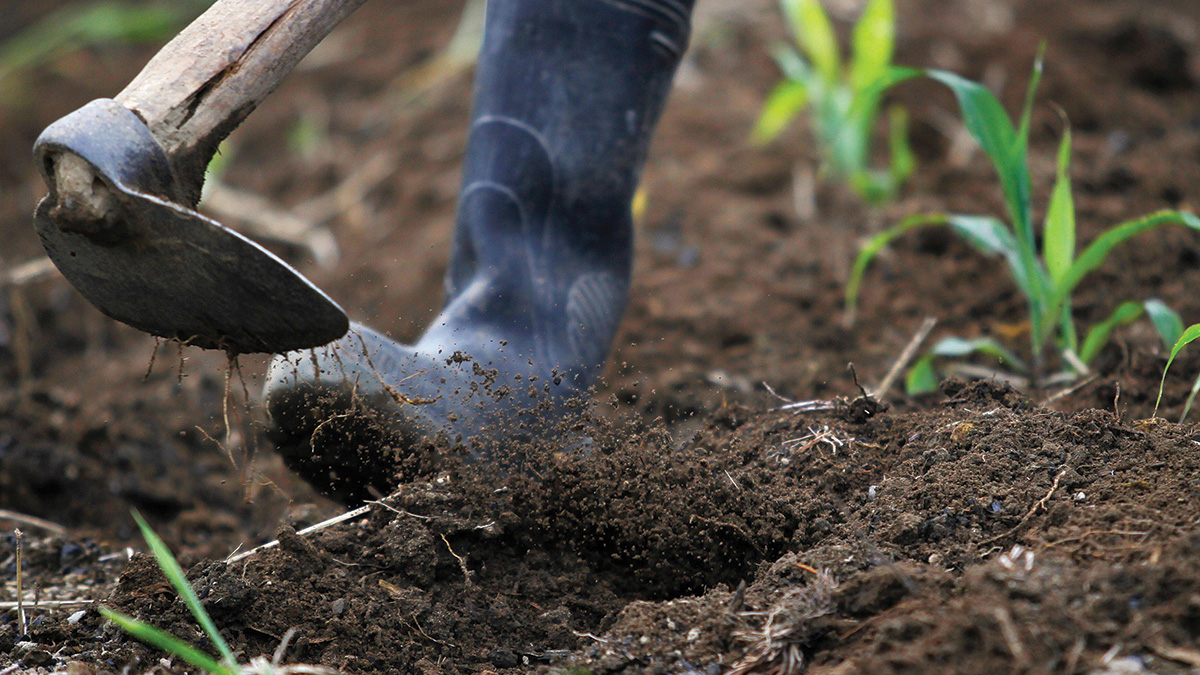
Close-up of a booted foot and the head of a hoe as dark soil is turned. Young corn plants are out of focus in the background.
Posted inFeatures

The Nutrient-Rich Legacy in the Amazon’s Dark Earths

by Kate Evans 23 March 20227 November 2024

Fertile terra preta soils were created through centuries of carefully managed land use. Scientists are taking cues from these soils to better sequester carbon and improve soil for agriculture.

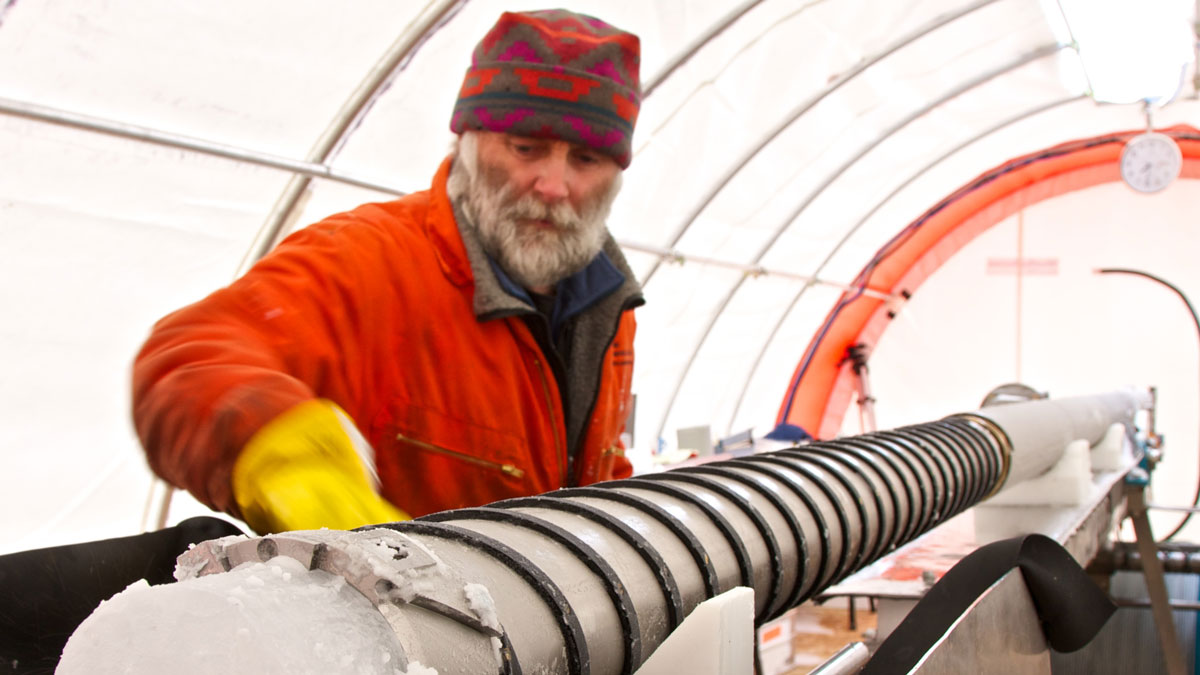
Image of a bearded and gloved man, Robert Mulvaney, with ice inside a metal corer.
Posted inNews

Māori Arrival in New Zealand Revealed in Antarctic Ice Cores

by Kate Evans 26 October 20215 June 2023

A new study shows smoke from fires set by the first inhabitants of Aotearoa from around 1300 left a mark in the ice 6,000 kilometers away, on an island off the Antarctic Peninsula.

Illustration of exoplanet Kepler-1649 c orbiting its host red dwarf star
Posted inFeatures

The Forecast for Exoplanets is Cloudy but Bright

by Kate Evans 26 July 202126 April 2022

Clouds make climate modeling on Earth difficult. Identifying—and even defining—atmospheric phenomena on other planets is the next big exoplanet challenge.

Computer artwork of two transportation vehicles on the Moon, with the Earth visible in the sky above
Posted inFeatures

Hear Ye! Hear Ye! A Declaration of the Rights of the Moon

by Kate Evans 20 July 202118 December 2023

What are the ethics of mining the Moon? Could humans cause environmental damage to Earth’s only satellite? And could a new Declaration of the Rights of the Moon be one way of mitigating those impacts?
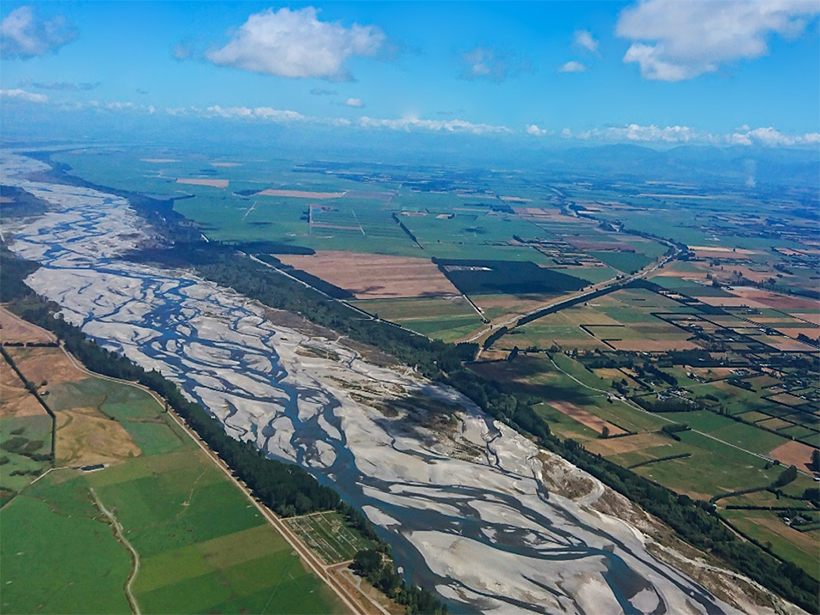
Aerial image of the braided channels of the Waimakariri River
Posted inFeatures

The River’s Lizard Tail: Braiding Indigenous Knowledges with Geomorphology

by Kate Evans 14 September 20208 October 2021

Indigenous Knowledges can be accurate, rigorous, and precise, say researchers in New Zealand, and they can help geomorphologists see landscapes in a new, richer way.
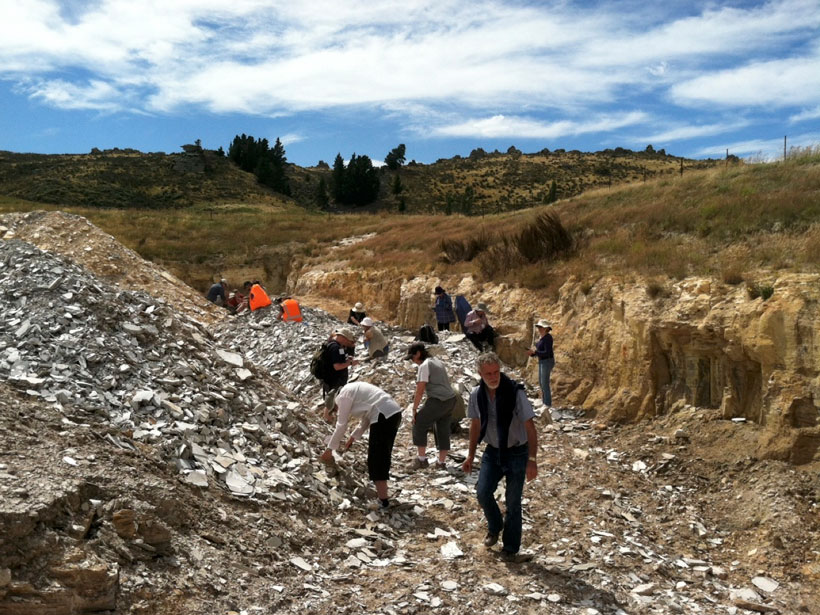
Wide image of a group of researchers looking through slabs of rock in a ditch in a dry paddock
Posted inNews

Ancient “Pickled” Leaves Give a Glimpse of Global Greening

by Kate Evans 3 September 202026 January 2023

A unique fossil lake bed in New Zealand has revealed insights into global climate under elevated levels of carbon dioxide but is now off-limits to scientists.
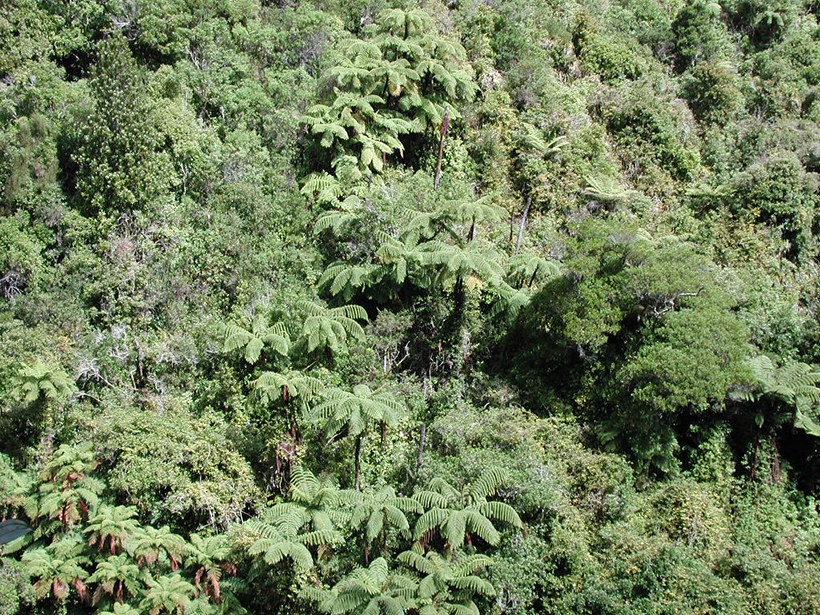
Dazzlingly lush canopy of the Akatarawa Forest, New Zealand
Posted inNews

New Evidence of a Giant Lava Lamp Beneath the Ancient Pacific

by Kate Evans 1 July 20204 October 2021

Seismic surveys find evidence of a superplume in Earth’s mantle that fueled ancient megaeruptions in the Pacific.

Posts pagination

Newer posts 1 2
A view of a bridge, with the New Orleans skyline visible in the distance between the bridge and the water. A purple tint, a teal curved line representing a river, and the text “#AGU25 coverage from Eos” overlie the photo.

Features from AGU Publications

Research Spotlights

New River Chemistry Insights May Boost Coastal Ocean Modeling

9 January 20269 January 2026
Editors' Highlights

Central China Water Towers Provide Stable Water Resources Under Change

9 January 20269 January 2026
Editors' Vox

Hydrothermal Circulation and Its Impact on the Earth System

3 December 20253 December 2025
Eos logo at left; AGU logo at right

About Eos
ENGAGE
Awards
Contact

Advertise
Submit
Career Center
Sitemap

© 2026 American Geophysical Union. All rights reserved Powered by Newspack