
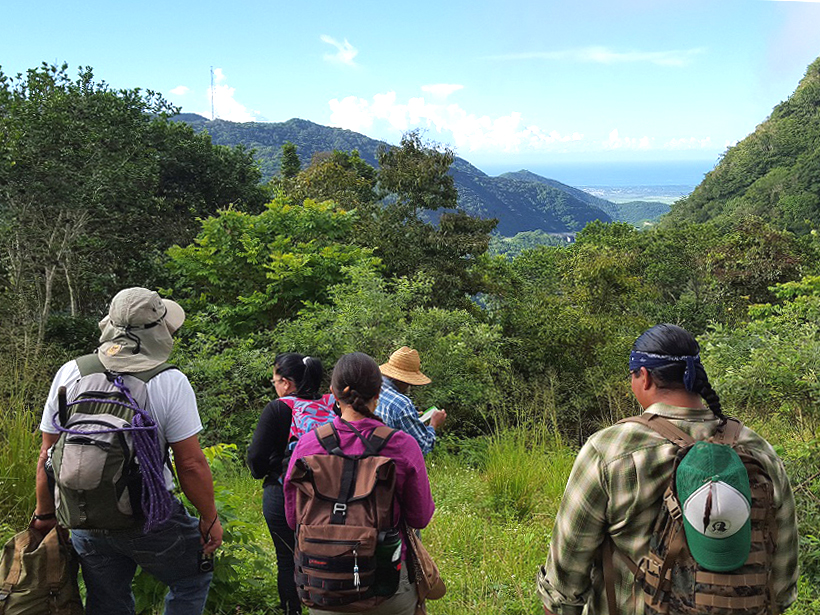

Un nuevo modelo de trabajo podría ayudar a los científicos a diseñar y facilitar la investigación que cumpla tanto los estándares de ética científica como los culturales, al trabajar con conocimiento indígena acerca del clima y el ambiente.

Kimberly M. S. Cartier
Kimberly M. S. Cartier, Senior Science Reporter for Eos.org, joined the Eos staff in 2017 after earning her Ph.D. studying extrasolar planets. Kimberly covers space science, climate change, and STEM diversity, justice, and education

Posted inNews
New Space Telescope Named for Nancy Roman, Astronomy Pioneer
Nancy Grace Roman’s namesake telescope will search for distant worlds and the earliest galaxies.

Posted inNews
Eight Lessons from COVID-19 to Guide Our Climate Response
The global response to the ongoing pandemic can teach us how we should, and shouldn’t, respond to the climate crisis. And most important, it shows that we can do something.

Posted inFeatures
Planetary Lightning: Same Physics, Distant Worlds
Lightning on Earth needs just a few simple ingredients to generate a spark. Those ingredients exist throughout the solar system and beyond.

Posted inNews
Mountain Streams Exhale More Than Their Share of CO2
Streams that flow down mountainsides are more turbulent than those that run along forest floors, which leads to faster gas exchange between water and air.

Posted inNews
Nonscientists Struggle to Separate Climate Fact from Fiction
People were much worse at identifying false statements about climate change than about general science, and they were overly confident in their answers.

Posted inNews
El Compostaje Humano es el Camino Ecológico a Seguir
Nuestro impacto ambiental no desaparece cuando morimos, pero existe una forma de convertir este impacto en algo positivo.

Posted inNews
Reindeer Could Trample Permafrost Thaw
Thick, fluffy snow traps summer’s heat in the top layers of Arctic permafrost even as winter chills the air above. Grazing animals stomp that snow flat.

Posted inNews
Basalts Turn Carbon into Stone for Permanent Storage
Scientists have shown that mineral carbonation can permanently capture and store carbon quickly enough and safely enough to rise to the challenge of climate change.

Posted inNews
Earth’s Skies Transmitted Signs of Life During Lunar Eclipse
Using upcoming ground- and space-based telescopes, scientists hope to make similar observations of the skies of distant, Earth-like exoplanets.