
Dear Eos,
Muskegon Lake, in west Michigan, is one of over 100 drowned river mouth estuaries in the Laurentian Great Lakes basin of North America.
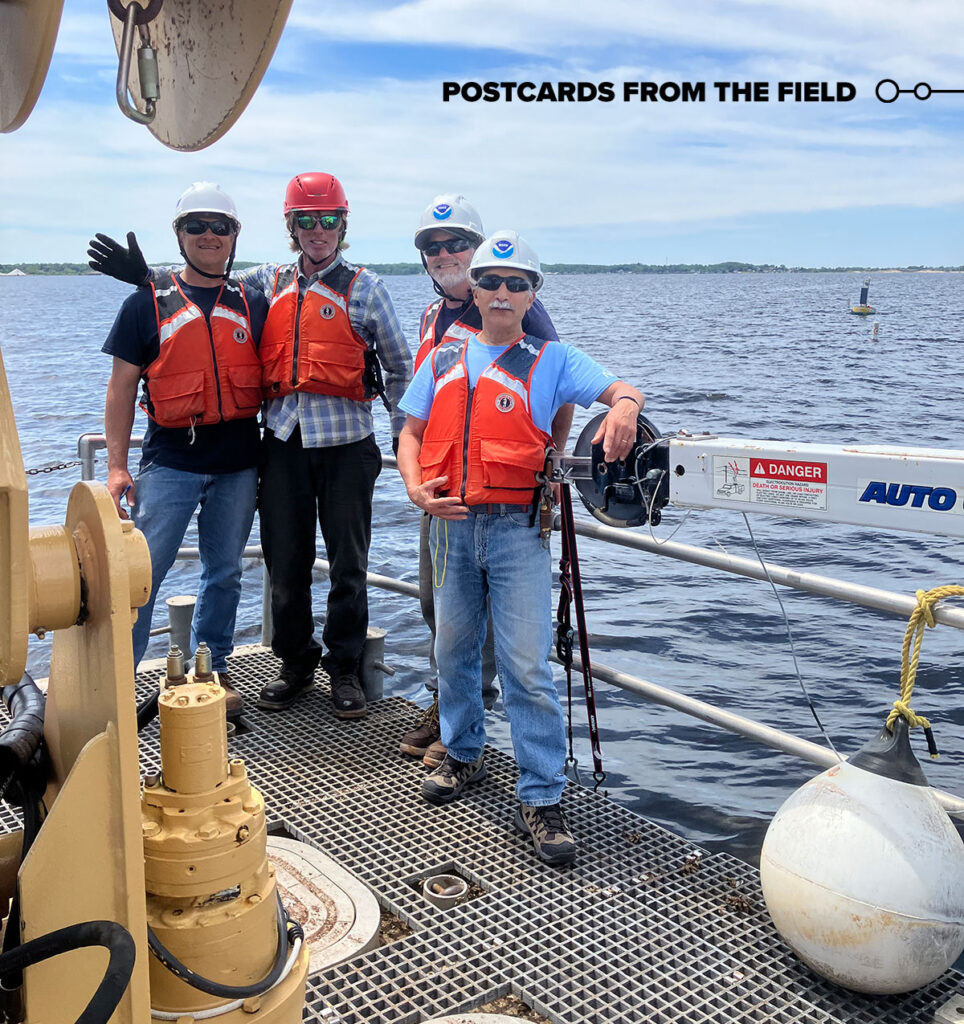
We are on board NOAA’s Buoy Tender R5501, having just deployed the Muskegon Lake Observatory buoy seen in the background (left to right, NOAA’s Andrew Yagiela, Dan Burlingame, and Tod Roetman, then me—Bopi Biddanda). The 16-year-old observatory acquires high-frequency time series weather and water quality data and tracks ongoing ecosystem change in this urbanized Great Lakes estuary, which is affected by eutrophication, harmful algal blooms, and bottom water hypoxia. The observatory provides open-access environmental data in near-real time for advancing science, education, and outreach.
Around the world, rivers, lakes, and estuaries serve as vital water sources for humans, as biodiversity havens, and as regulators of ecosystem function. A warming climate and anthropogenic pollution coupled with more extreme hydrological cycles could compromise ecosystem health and quality of life around these vital bodies of fresh water.
—Bopi Biddanda, Annis Water Resources Institute, Grand Valley State University, Muskegon, Mich.