
Dear Eos:
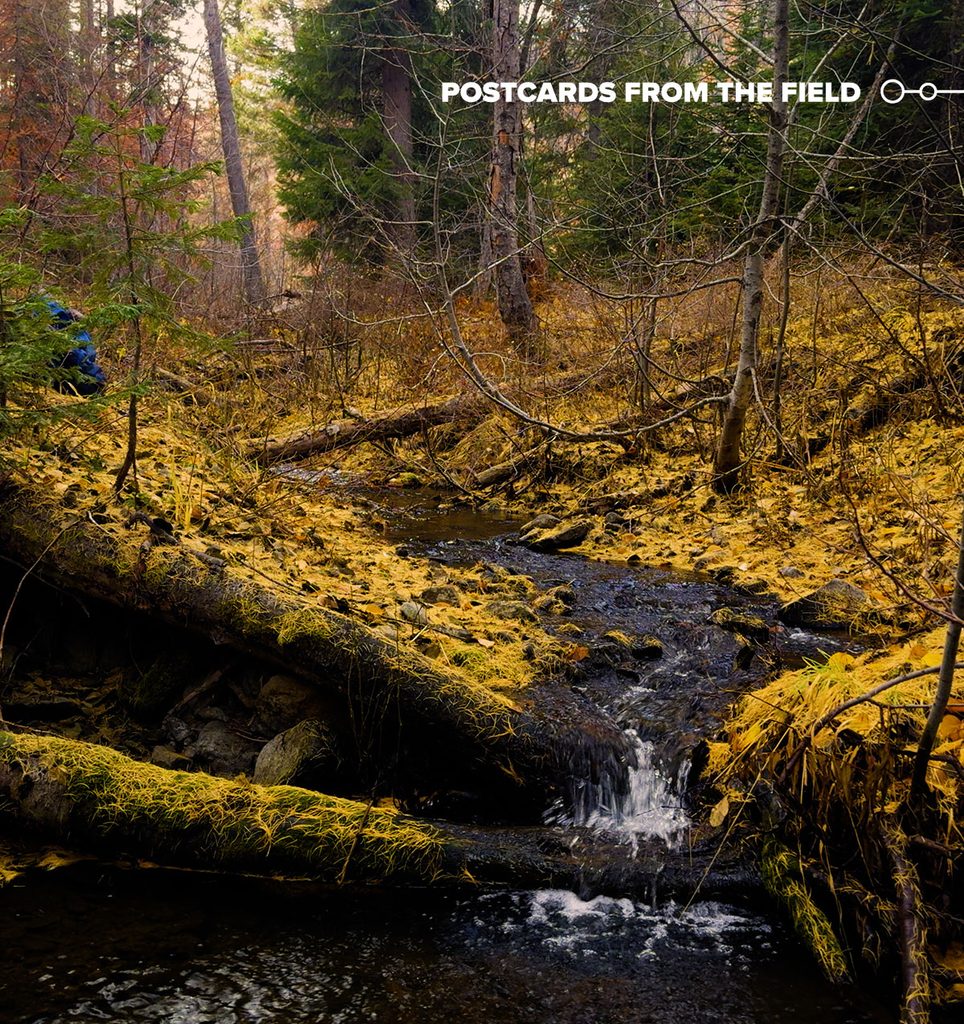
Happy fall from the Oak Creek watershed!
Here our team is exploring how wildfire and the drying of streams jointly affect how watersheds work, from molecular to basin scales. Centered in our photo is Oak Creek, which flows through burned and unburned terrain in central Washington State, United States. It also sometimes connects to nonperennial streams, providing opportunities to learn how disturbances like fires affect watersheds. We’re uncovering connections among processes like water transport, organic matter transformation, sediment respiration, and microbial ecology.
At Oak Creek, we collect samples and deploy sensors and cameras bimonthly. We also capture river shoreline photos as part of the Worldwide Hydrobiogeochemistry Observation Network for Dynamic River Systems (WHONDRS) Global River Image Network initiative, which is currently inviting global contributions.
Best wishes,
Grace Tiegs, Andrew Burgess, Jake Cavaiani, Peter Regier, Lupita Renteria, and Amy Goldman, Pacific Northwest National Laboratory, Richland, Wash.