• About
  • Special Reports
  • Topics
    • Climate
    • Earth Science
    • Oceans
    • Space & Planets
    • Health & Ecosystems
    • Culture & Policy
    • Education & Careers
    • Opinions
  • Projects
    • Postcards From the Field
    • ENGAGE
    • Editors’ Highlights
    • Editors’ Vox
    • Eos en Español
    • Eos 简体中文版
    • Print Archive: 2015–2025
  • Policy Tracker
  • Blogs
    • Research & Developments
    • The Landslide Blog
  • Newsletter
  • Submit to Eos
  • AGU.org
  • Career Center
  • Join AGU
  • Give to AGU
  • About
  • Special Reports
  • Topics
    • Climate
    • Earth Science
    • Oceans
    • Space & Planets
    • Health & Ecosystems
    • Culture & Policy
    • Education & Careers
    • Opinions
  • Projects
    • Postcards From the Field
    • ENGAGE
    • Editors’ Highlights
    • Editors’ Vox
    • Eos en Español
    • Eos 简体中文版
    • Print Archive: 2015–2025
  • Policy Tracker
  • Blogs
    • Research & Developments
    • The Landslide Blog
  • Newsletter
  • Submit to Eos
Skip to content
  • AGU.org
  • Career Center
  • Join AGU
  • Give to AGU
Eos

Eos

Science News by AGU

Support Eos
Sign Up for Newsletter
  • About
  • Special Reports
  • Topics
    • Climate
    • Earth Science
    • Oceans
    • Space & Planets
    • Health & Ecosystems
    • Culture & Policy
    • Education & Careers
    • Opinions
  • Projects
    • Postcards From the Field
    • ENGAGE
    • Editors’ Highlights
    • Editors’ Vox
    • Eos en Español
    • Eos 简体中文版
    • Print Archive: 2015–2025
  • Policy Tracker
  • Blogs
    • Research & Developments
    • The Landslide Blog
  • Newsletter
  • Submit to Eos

CubeSats

Mars InSight sitting on the Martian surface with the inner solar system planets in the background
Posted inNews

New Lander en Route to Probe the Red Planet’s Interior

Kimberly M. S. Cartier, News Writing and Production Intern for Eos.org by Kimberly M. S. Cartier 7 May 20182 July 2025

The Mars InSight mission aims to answer key planetary science questions about seismicity, meteorite impacts, and the formation of rocky planets.

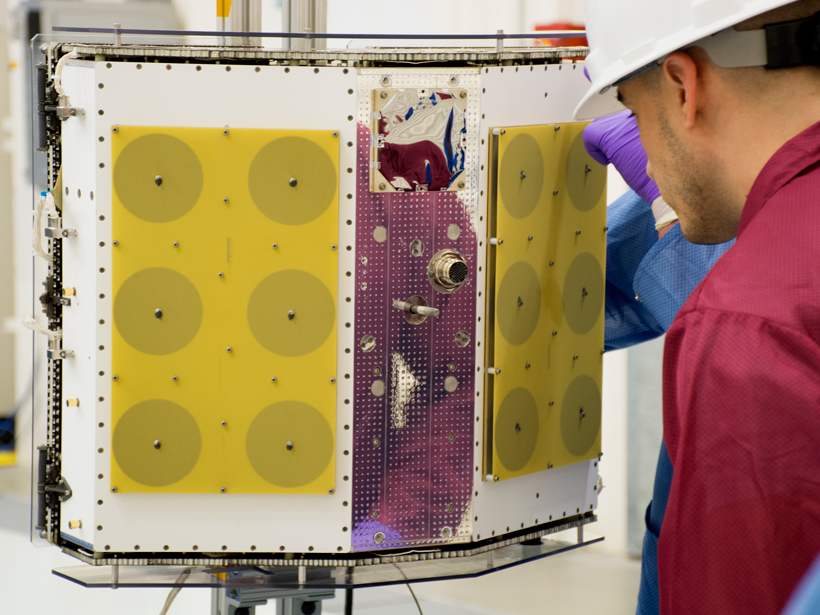
Technicians at Vandenberg Air Force Base in California inspect one of eight CYGNSS spacecraft on 11 October.
Posted inNews

New NASA Science Head Foresees Progress in Search for Alien Life

by Randy Showstack 4 November 20162 July 2025

Thomas Zurbuchen said other top goals for science and the agency include understanding and protecting life on Earth and probing fundamental aspects of the universe like dark matter and dark energy.
Posted inNews

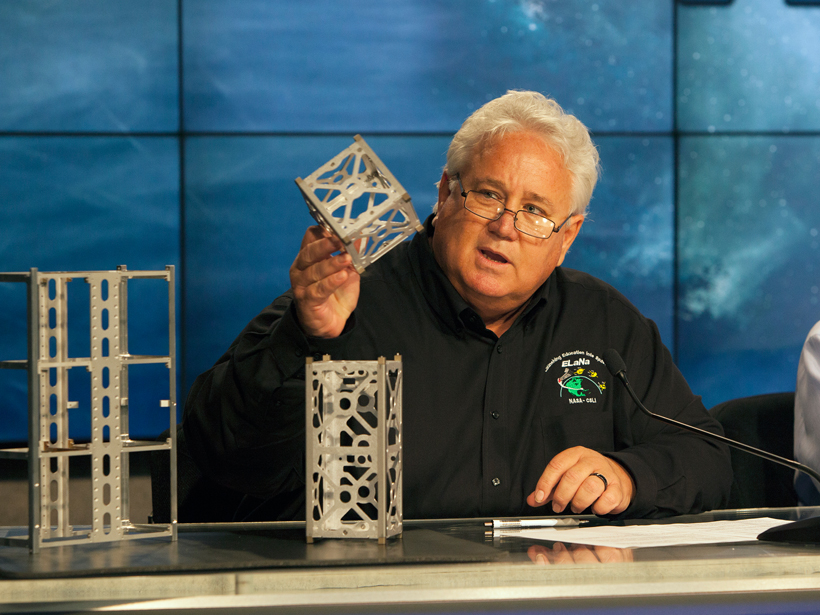
NASA Selects Launch Vehicles for Small Satellites

by Randy Showstack 22 October 20152 July 2025

Miniature satellites offer new opportunities for science, commerce, and education. With new launch vehicles, these satellites will fly as primary payloads rather than hitchhiking on bigger missions.
Posted inNews

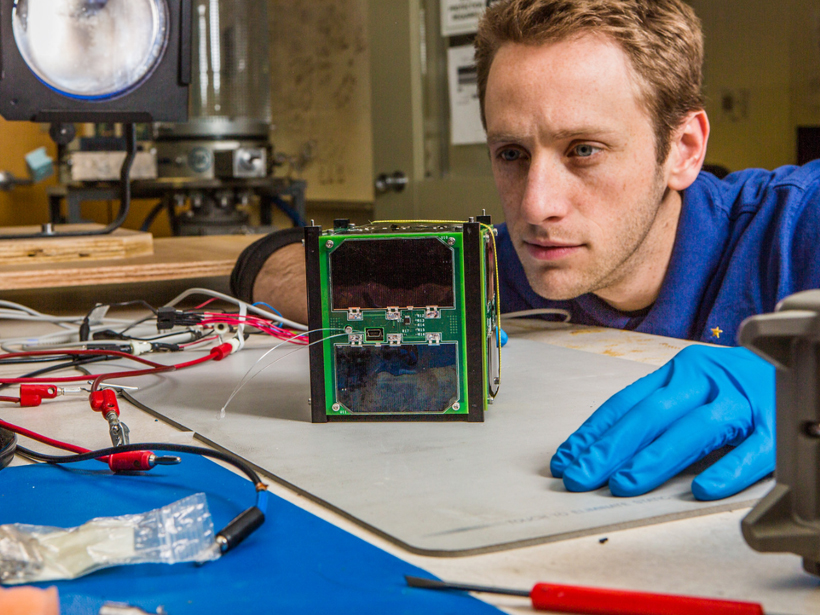
U.S. Launches 13 New Minisatellites

by Randy Showstack 8 October 20152 July 2025

Tiny CubeSat satellites made of one or more cube-like modules roughly the size of coffee mugs offer a compact and inexpensive way to conduct research and other activities in space.

Posts pagination

Newer posts 1 2
Over a dark blue-green square appear the words Special Report: The State of the Science 1 Year On.

Features from AGU Publications

Research Spotlights

New Method Could Improve U.S. Forecasting of West Nile Virus

20 February 202620 February 2026
Editors' Highlights

Why More Rain Doesn’t Mean More Erosion in Mountains

20 February 202620 February 2026
Editors' Vox

A Double-Edged Sword: The Global Oxychlorine Cycle on Mars

10 February 202610 February 2026
Eos logo at left; AGU logo at right

About Eos
ENGAGE
Awards
Contact

Advertise
Submit
Career Center
Sitemap

© 2026 American Geophysical Union. All rights reserved Powered by Newspack