• About
  • Sections
  • Topics
    • Climate
    • Earth Science
    • Oceans
    • Space & Planets
    • Health & Ecosystems
    • Culture & Policy
    • Education & Careers
    • Opinions
  • Projects
    • ENGAGE
    • Editors’ Highlights
    • Editors’ Vox
    • Eos en Español
    • Eos 简体中文版
    • Print Archive
  • Science Policy Tracker
  • Blogs
    • Research & Developments
    • The Landslide Blog
  • Newsletter
  • Submit to Eos
  • AGU.org
  • Career Center
  • Join AGU
  • Give to AGU
  • About
  • Sections
  • Topics
    • Climate
    • Earth Science
    • Oceans
    • Space & Planets
    • Health & Ecosystems
    • Culture & Policy
    • Education & Careers
    • Opinions
  • Projects
    • ENGAGE
    • Editors’ Highlights
    • Editors’ Vox
    • Eos en Español
    • Eos 简体中文版
    • Print Archive
  • Science Policy Tracker
  • Blogs
    • Research & Developments
    • The Landslide Blog
  • Newsletter
  • Submit to Eos
Skip to content
  • AGU.org
  • Career Center
  • Join AGU
  • Give to AGU
Eos

Eos

Science News by AGU

Support Eos
Sign Up for Newsletter
  • About
  • Sections
  • Topics
    • Climate
    • Earth Science
    • Oceans
    • Space & Planets
    • Health & Ecosystems
    • Culture & Policy
    • Education & Careers
    • Opinions
  • Projects
    • ENGAGE
    • Editors’ Highlights
    • Editors’ Vox
    • Eos en Español
    • Eos 简体中文版
    • Print Archive
  • Science Policy Tracker
  • Blogs
    • Research & Developments
    • The Landslide Blog
  • Newsletter
  • Submit to Eos

Global Biogeochemical Cycles

Visit the journal.

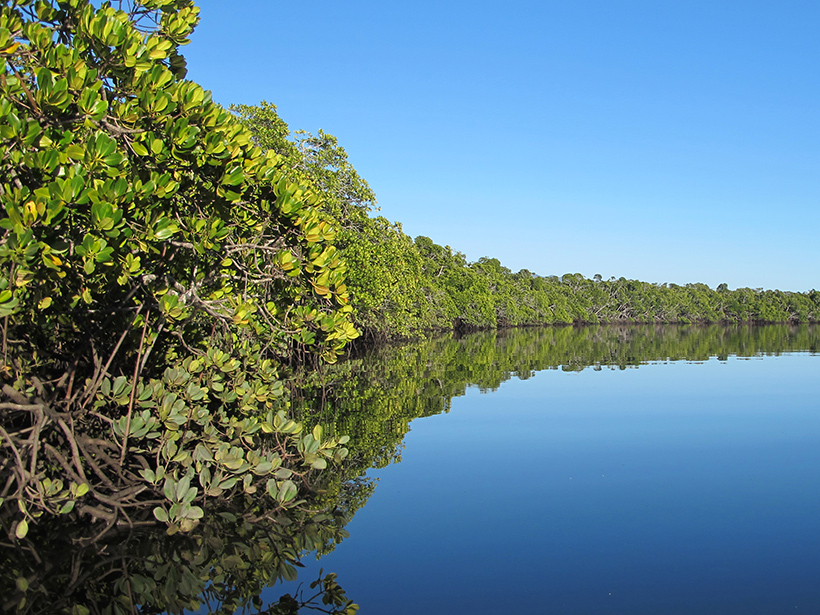
Mangroves at Coral Creek, Hinchinbrook Island. Australia.
Posted inResearch Spotlights

Can Mangroves Buffer Ocean Acidification?

by W. Yan 9 June 201620 April 2022

New research evaluates the ability of coastal foliage to influence the ocean's pH.

Posted inResearch Spotlights

Moored Ocean Buoy Tracks Marine Carbon Cycle Variations

by Mark Zastrow 14 March 201617 March 2023

Years of data from a North Pacific ocean station show that the ocean's ability to pull carbon out of the atmosphere is controlled by biological and physical processes that change between seasons.
Posted inResearch Spotlights

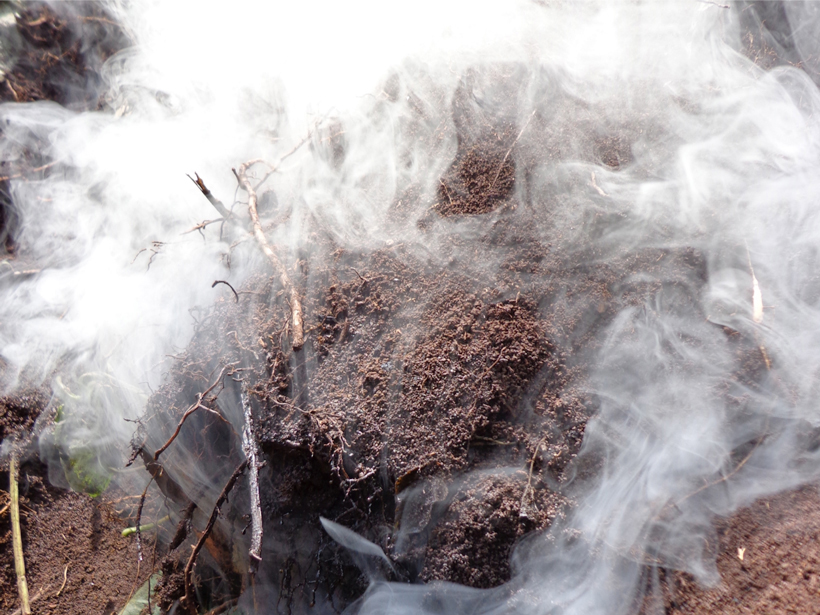
Soil Loses Pyrogenic Carbon by an Unexpected Pathway

by S. Kelleher 1 March 20168 March 2023

Fresh insight into pyrogenic carbon disappearance suggests that erosion is not responsible.
Posted inResearch Spotlights

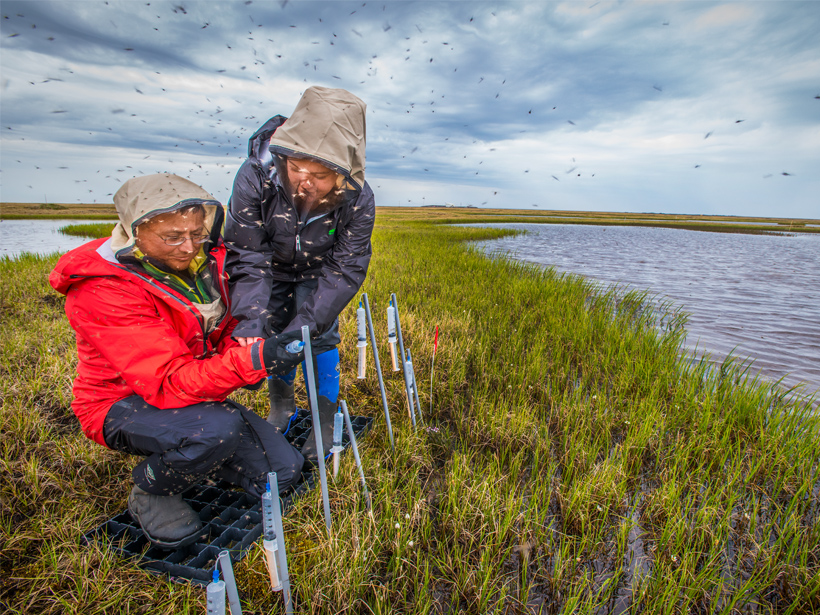
Tracking Carbon in the Alaskan Arctic

Kate Wheeling, freelance science writer by Kate Wheeling 8 February 20169 December 2021

Researchers trace carbon through Arctic soils and find an unlikely source of methane and surprisingly low methane oxidation in watersheds throughout northern Alaska.

Posted inResearch Spotlights

Past Phosphorus Runoff Causes Present Oxygen Depletion in Lakes

by David Shultz 24 July 201520 April 2022

Sediment cores show how phosphorus pollution in the 1950s led to current, inherited hypoxia in lakes in the Alps.

Posted inResearch Spotlights

Humans Greatly Increase Mercury Levels in the Ocean

by S. Palus 22 April 201525 August 2022

A study of the natural cycle of mercury reveals that humans are to blame for a five- to sixfold increase in the oceanic concentrations of the potentially toxic element.

Posted inResearch Spotlights

How Much Carbon Dioxide Does Sunlight Release from Lakes?

by S. Palus 8 April 201517 March 2023

A study of more than 1000 lakes in Sweden helps model sunlight's ability to drive greenhouse gas emissions.

Posted inResearch Spotlights

Ocean Carbon Uptake More Variable Than Previously Thought

by E. Betz 9 December 201427 September 2022

Researchers create a global model of carbon dioxide absorbed by the ocean to get a better idea of how the greenhouse gas influences climate.

Posted inAGU News

New Editors for AGU Journals

by J. Panning 28 October 201430 May 2023

AGU announces new editors for several of its journals.

Posts pagination

Newer posts 1 … 7 8 9
A view of a bridge, with the New Orleans skyline visible in the distance between the bridge and the water. A purple tint, a teal curved line representing a river, and the text “#AGU25 coverage from Eos” overlie the photo.

Features from AGU Publications

Research Spotlights

Understanding Flux, from the Wettest Ecosystems to the Driest

24 November 202524 November 2025
Editors' Highlights

Using Lightning-Induced Precipitation to Estimate Electron Belt Decay Times

3 December 20252 December 2025
Editors' Vox

Hydrothermal Circulation and Its Impact on the Earth System

3 December 20253 December 2025
Eos logo at left; AGU logo at right

About Eos
ENGAGE
Awards
Contact

Advertise
Submit
Career Center
Sitemap

© 2025 American Geophysical Union. All rights reserved Powered by Newspack