• About
  • Special Reports
  • Topics
    • Climate
    • Earth Science
    • Oceans
    • Space & Planets
    • Health & Ecosystems
    • Culture & Policy
    • Education & Careers
    • Opinions
  • Projects
    • Postcards From the Field
    • ENGAGE
    • Editors’ Highlights
    • Editors’ Vox
    • Eos en Español
    • Eos 简体中文版
    • Print Archive: 2015–2025
  • Policy Tracker
  • Blogs
    • Research & Developments
    • The Landslide Blog
  • Newsletter
  • Submit to Eos
  • AGU.org
  • Career Center
  • Join AGU
  • Give to AGU
  • About
  • Special Reports
  • Topics
    • Climate
    • Earth Science
    • Oceans
    • Space & Planets
    • Health & Ecosystems
    • Culture & Policy
    • Education & Careers
    • Opinions
  • Projects
    • Postcards From the Field
    • ENGAGE
    • Editors’ Highlights
    • Editors’ Vox
    • Eos en Español
    • Eos 简体中文版
    • Print Archive: 2015–2025
  • Policy Tracker
  • Blogs
    • Research & Developments
    • The Landslide Blog
  • Newsletter
  • Submit to Eos
Skip to content
  • AGU.org
  • Career Center
  • Join AGU
  • Give to AGU
Eos

Eos

Science News by AGU

Support Eos
Sign Up for Newsletter
  • About
  • Special Reports
  • Topics
    • Climate
    • Earth Science
    • Oceans
    • Space & Planets
    • Health & Ecosystems
    • Culture & Policy
    • Education & Careers
    • Opinions
  • Projects
    • Postcards From the Field
    • ENGAGE
    • Editors’ Highlights
    • Editors’ Vox
    • Eos en Español
    • Eos 简体中文版
    • Print Archive: 2015–2025
  • Policy Tracker
  • Blogs
    • Research & Developments
    • The Landslide Blog
  • Newsletter
  • Submit to Eos

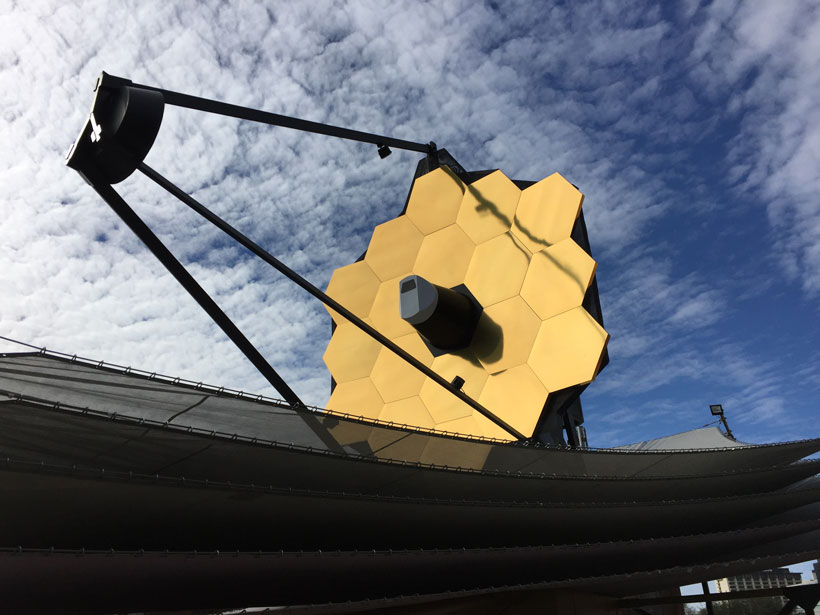
James Webb Space Telescope

Full-scale model of the James Webb Space Telescope
Posted inNews

How Well Can the Webb Telescope Detect Signs of Exoplanet Life?

Lucas Joel by L. Joel 24 September 20189 November 2021

Recent research suggests that NASA’s next-generation space telescope will be good—but not the best—at finding life-sustaining levels of oxygen in an exoplanet’s atmosphere.
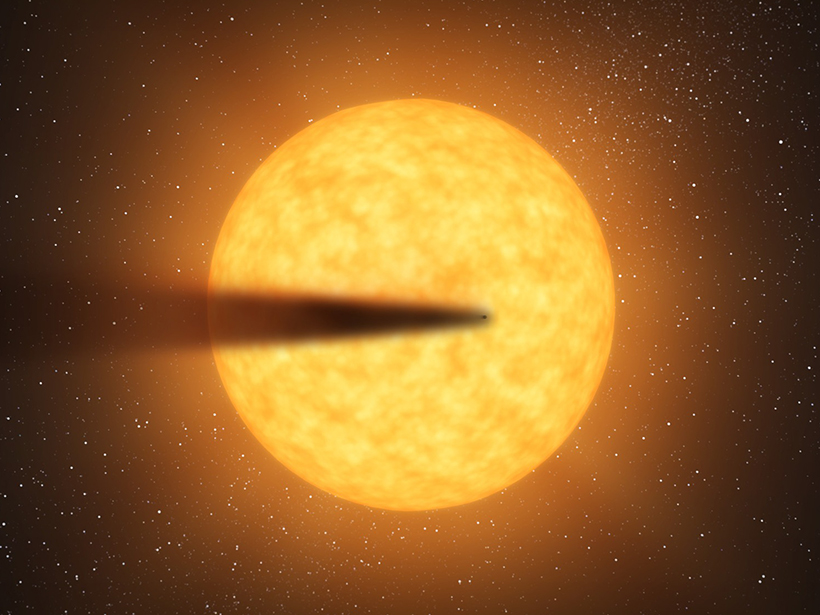
Artist’s rendering of disintegrating planet Kepler-1520b.
Posted inNews

Webb Telescope May Detect Minerals from Shredded Worlds

Kimberly M. S. Cartier, News Writing and Production Intern for Eos.org by Kimberly M. S. Cartier 12 September 20189 November 2021

The upcoming James Webb Space Telescope should be able to measure the composition of vaporizing exoplanets, giving clues about the makeup of their cores, mantles, and crusts.
Posted inNews

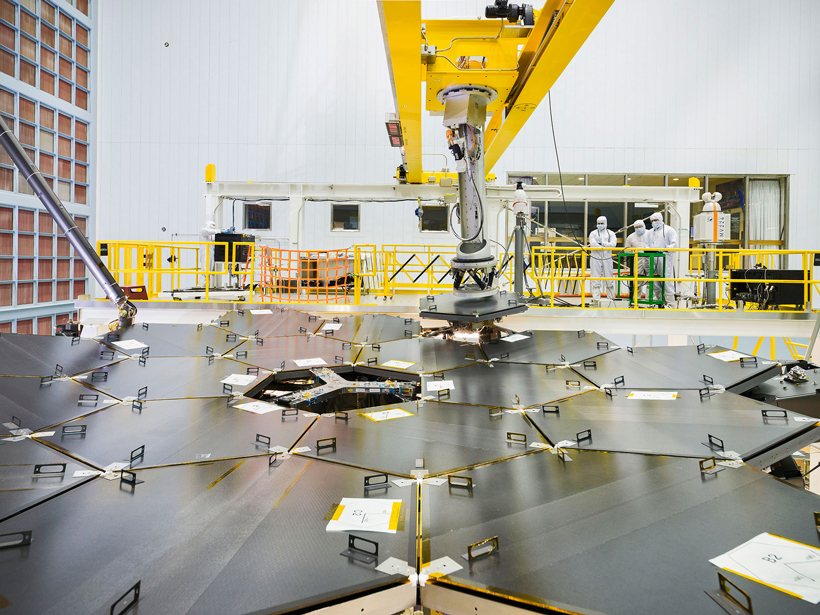
Final Mirror Segment Added to Powerful Future Space Observatory

by Randy Showstack 8 February 201617 January 2023

After years of planning, testing, and assembly, the James Webb Space Telescope, the world's largest infrared, space-based observatory, is taking shape.

Posts pagination

Newer posts 1 2 3
Over a dark blue-green square appear the words Special Report: The State of the Science 1 Year On.

Features from AGU Publications

Research Spotlights

Tracking 20 Years of Productivity in Tidal Wetlands

7 July 20267 July 2026
Editors' Highlights

The Largest Ice Thickness Survey of Alaska’s Glaciers

7 July 20266 July 2026
Editors' Vox

Small-Scale Indian Ocean Dynamics Underpin Marine Ecology and Climate

4 June 20263 June 2026
Eos logo at left; AGU logo at right

About Eos
ENGAGE
Awards
Contact

Advertise
Submit
Career Center
Sitemap

© 2026 American Geophysical Union. All rights reserved Powered by Newspack