• About
  • Sections
  • Topics
    • Climate
    • Earth Science
    • Oceans
    • Space & Planets
    • Health & Ecosystems
    • Culture & Policy
    • Education & Careers
    • Opinions
  • Projects
    • ENGAGE
    • Editors’ Highlights
    • Editors’ Vox
    • Eos en Español
    • Eos 简体中文版
    • Print Archive
  • Science Policy Tracker
  • Blogs
    • Research & Developments
    • The Landslide Blog
  • Newsletter
  • Submit to Eos
  • AGU.org
  • Career Center
  • Join AGU
  • Give to AGU
  • About
  • Sections
  • Topics
    • Climate
    • Earth Science
    • Oceans
    • Space & Planets
    • Health & Ecosystems
    • Culture & Policy
    • Education & Careers
    • Opinions
  • Projects
    • ENGAGE
    • Editors’ Highlights
    • Editors’ Vox
    • Eos en Español
    • Eos 简体中文版
    • Print Archive
  • Science Policy Tracker
  • Blogs
    • Research & Developments
    • The Landslide Blog
  • Newsletter
  • Submit to Eos
Skip to content
  • AGU.org
  • Career Center
  • Join AGU
  • Give to AGU
Eos

Eos

Science News by AGU

Support Eos
Sign Up for Newsletter
  • About
  • Sections
  • Topics
    • Climate
    • Earth Science
    • Oceans
    • Space & Planets
    • Health & Ecosystems
    • Culture & Policy
    • Education & Careers
    • Opinions
  • Projects
    • ENGAGE
    • Editors’ Highlights
    • Editors’ Vox
    • Eos en Español
    • Eos 简体中文版
    • Print Archive
  • Science Policy Tracker
  • Blogs
    • Research & Developments
    • The Landslide Blog
  • Newsletter
  • Submit to Eos

Journal of Geophysical Research: Space Physics

Visit the journal.

Posted inResearch Spotlights

The Curious Case of the Halloween Ghost Electrons

by Mark Zastrow 30 October 201519 January 2023

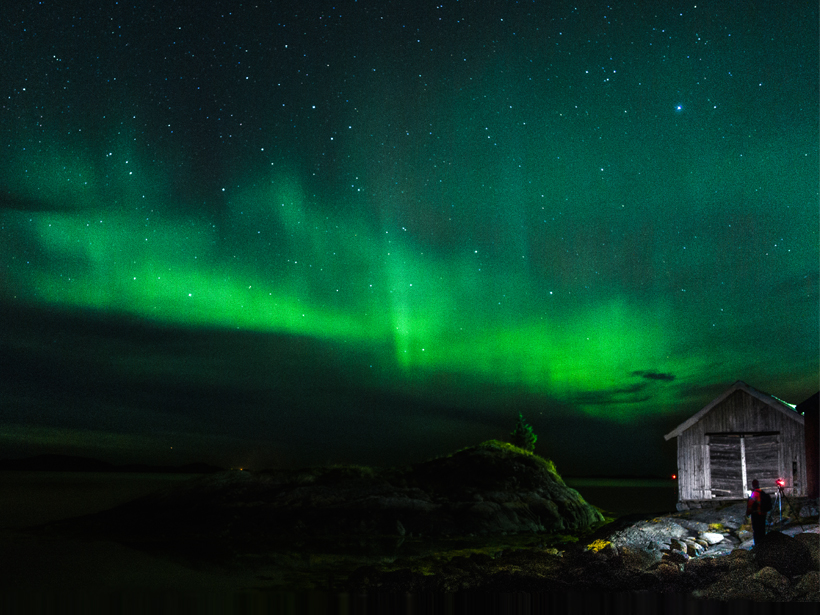
When solar storms pounded Earth during Halloween in 2003, scientists were eager to measure their effects. But new research shows one satellite was seeing "ghost" particles that probably weren't real.

Posted inResearch Spotlights

New Clues to Mysterious Hiss in Earth's Plasmasphere

by Mark Zastrow 26 October 201527 September 2022

An analysis of the electromagnetic "hiss" that surrounds Earth reveals it's not just static; there's a signal hidden within, which may help scientists uncover its source.
Posted inResearch Spotlights

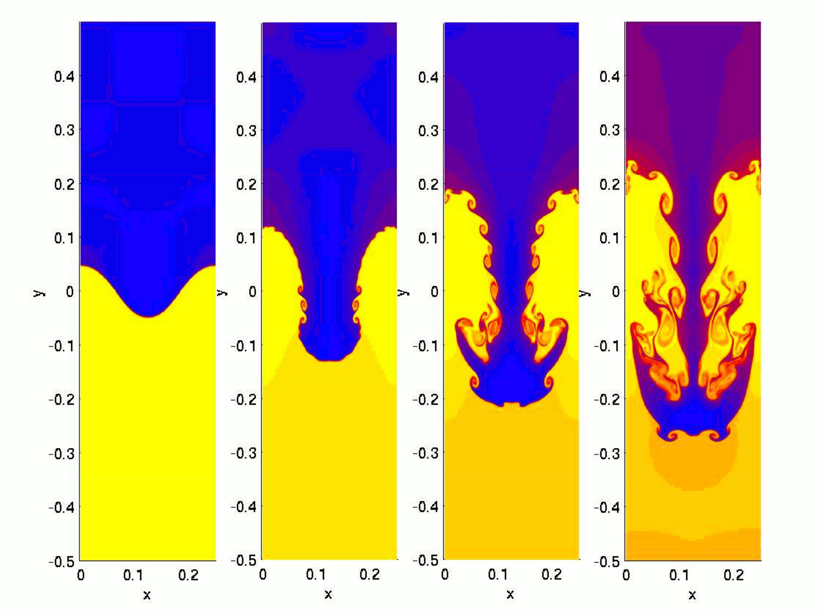
"Fingers" of Plasma Invade Saturn's Magnetic Field

by Mark Zastrow 15 October 201511 January 2022

NASA's Cassini probe observed vast amounts of plasma on the fringes of Saturn's magnetic field being mysteriously injected hundreds of thousands of kilometers inward.
Posted inResearch Spotlights

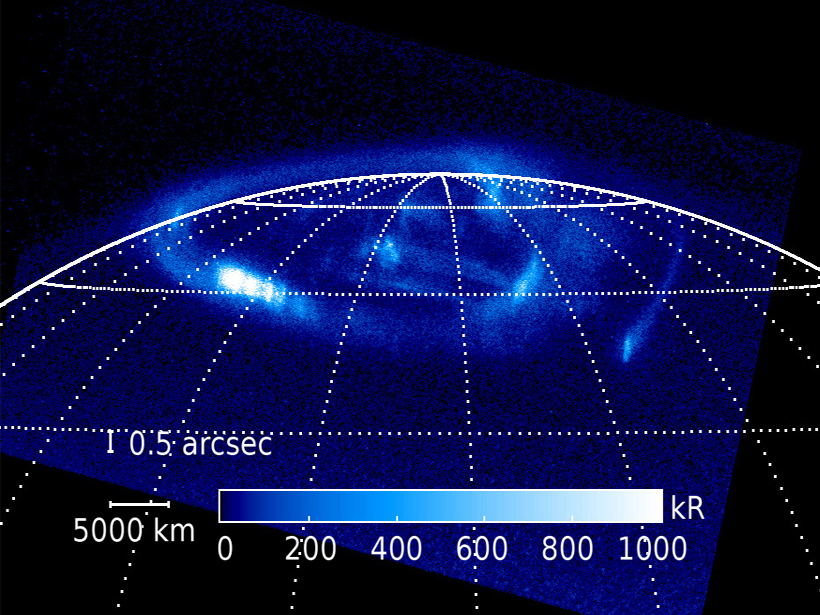
How Powerful Is Jupiter's Aurora?

by Mark Zastrow 8 September 201511 August 2022

Scientists have mapped Jupiter's spectacular aurora in unprecedented detail with the Hubble Space Telescope.
Posted inResearch Spotlights

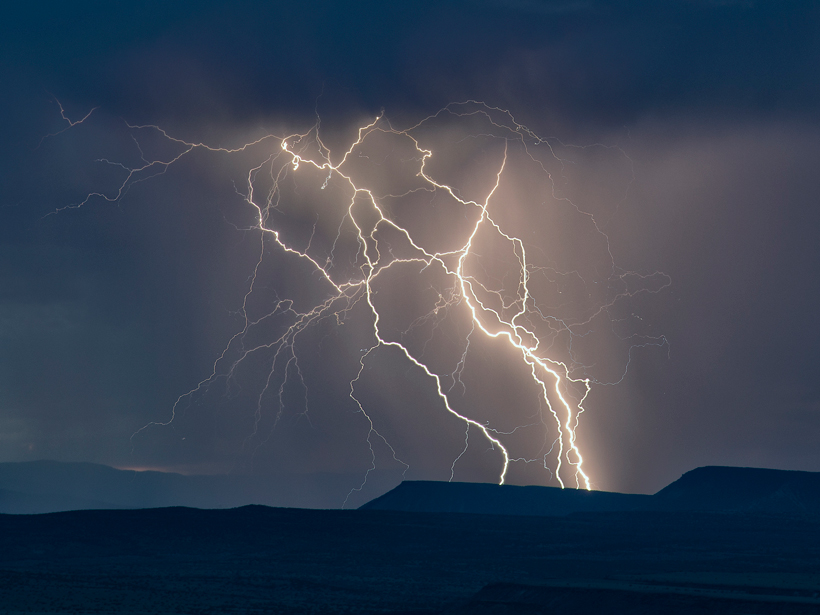
Lightning "Impulses" Improve Models of Global Electrical Circuit

by Mark Zastrow 19 August 201513 April 2023

New simulations of how thunderstorms drive electrical currents through the Earth's atmosphere combine precision with computational speed.
Posted inResearch Spotlights

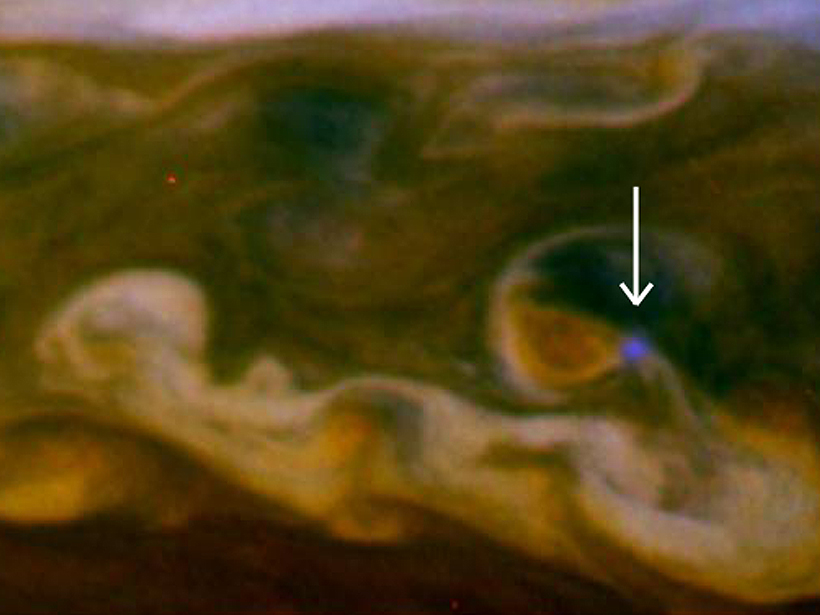
Gaseous Planets May Have Huge Luminous Rings Caused by Lightning

by Mark Zastrow 15 July 201513 April 2023

What business do elves have in the upper atmospheres of gas giants? Plenty, it seems. The enormous ring-shaped phenomena triggered by lightning may occur on Jupiter, Saturn, and exoplanets.

Posted inResearch Spotlights

X Marks the Spot of Magnetic Islands in Space

by Mark Zastrow 17 June 201518 July 2023

At the edge of Earth's magnetic field, satellites have found X-shaped fields and fast-moving "islands" of magnetism that could shed light on the physics of solar storms.
Posted inResearch Spotlights

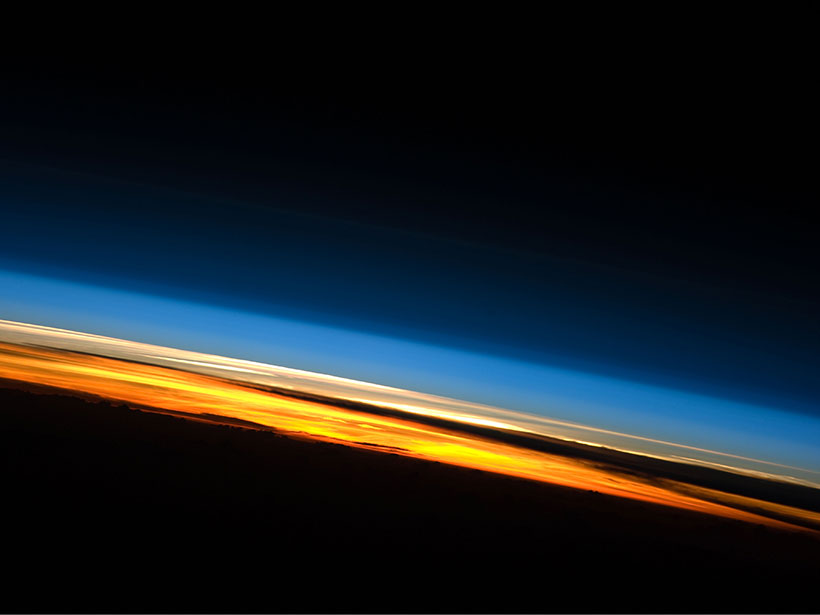
New Ionosphere Model Incorporates Solar Angles

by Mark Zastrow 4 June 201516 November 2021

The decades-old theory of the layers of the Earth's ionosphere, which dates to 1931, has just received an update that takes into account the angle of the Sun.

Posted inResearch Spotlights

Particle Accelerator in Space Could Help Scientists Study Auroras

by Mark Zastrow 8 April 201520 October 2021

Researchers could launch an electron beam device into space to study the Earth's magnetic field and trigger artificial auroras and lightning.

Posted inResearch Spotlights

Shooting Stars and Cosmic Dust Help Form Clouds, Fertilize Plankton

by E. Betz 5 March 20157 March 2022

Tons of cosmic dust enter Earth’s atmosphere each day, triggering a range of phenomena that scientists are only just beginning to understand.

Posts pagination

Newer posts 1 … 11 12 13 14 Older posts
A view of a bridge, with the New Orleans skyline visible in the distance between the bridge and the water. A purple tint, a teal curved line representing a river, and the text “#AGU25 coverage from Eos” overlie the photo.

Features from AGU Publications

Research Spotlights

An Ecosystem Never Forgets

19 December 202519 December 2025
Editors' Highlights

Frictional Properties of the Nankai Accretionary Prism

11 December 20259 December 2025
Editors' Vox

Hydrothermal Circulation and Its Impact on the Earth System

3 December 20253 December 2025
Eos logo at left; AGU logo at right

About Eos
ENGAGE
Awards
Contact

Advertise
Submit
Career Center
Sitemap

© 2025 American Geophysical Union. All rights reserved Powered by Newspack