• About
  • Sections
  • Topics
    • Climate
    • Earth Science
    • Oceans
    • Space & Planets
    • Health & Ecosystems
    • Culture & Policy
    • Education & Careers
    • Opinions
  • Projects
    • Postcards From the Field
    • ENGAGE
    • Editors’ Highlights
    • Editors’ Vox
    • Eos en Español
    • Eos 简体中文版
    • Print Archive: 2015–2025
  • Science Policy Tracker
  • Blogs
    • Research & Developments
    • The Landslide Blog
  • Newsletter
  • Submit to Eos
  • AGU.org
  • Career Center
  • Join AGU
  • Give to AGU
  • About
  • Sections
  • Topics
    • Climate
    • Earth Science
    • Oceans
    • Space & Planets
    • Health & Ecosystems
    • Culture & Policy
    • Education & Careers
    • Opinions
  • Projects
    • Postcards From the Field
    • ENGAGE
    • Editors’ Highlights
    • Editors’ Vox
    • Eos en Español
    • Eos 简体中文版
    • Print Archive: 2015–2025
  • Science Policy Tracker
  • Blogs
    • Research & Developments
    • The Landslide Blog
  • Newsletter
  • Submit to Eos
Skip to content
  • AGU.org
  • Career Center
  • Join AGU
  • Give to AGU
Eos

Eos

Science News by AGU

Support Eos
Sign Up for Newsletter
  • About
  • Sections
  • Topics
    • Climate
    • Earth Science
    • Oceans
    • Space & Planets
    • Health & Ecosystems
    • Culture & Policy
    • Education & Careers
    • Opinions
  • Projects
    • Postcards From the Field
    • ENGAGE
    • Editors’ Highlights
    • Editors’ Vox
    • Eos en Español
    • Eos 简体中文版
    • Print Archive: 2015–2025
  • Science Policy Tracker
  • Blogs
    • Research & Developments
    • The Landslide Blog
  • Newsletter
  • Submit to Eos

marine debris

Posted inNews

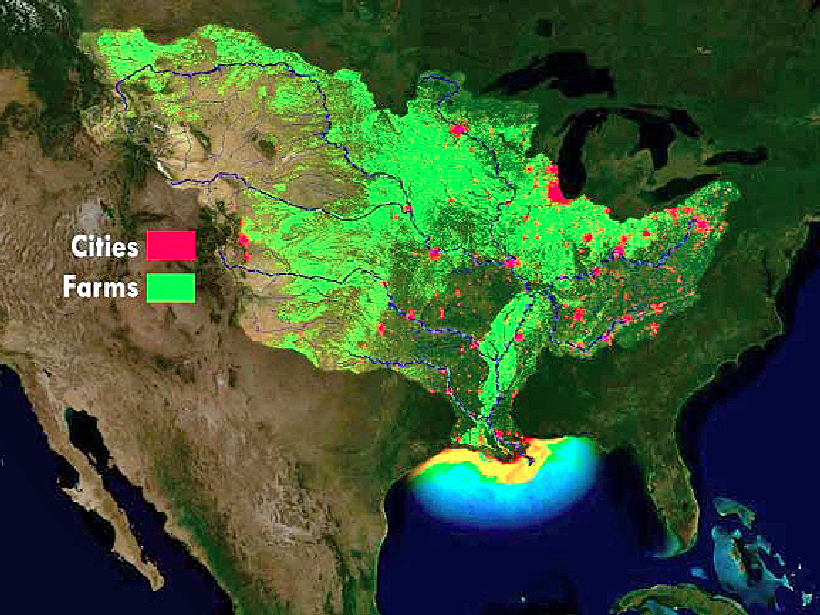
Gulf of Mexico Dead Zone Largest Since 2002

JoAnna Wendel, freelance science writer and illustrator by JoAnna Wendel 6 August 201519 October 2021

Downpours in June drove nutrients into the Mississippi River that ultimately deprived a much larger portion of the Gulf of oxygen than had been expected.
Posted inNews

Connecticut-Sized Dead Zone Expected in Gulf of Mexico

JoAnna Wendel, freelance science writer and illustrator by JoAnna Wendel 18 June 201519 October 2021

An ensemble of four computer models evaluated river runoff, wind patterns, and other factors affecting the extent of oxygen-poor waters near the Mississippi River's mouth.
Posted inResearch Spotlights

Humans Greatly Increase Mercury Levels in the Ocean

by S. Palus 22 April 201525 August 2022

A study of the natural cycle of mercury reveals that humans are to blame for a five- to sixfold increase in the oceanic concentrations of the potentially toxic element.
Posted inResearch Spotlights

Aquifers Spew More Pollution into Oceans Than Rivers

by N. Akpan 31 March 201527 September 2022

A new model makes a direct estimate of contaminants in submarine groundwater discharge.

Posted inNews

New Data Aid Estimate of Ocean's Plastic Content

JoAnna Wendel, freelance science writer and illustrator by JoAnna Wendel 18 December 201430 May 2023

Researchers estimate the abundance of plastics churning in the world’s oceans.

Posts pagination

Newer posts 1 … 4 5 6
A view of a bridge, with the New Orleans skyline visible in the distance between the bridge and the water. A purple tint, a teal curved line representing a river, and the text “#AGU25 coverage from Eos” overlie the photo.

Features from AGU Publications

Research Spotlights

Denitrification Looks Different in Rivers Versus Streams

16 January 202616 January 2026
Editors' Highlights

Kyanite Exsolution Reveals Ultra-Deep Subduction of Continents

23 January 202622 January 2026
Editors' Vox

Bridging the Gap: Transforming Reliable Climate Data into Climate Policy

16 January 202616 January 2026
Eos logo at left; AGU logo at right

About Eos
ENGAGE
Awards
Contact

Advertise
Submit
Career Center
Sitemap

© 2026 American Geophysical Union. All rights reserved Powered by Newspack