• About
  • Special Reports
  • Topics
    • Climate
    • Earth Science
    • Oceans
    • Space & Planets
    • Health & Ecosystems
    • Culture & Policy
    • Education & Careers
    • Opinions
  • Projects
    • Postcards From the Field
    • ENGAGE
    • Editors’ Highlights
    • Editors’ Vox
    • Eos en Español
    • Eos 简体中文版
    • Print Archive: 2015–2025
  • Policy Tracker
  • Blogs
    • Research & Developments
    • The Landslide Blog
  • Newsletter
  • Submit to Eos
  • AGU.org
  • Career Center
  • Join AGU
  • Give to AGU
  • About
  • Special Reports
  • Topics
    • Climate
    • Earth Science
    • Oceans
    • Space & Planets
    • Health & Ecosystems
    • Culture & Policy
    • Education & Careers
    • Opinions
  • Projects
    • Postcards From the Field
    • ENGAGE
    • Editors’ Highlights
    • Editors’ Vox
    • Eos en Español
    • Eos 简体中文版
    • Print Archive: 2015–2025
  • Policy Tracker
  • Blogs
    • Research & Developments
    • The Landslide Blog
  • Newsletter
  • Submit to Eos
Skip to content
  • AGU.org
  • Career Center
  • Join AGU
  • Give to AGU
Eos

Eos

Science News by AGU

Support Eos
Sign Up for Newsletter
  • About
  • Special Reports
  • Topics
    • Climate
    • Earth Science
    • Oceans
    • Space & Planets
    • Health & Ecosystems
    • Culture & Policy
    • Education & Careers
    • Opinions
  • Projects
    • Postcards From the Field
    • ENGAGE
    • Editors’ Highlights
    • Editors’ Vox
    • Eos en Español
    • Eos 简体中文版
    • Print Archive: 2015–2025
  • Policy Tracker
  • Blogs
    • Research & Developments
    • The Landslide Blog
  • Newsletter
  • Submit to Eos

mercury (Hg)

Posted inNews

A Volcanic Trigger for Earth’s First Mass Extinction?

Lucas Joel by L. Joel 30 May 201730 January 2023

Abnormally high levels of mercury in Ordovician rocks may imply that a huge surge of volcanism took place at a time when much of the planet’s ocean life vanished.

Posted inNews

Mercury in Rain Increasing in Western and Central United States

Cody Sullivan by C. Sullivan 2 February 201613 March 2023

Despite tightening emissions rules, mercury concentrations are rising in rainfall wetting western and central regions of the United States. The pollutant may waft in from Asia, scientists speculate.
Posted inNews

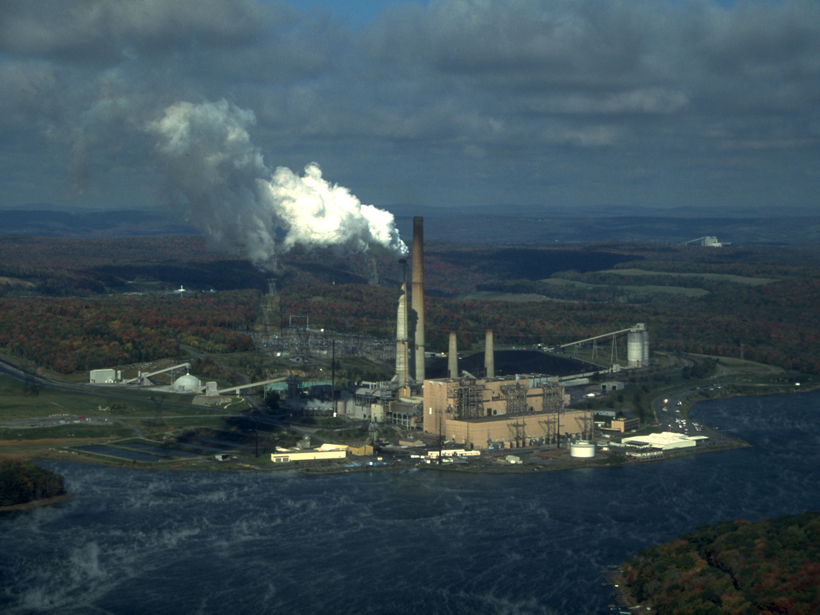
Despite Stalled Regulations, U.S. Mercury Emissions Decline

by K. Klein 9 December 201521 December 2022

Newly published measurements made downwind of West Virginia, Pennsylvania, and Ohio coal-burning plants reveal steep, unexpected drops in atmospheric mercury concentrations since 2006.

Posted inResearch Spotlights

Drought Changes How Peat Bogs Cycle Mercury and Sulfur

by L. Strelich 11 November 20151 April 2022

Drought conditions dictate whether atmospherically deposited sulfate stays locked in a peatland or is mobilized to stimulate the bacterial methylation of mercury.
Posted inResearch Spotlights

Humans Greatly Increase Mercury Levels in the Ocean

by S. Palus 22 April 201525 August 2022

A study of the natural cycle of mercury reveals that humans are to blame for a five- to sixfold increase in the oceanic concentrations of the potentially toxic element.

Posts pagination

Newer posts 1 2
Over a dark blue-green square appear the words Special Report: The State of the Science 1 Year On.

Features from AGU Publications

Research Spotlights

Global Observations Reveal Rapid Reorganization of Ocean Nutrients

12 March 202612 March 2026
Editors' Highlights

Robustness Through Diversity: Learning from Heterogeneous Aquifers

12 March 202612 March 2026
Editors' Vox

Introducing the New EIC of Paleoceanography and Paleoclimatology

12 March 202612 March 2026
Eos logo at left; AGU logo at right

About Eos
ENGAGE
Awards
Contact

Advertise
Submit
Career Center
Sitemap

© 2026 American Geophysical Union. All rights reserved Powered by Newspack