
Editors’ Highlights are summaries of recent papers by AGU’s journal editors.
Source: Earth and Space Science
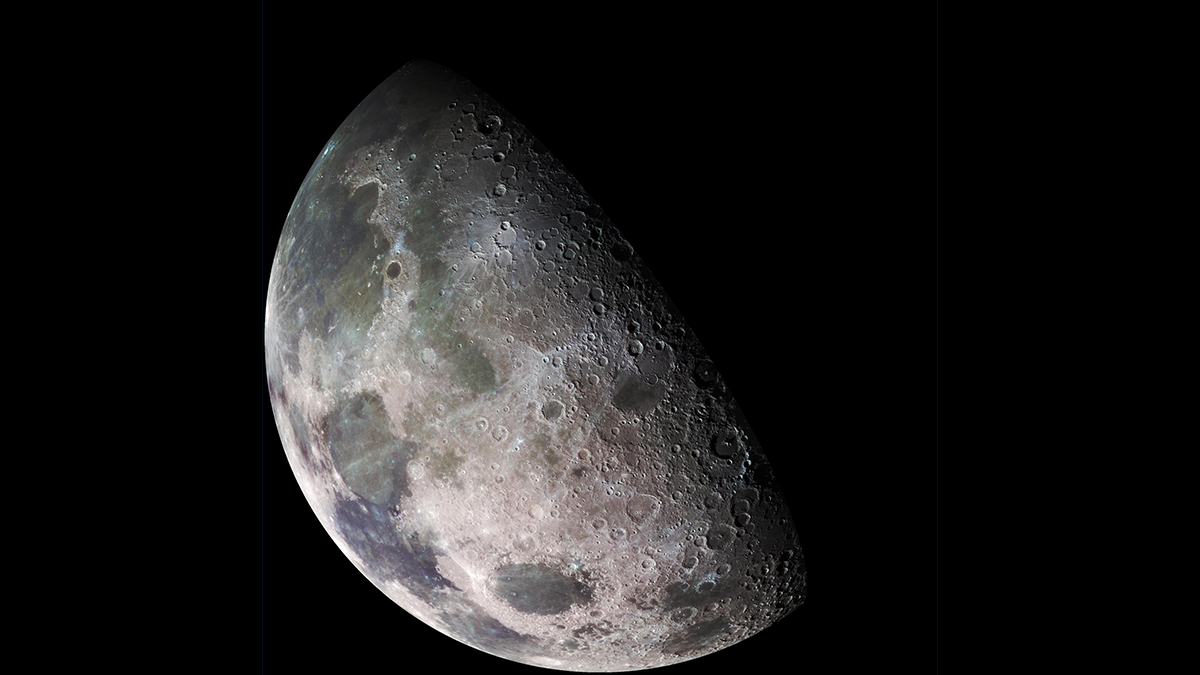
Distributed Acoustic Sensing (DAS) is a relatively new technique that uses optic cable to measure ground motion along its length, effectively turning the cable into thousands of vibration sensors and which measures dynamic strain over long distances. DAS is now widely used as an alternative to conventional geophones and seismometers. In practice, DAS cables are typically buried to ensure good contact with the ground. However, cable burial may be difficult or impossible on the Moon.
Probst et al. [2026] investigate the extent to which unburied cables provide reliable data using controlled experiments on a lunar soil simulant and several different fiber-optic cables. The authors find that stiffer, thicker cables record reliable signals even when unburied if contact is maintained contact ground surface. This paper presents fundamental research that addresses a key knowledge gap in the current DAS user community. The issue of cable coupling has been both controversial and understudied. These results provide important guidance for cable coupling to ensure high quality results.
Citation: Probst, S., Zandanel, A., Robertsson, J. O. A., & Donahue, C. M. (2026). Controlled source DAS coupling tests: Implications for unburied deployment on the Moon and Earth. Earth and Space Science,13, e2025EA004817. https://doi.org/10.1029/2025EA004817
—Kristy Tiampo, Editor, Earth and Space Science