


Nancy Grace Roman’s namesake telescope will search for distant worlds and the earliest galaxies.
Space & Planets

Posted inOpinions
All Hands on Deck for Ionospheric Modeling
Challenges to studying the ionosphere’s ability to conduct electrical currents undercut scientists’ efforts to improve space weather forecasting models. Let’s tackle them together.
Posted inNews
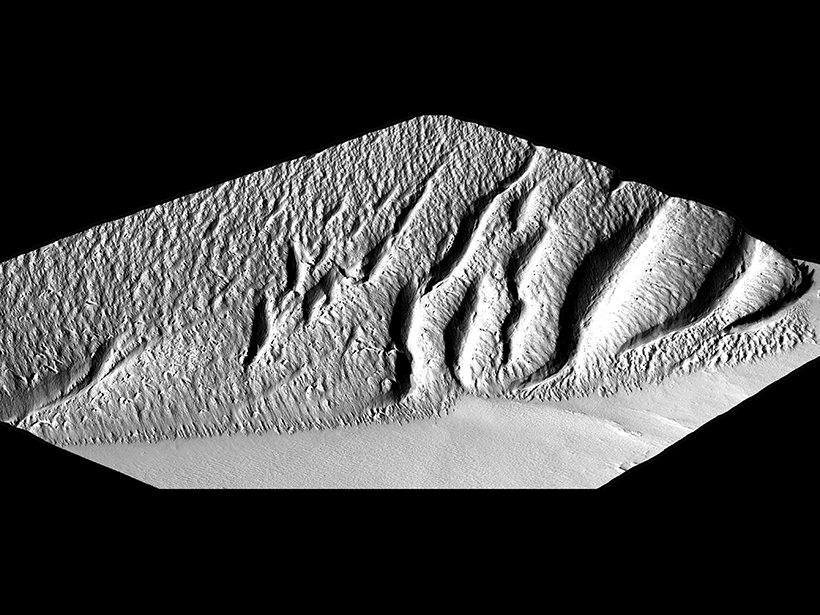
Scientists Float a New Theory on the Medusae Fossae Formation

Pumice-like rafts of lightweight material could have carried volcanic debris across an ancient Martian ocean to build one of the most puzzling features on the Red Planet.
Posted inEditors' Highlights
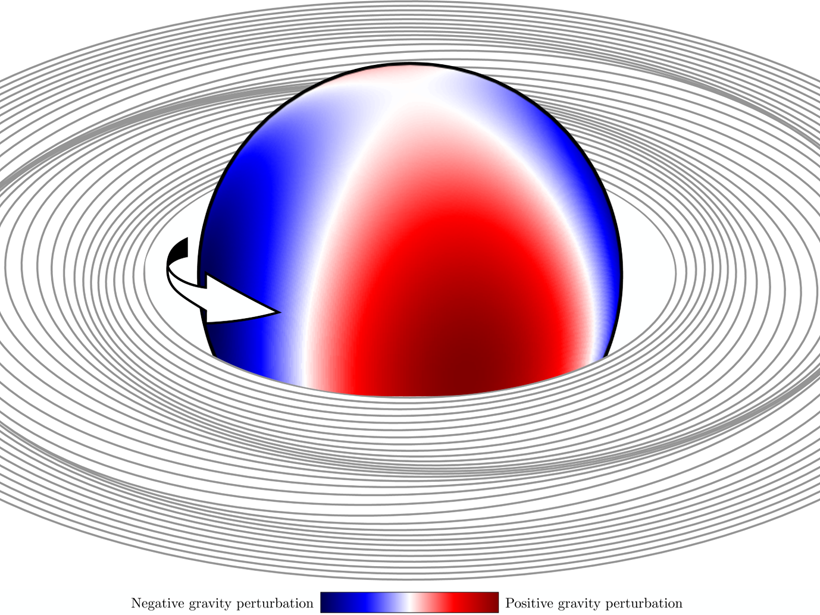
Using Saturn’s Rings as a Seismometer
The Cassini spacecraft observed spiral density waves in the rings of Saturn which can be used to probe its interior structure and rotation.

Posted inNews
The Closest Black Hole Is 1,000 Light-Years Away

An unseen object—probably a black hole—orbits with two normal stars in our cosmic neighborhood.
Posted inResearch Spotlights
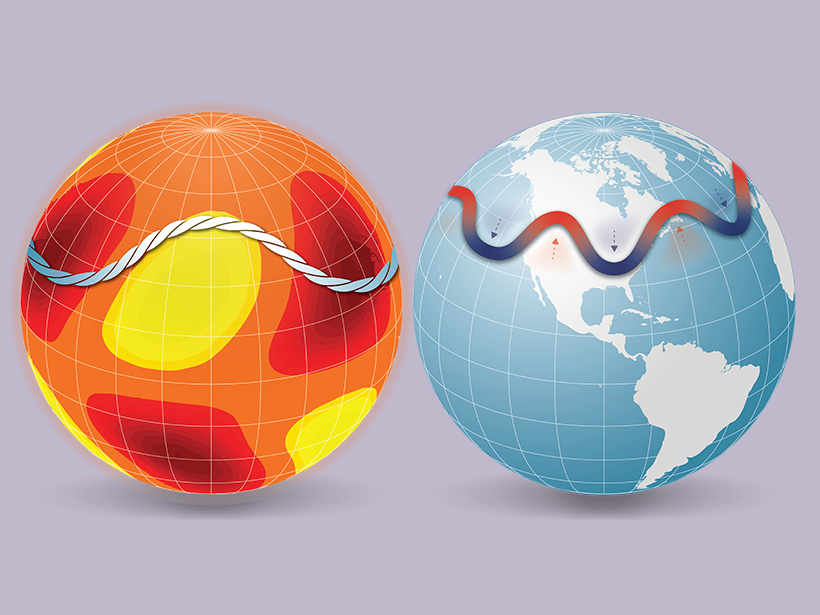
Space Weather Forecasting Takes Inspiration from Meteorology

Solar features analogous to major atmospheric waves on Earth could offer more advanced warning of harmful solar storms.
Posted inResearch Spotlights
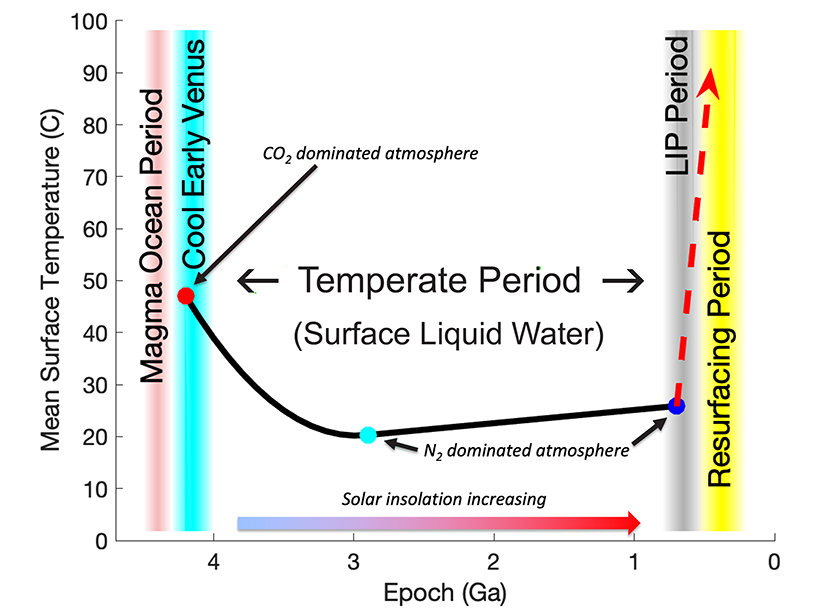
How Long Was Venus Habitable?

Climate simulations of Venus’s history could provide insights into the habitability of Earth and of exoplanets.

Posted inNews
The Massive Ice Avalanches of Mars

Ice avalanches may have traveled at speeds of up to 80 meters per second.

Posted inFeatures
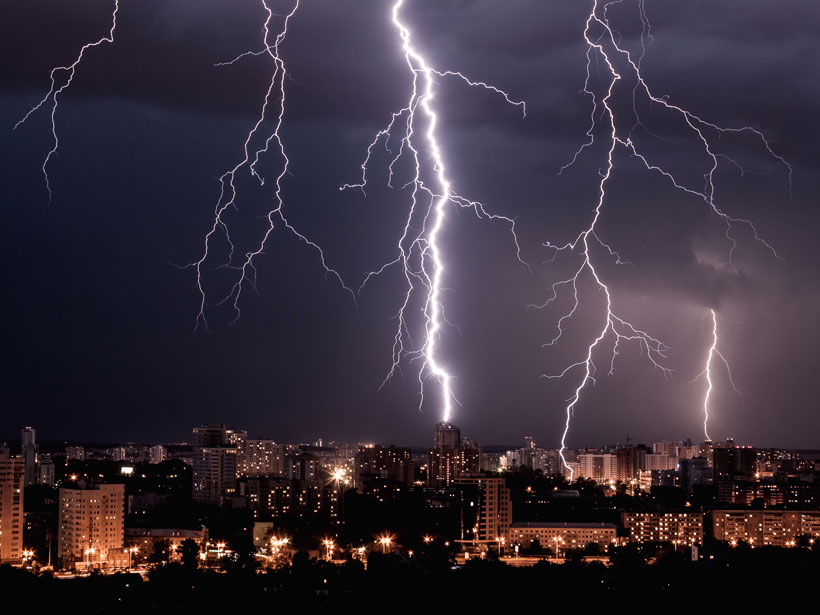
Planetary Lightning: Same Physics, Distant Worlds
Lightning on Earth needs just a few simple ingredients to generate a spark. Those ingredients exist throughout the solar system and beyond.
Posted inAGU News
Investigating the Spark

In May, we look at lightning—what it tells us about dangerous weather, how to find it on other planets, and what we might learn if we get all that data in one place.