• About
  • Special Reports
  • Topics
    • Climate
    • Earth Science
    • Oceans
    • Space & Planets
    • Health & Ecosystems
    • Culture & Policy
    • Education & Careers
    • Opinions
  • Projects
    • Postcards From the Field
    • ENGAGE
    • Editors’ Highlights
    • Editors’ Vox
    • Eos en Español
    • Eos 简体中文版
    • Print Archive: 2015–2025
  • Policy Tracker
  • Blogs
    • Research & Developments
    • The Landslide Blog
  • Newsletter
  • Submit to Eos
  • AGU.org
  • Career Center
  • Join AGU
  • Give to AGU
  • About
  • Special Reports
  • Topics
    • Climate
    • Earth Science
    • Oceans
    • Space & Planets
    • Health & Ecosystems
    • Culture & Policy
    • Education & Careers
    • Opinions
  • Projects
    • Postcards From the Field
    • ENGAGE
    • Editors’ Highlights
    • Editors’ Vox
    • Eos en Español
    • Eos 简体中文版
    • Print Archive: 2015–2025
  • Policy Tracker
  • Blogs
    • Research & Developments
    • The Landslide Blog
  • Newsletter
  • Submit to Eos
Skip to content
  • AGU.org
  • Career Center
  • Join AGU
  • Give to AGU
Eos

Eos

Science News by AGU

Support Eos
Sign Up for Newsletter
  • About
  • Special Reports
  • Topics
    • Climate
    • Earth Science
    • Oceans
    • Space & Planets
    • Health & Ecosystems
    • Culture & Policy
    • Education & Careers
    • Opinions
  • Projects
    • Postcards From the Field
    • ENGAGE
    • Editors’ Highlights
    • Editors’ Vox
    • Eos en Español
    • Eos 简体中文版
    • Print Archive: 2015–2025
  • Policy Tracker
  • Blogs
    • Research & Developments
    • The Landslide Blog
  • Newsletter
  • Submit to Eos

Space & Planets

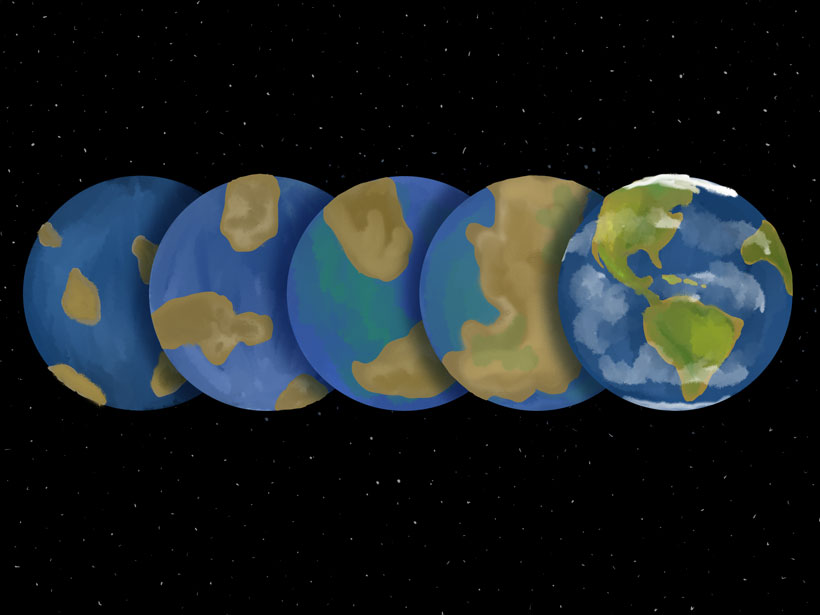
Illustration of the geological evolution of Earth
Posted inNews

Looking Back at Our Pale Blue Dot

by C. Fogerty 23 April 20208 April 2022

Astronomers model changes in Earth’s chemical signature over the past 4 billion years to improve the search for Earth-like exoplanets.

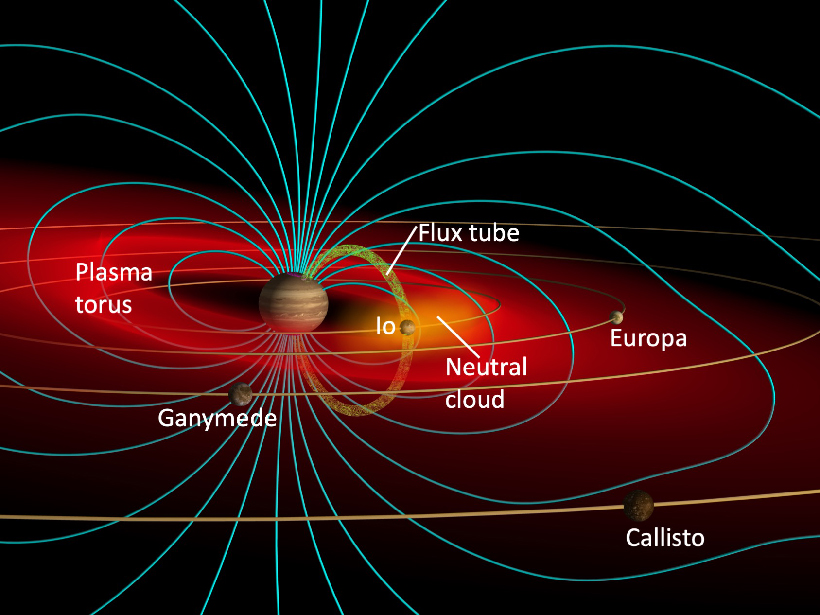
Illustration of Jupiter’s magnetosphere and innermost planets
Posted inResearch Spotlights

Two Moons and a Magnetosphere

Sarah Stanley, Science Writer by Sarah Stanley 21 April 202018 October 2022

Decades of research have illuminated how Io and Europa shape—and are shaped by—Jupiter’s giant magnetosphere.
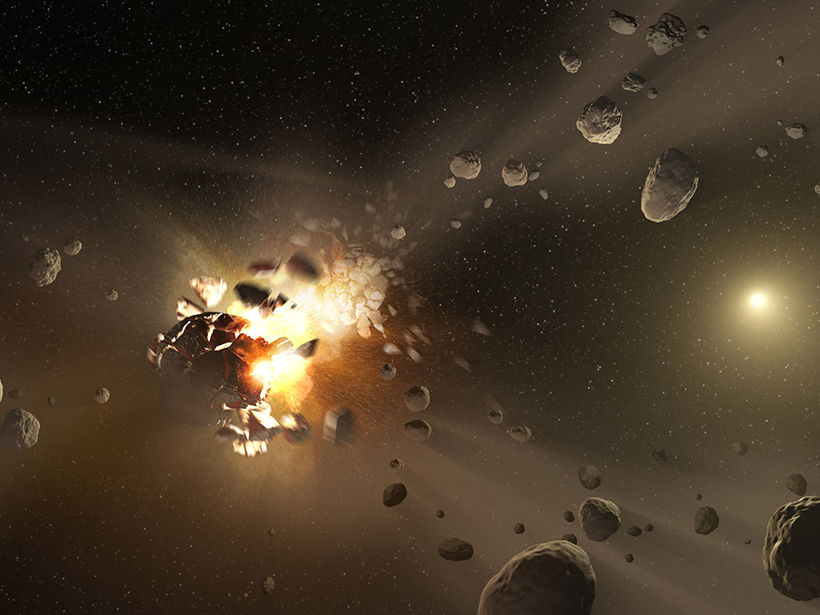
Asteroids smashing into one another
Posted inNews

Dust from Colliding Asteroids Masqueraded as a Planet

Katherine Kornei, Science Writer by Katherine Kornei 20 April 20202 February 2022

New analysis of Hubble Space Telescope images suggests that Fomalhaut b, once believed to be an extrasolar planet, is, in fact, a cloud of dust that likely formed from the collision of enormous asteroids.
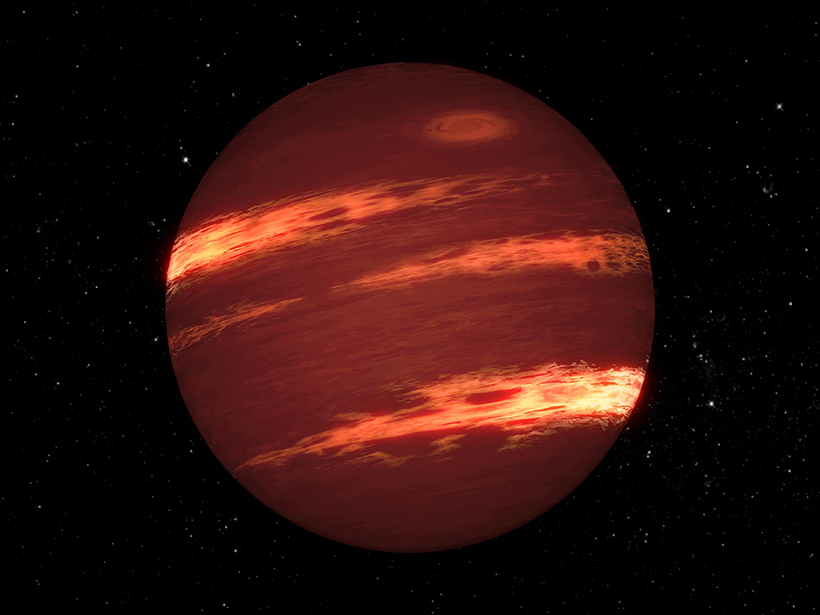
Orange and brown planet-looking object
Posted inNews

Record-Setting Winds on a Nearby Brown Dwarf

Katherine Kornei, Science Writer by Katherine Kornei 16 April 202024 October 2022

Infrared and radio observations reveal zonal winds moving faster than 2,000 kilometers per hour on a “failed star” in our celestial neighborhood.
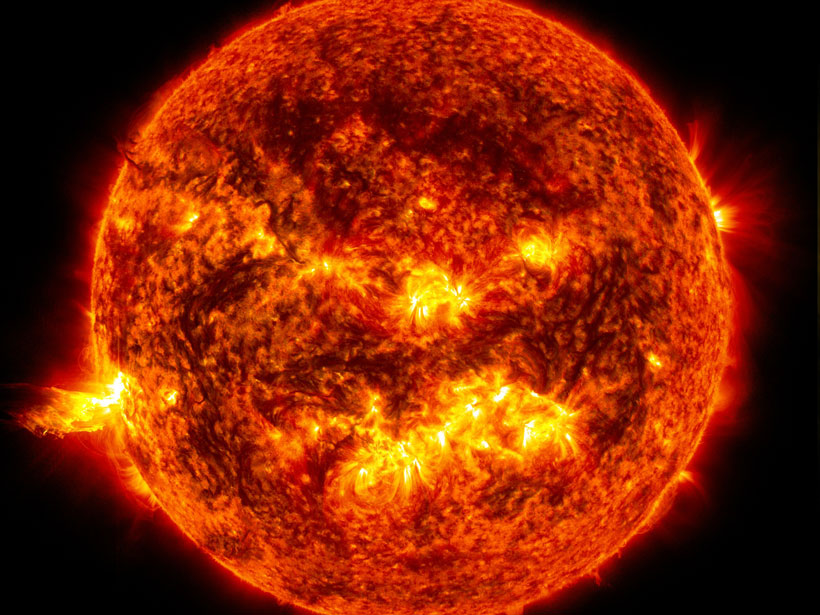
An active sun in June 2013
Posted inResearch Spotlights

How Accurate Are Our Measurements of the Sun’s Energy?

Elizabeth Thompson by Elizabeth Thompson 13 April 20206 December 2022

As instruments collecting solar data degrade, researchers must correct for errors. A new study compares several methods to correct solar spectral irradiance measurements.
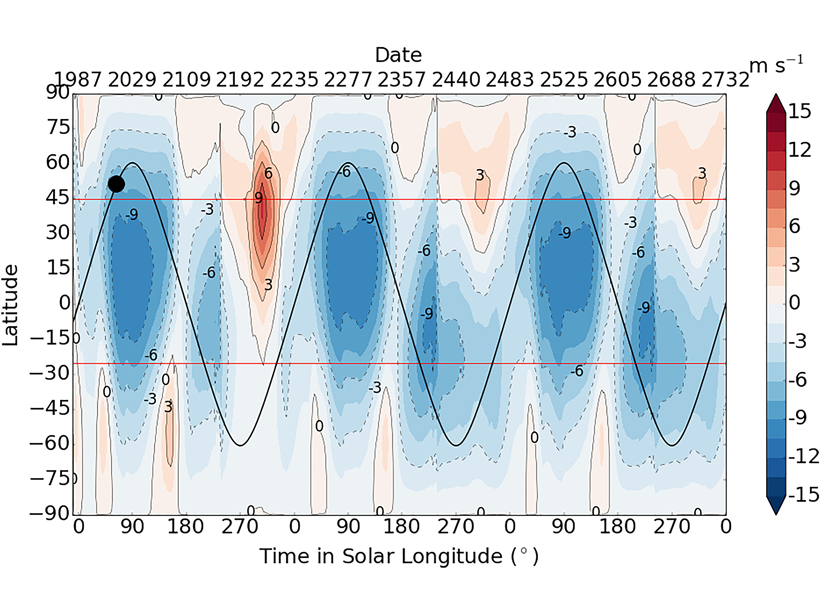
Figure showing the zonal winds in the upper atmosphere of Pluto as a function of season for three Pluto years.
Posted inEditors' Highlights

Capturing Pluto’s Heartbeat in a Computer

by Anni Määttänen 8 April 202017 February 2023

Unprecedented global climate model simulations, incorporating observational data from the New Horizons mission, reveal atmospheric circulations driven by a large ice cap on Pluto.

Illustration of an impact on Pluto
Posted inNews

Ancient Impact’s Seismic Waves Reveal Pluto’s Ocean, Core

JoAnna Wendel, freelance science writer and illustrator by JoAnna Wendel 6 April 202017 February 2023

By modeling the waves produced by a massive, ancient impact, scientists have begun to unlock the secrets of Pluto’s interior.

Artist’s illustration of the surface of the asteroid Psyche
Posted inResearch Spotlights

The Stuff That Psyche Is Made Of

Sarah Stanley, Science Writer by Sarah Stanley 6 April 202015 February 2022

The metallic asteroid Psyche appears to contain more rock than previously thought, shedding new light on possible scenarios for its formation in the early solar system.
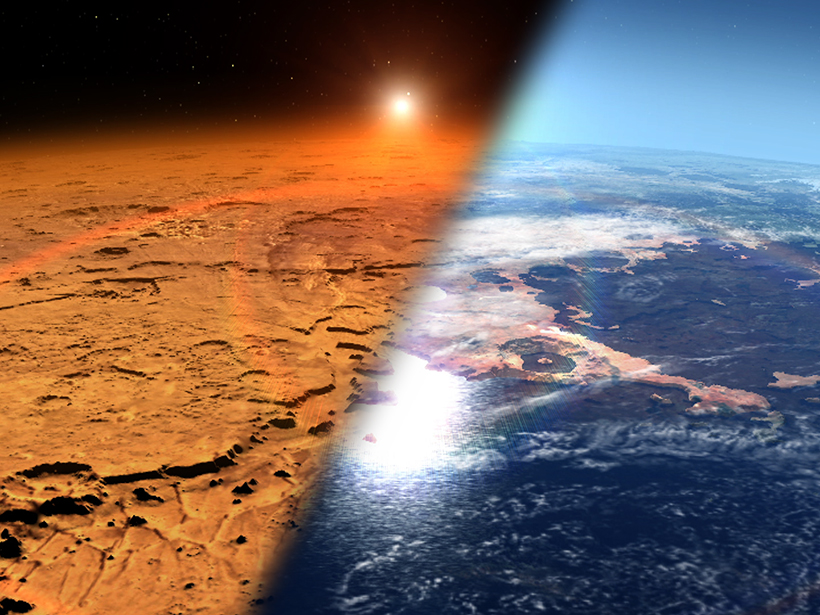
Side-by-side illustrations of a Martian horizon featuring a dry landscape and a wet landscape
Posted inResearch Spotlights

How Mars’s Magnetic Field Let Its Atmosphere Slip Away

by Mark Zastrow 31 March 202010 February 2023

A planet’s magnetic field usually protects its atmosphere from being blown away by its star. But new research suggests Mars’s weak magnetic field may have helped its atmosphere escape.

Satellite view of the Nili Patera dune field on Mars in 2014
Posted inResearch Spotlights

Mapping Martian Dunes from Orbit

by David Shultz 24 March 202028 July 2022

New research shows how fast the sands shift on the Red Planet and how useful imagery from different orbiting cameras can be in studies of Mars’s dunes.

Posts pagination

Newer posts 1 … 66 67 68 69 70 … 126 Older posts
Over a dark blue-green square appear the words Special Report: The State of the Science 1 Year On.

Features from AGU Publications

Research Spotlights

Solar Storms Can Affect Earth’s Weather. A New Study Examines How.

23 June 202623 June 2026
Editors' Highlights

Where Methane is Emitted Matters for Global Burden

18 June 202616 June 2026
Editors' Vox

Small-Scale Indian Ocean Dynamics Underpin Marine Ecology and Climate

4 June 20263 June 2026
Eos logo at left; AGU logo at right

About Eos
ENGAGE
Awards
Contact

Advertise
Submit
Career Center
Sitemap

© 2026 American Geophysical Union. All rights reserved Powered by Newspack