• About
  • Sections
  • Topics
    • Climate
    • Earth Science
    • Oceans
    • Space & Planets
    • Health & Ecosystems
    • Culture & Policy
    • Education & Careers
    • Opinions
  • Projects
    • Postcards From the Field
    • ENGAGE
    • Editors’ Highlights
    • Editors’ Vox
    • Eos en Español
    • Eos 简体中文版
    • Print Archive: 2015–2025
  • Science Policy Tracker
  • Blogs
    • Research & Developments
    • The Landslide Blog
  • Newsletter
  • Submit to Eos
  • AGU.org
  • Career Center
  • Join AGU
  • Give to AGU
  • About
  • Sections
  • Topics
    • Climate
    • Earth Science
    • Oceans
    • Space & Planets
    • Health & Ecosystems
    • Culture & Policy
    • Education & Careers
    • Opinions
  • Projects
    • Postcards From the Field
    • ENGAGE
    • Editors’ Highlights
    • Editors’ Vox
    • Eos en Español
    • Eos 简体中文版
    • Print Archive: 2015–2025
  • Science Policy Tracker
  • Blogs
    • Research & Developments
    • The Landslide Blog
  • Newsletter
  • Submit to Eos
Skip to content
  • AGU.org
  • Career Center
  • Join AGU
  • Give to AGU
Eos

Eos

Science News by AGU

Support Eos
Sign Up for Newsletter
  • About
  • Sections
  • Topics
    • Climate
    • Earth Science
    • Oceans
    • Space & Planets
    • Health & Ecosystems
    • Culture & Policy
    • Education & Careers
    • Opinions
  • Projects
    • Postcards From the Field
    • ENGAGE
    • Editors’ Highlights
    • Editors’ Vox
    • Eos en Español
    • Eos 简体中文版
    • Print Archive: 2015–2025
  • Science Policy Tracker
  • Blogs
    • Research & Developments
    • The Landslide Blog
  • Newsletter
  • Submit to Eos

Alka Tripathy-Lang

Alka Tripathy-Lang is a freelance science writer covering stories about Earth and environmental science. Alka holds a Ph.D. in geology from Arizona State University and conducted postdoctoral research at the Berkeley Geochronology Center.
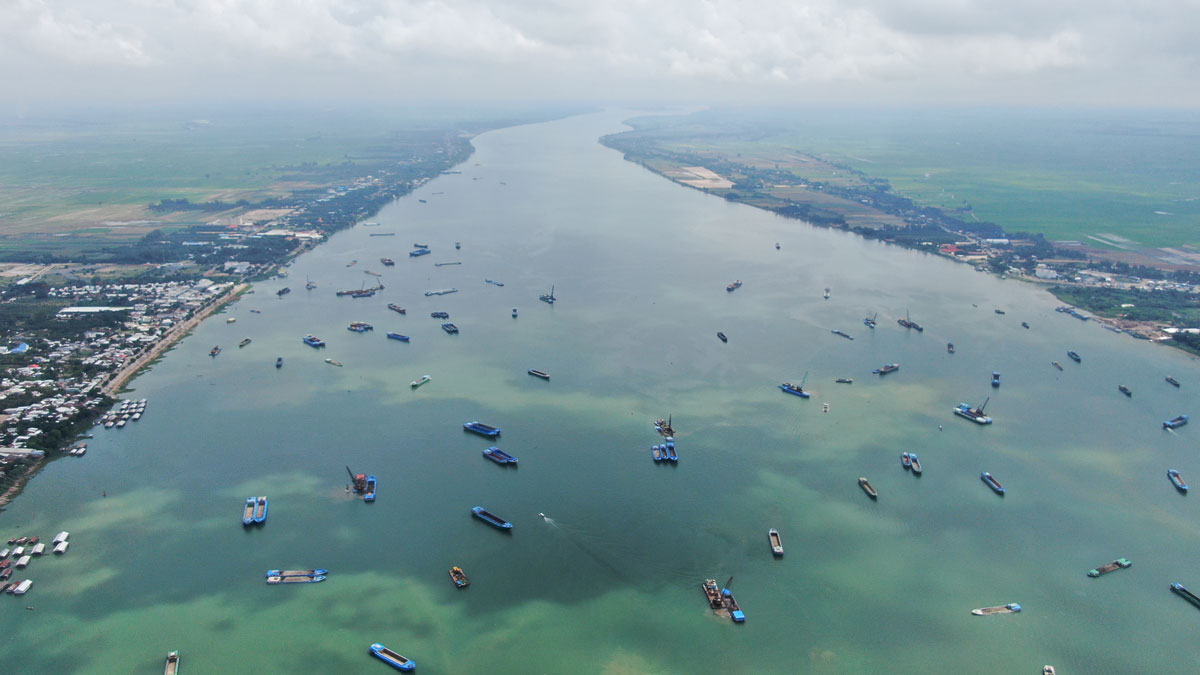
Under a cloudy sky, numerous blue-tipped sand mining ships dot the green-blue waters of the Mekong River.
Posted inNews

Satellites Spy on Sand Mining in the Mekong

by Alka Tripathy-Lang 21 December 202110 January 2022

Concrete, used in everything from streets to skyscrapers, needs sand, often mined from active rivers in developing countries with little oversight. Researchers can now use satellites to keep watch.

In the foreground sits a yellow-beige pond, with tree trunks scattered about its surface. Two dredges that appear to be made of wood float by the banks, smoke rising from between them. In the background, the green rain forest towers, the blue sky smudged with white smoke.
Posted inNews

Mercury-Based Gold Mining Haunts Peruvian Rain Forests

by Alka Tripathy-Lang 15 December 202115 December 2021

In Peru, gold mining harms rain forests and human health. Satellite data can now track forest recovery in protected areas and the migration of informal miners to less regulated areas.
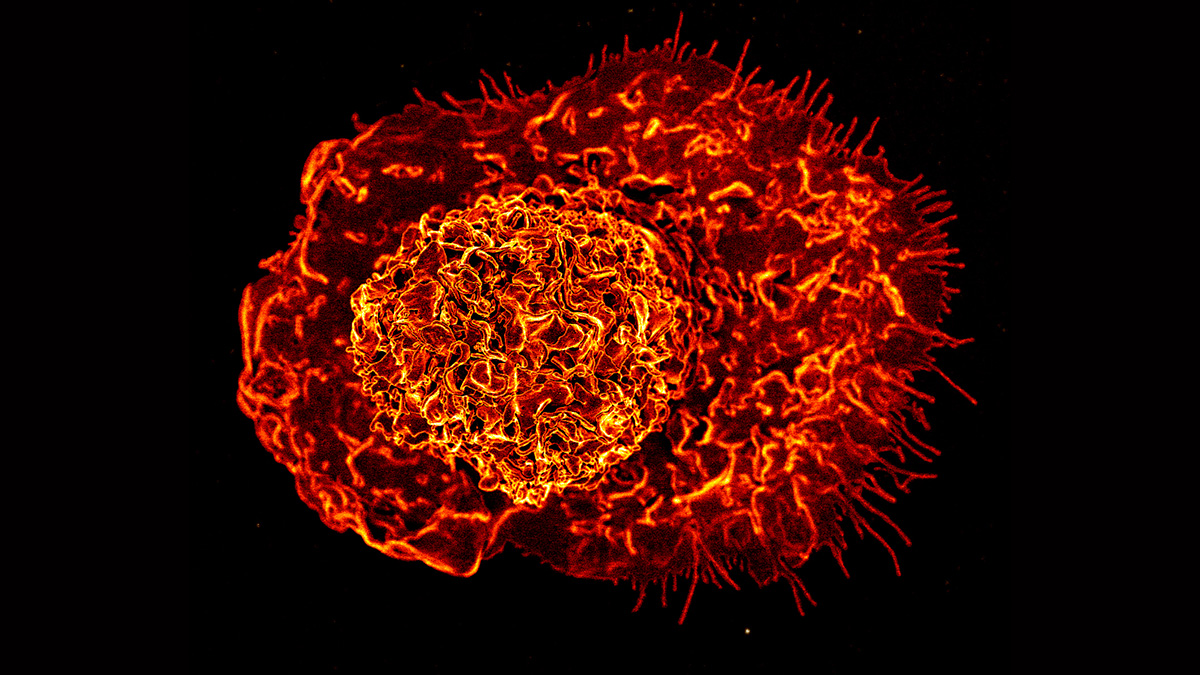
Colorized scanning electron micrograph of a macrophage
Posted inNews

Microplastics Morph Cell Metabolism

by Alka Tripathy-Lang 24 November 20214 October 2022

Microplastics get into our bodies, potentially altering how certain cells convert sugar into energy, especially in the gut. Continued ingestion could cause chronic problems.
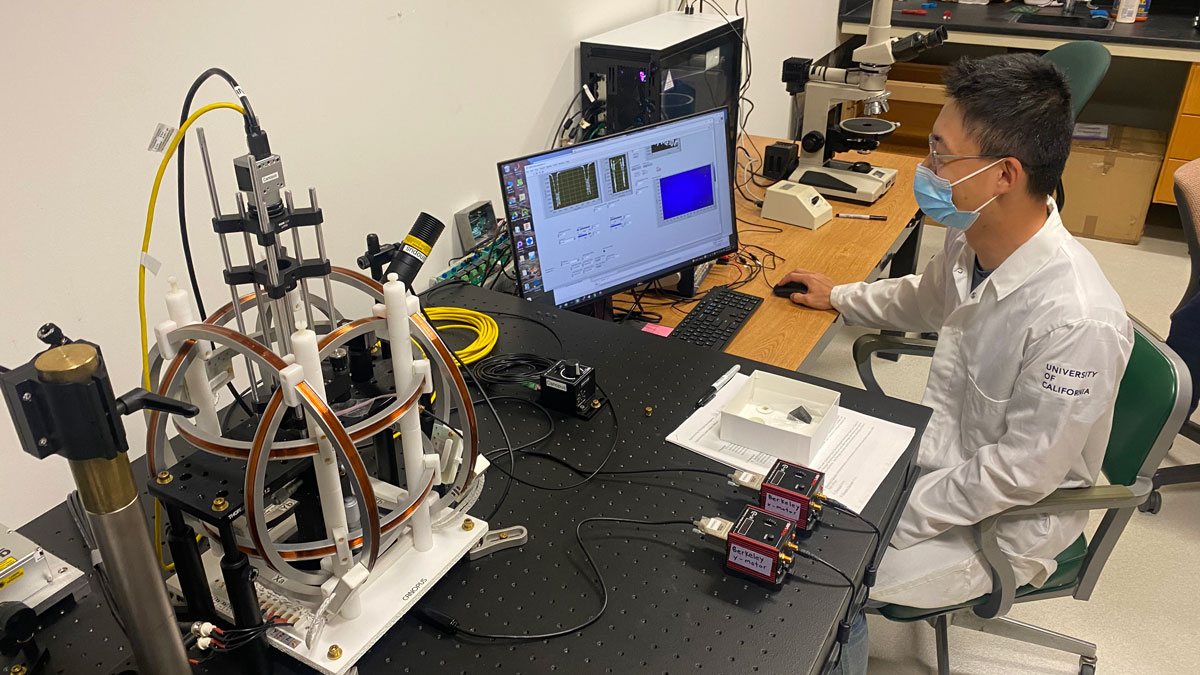
Wearing a white lab coat, Yiming Zhang, a doctoral student at the University of California, Berkeley, sits in front of a computer screen, examining data, with a mouse in his right hand. To his left, a gray microscope with four copper-colored rings encircling the stage perches on a black table.
Posted inNews

Diamonds Are a Paleomagnetist’s Best Friend

by Alka Tripathy-Lang 19 October 202114 March 2023

Typical paleomagnetic measurements average a sample’s signal. The quantum diamond microscope helps scientists make micrometer-scale maps of magnetism, showing where a sample locked in its magnetic signatures.

Against a blue sky streaked with white clouds, Michael Bunds runs along a dirt road as he lands a black fixed-wing drone. Chelsea Scott, wearing red, stands with her back to the photographer, watching the drone and looking at desert scrub in the foreground.
Posted inNews

Drone Rules Make Tracking Down Faults a Difficult Feat

by Alka Tripathy-Lang 6 October 202124 April 2024

Regulations differ from country to country, but on one point, they’re relatively uniform: Drones must remain within their operators’ line of sight. How do earthquake scientists collect drone data while working within the rules?

In the foreground, a pregnant woman wearing a multicolored dress stands near a street, holding her belly. Her face is not visible. In the background, a white car drives by.
Posted inNews

How Can Wristbands Monitor Pollution, PAHs, and Prenatal Care?

by Alka Tripathy-Lang 27 August 202130 March 2023

Silicone wristbands can help monitor pregnant women’s exposure to polycyclic aromatic hydrocarbons. Tracking these toxic chemicals, produced by combustion, could improve public health outcomes.

Jane, an anthropomorphized zircon crystal, complete with a face, arms, and legs, experiences stages of development in a magma chamber.
Posted inGeoFIZZ

Meet Jane, the Zircon Grain—Geochronology’s New Mascot

by Alka Tripathy-Lang 27 August 202130 March 2023

In a children’s book written by geochronologist Matthew Fox, he condenses 400 million years of history into 34 playfully poetic pages as he follows the travels of a single grain of sand.

White clouds swirl above blue ocean and green land as Tropical Storm Nepartak churns through the Pacific Ocean.
Posted inNews

Lightning Tames Typhoon Intensity Forecasting

by Alka Tripathy-Lang 20 August 202119 November 2021

Typhoons regularly drench densely populated western Pacific regions, but lightning could forecast intensity more than a day before a storm’s strength peaks.

Students and researchers performing measurements in a snow pit excavated to the ground in Grand Mesa, Colo.
Posted inNews

SnowSchool Spans the States

by Alka Tripathy-Lang 28 July 202114 April 2022

The nonprofit, donation-fueled program engages K–12 students by combining the fun of playing in snow with the science of the cryosphere.

In the center of a cross-polarized image, a purple-pink grain of muscovite with dark asymmetric kink bands lies within a matrix of much finer grained, rainbow-colored micas, as well as small black, white, and gray feldspar and quartz grains.
Posted inNews

Tiny Kinks Record Ancient Quakes

by Alka Tripathy-Lang 19 July 202114 September 2022

As Earth ruptures, micas kink. These kink bands hide in rocks millions of years old, preserving evidence of past quakes.

Posts pagination

Newer posts 1 2 3 4 5 6 Older posts
A view of a bridge, with the New Orleans skyline visible in the distance between the bridge and the water. A purple tint, a teal curved line representing a river, and the text “#AGU25 coverage from Eos” overlie the photo.

Features from AGU Publications

Research Spotlights

Denitrification Looks Different in Rivers Versus Streams

16 January 202616 January 2026
Editors' Highlights

Kyanite Exsolution Reveals Ultra-Deep Subduction of Continents

23 January 202622 January 2026
Editors' Vox

Bridging the Gap: Transforming Reliable Climate Data into Climate Policy

16 January 202616 January 2026
Eos logo at left; AGU logo at right

About Eos
ENGAGE
Awards
Contact

Advertise
Submit
Career Center
Sitemap

© 2026 American Geophysical Union. All rights reserved Powered by Newspack