• About
  • Special Reports
  • Topics
    • Climate
    • Earth Science
    • Oceans
    • Space & Planets
    • Health & Ecosystems
    • Culture & Policy
    • Education & Careers
    • Opinions
  • Projects
    • Postcards From the Field
    • ENGAGE
    • Editors’ Highlights
    • Editors’ Vox
    • Eos en Español
    • Eos 简体中文版
    • Print Archive: 2015–2025
  • Policy Tracker
  • Blogs
    • Research & Developments
    • The Landslide Blog
  • Newsletter
  • Submit to Eos
  • AGU.org
  • Career Center
  • Join AGU
  • Give to AGU
  • About
  • Special Reports
  • Topics
    • Climate
    • Earth Science
    • Oceans
    • Space & Planets
    • Health & Ecosystems
    • Culture & Policy
    • Education & Careers
    • Opinions
  • Projects
    • Postcards From the Field
    • ENGAGE
    • Editors’ Highlights
    • Editors’ Vox
    • Eos en Español
    • Eos 简体中文版
    • Print Archive: 2015–2025
  • Policy Tracker
  • Blogs
    • Research & Developments
    • The Landslide Blog
  • Newsletter
  • Submit to Eos
Skip to content
  • AGU.org
  • Career Center
  • Join AGU
  • Give to AGU
Eos

Eos

Science News by AGU

Support Eos
Sign Up for Newsletter
  • About
  • Special Reports
  • Topics
    • Climate
    • Earth Science
    • Oceans
    • Space & Planets
    • Health & Ecosystems
    • Culture & Policy
    • Education & Careers
    • Opinions
  • Projects
    • Postcards From the Field
    • ENGAGE
    • Editors’ Highlights
    • Editors’ Vox
    • Eos en Español
    • Eos 简体中文版
    • Print Archive: 2015–2025
  • Policy Tracker
  • Blogs
    • Research & Developments
    • The Landslide Blog
  • Newsletter
  • Submit to Eos

Fanni Daniella Szakal

R/V Mirai makes its way across Arctic sea ice.
Posted inNews

The Bottom of the Arctic Is Blooming

by Fanni Daniella Szakal 14 November 202217 November 2022

Researchers found phytoplankton hidden on the Arctic seafloor, hinting at a cascade of effects on the local ecology and carbon cycle.

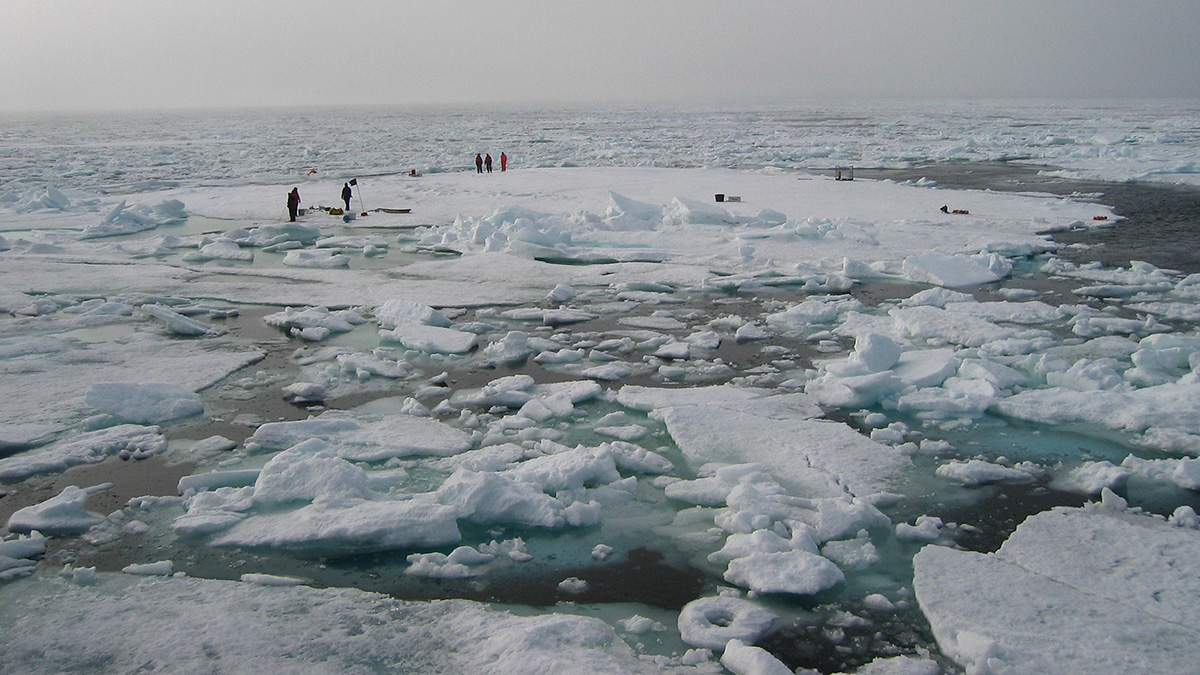
Scientists collect samples from algal mats dotting the surface of sea ice in the Arctic.
Posted inNews

Algal Mats May Be a Key to the Arctic Food Web

by Fanni Daniella Szakal 27 June 20226 January 2023

Melt ponds in sea ice have thriving algal communities with startlingly high levels of photosynthetic activity.

Image of gas hydrate cubes burning
Posted inNews

Forecasting Geohazards in the Age of Gas Hydrate Exploitation

by Fanni Daniella Szakal 3 November 202131 July 2023

A curious breath-like pattern exhibited by gas hydrates may help forecast hazards associated with extracting them from the seafloor.

Satellite image of the icy Sannikov Strait
Posted inNews

A Massive Methane Reservoir Is Lurking Beneath the Sea

by Fanni Daniella Szakal 27 April 202114 October 2021

Scientists have found a methane reservoir below the permafrost seabed of the Laptev Sea—a reservoir that could suddenly release large amounts of the potent greenhouse gas.

Over a dark blue-green square appear the words Special Report: The State of the Science 1 Year On.

Features from AGU Publications

Research Spotlights

As Wildfires Increase in the West, So Does Suppression Spending

10 June 202610 June 2026
Editors' Highlights

Soil Biogeochemistry Models Omit Key Processes Due to Geographic Bias

16 June 202616 June 2026
Editors' Vox

Small-Scale Indian Ocean Dynamics Underpin Marine Ecology and Climate

4 June 20263 June 2026
Eos logo at left; AGU logo at right

About Eos
ENGAGE
Awards
Contact

Advertise
Submit
Career Center
Sitemap

© 2026 American Geophysical Union. All rights reserved Powered by Newspack