• About
  • Special Reports
  • Topics
    • Climate
    • Earth Science
    • Oceans
    • Space & Planets
    • Health & Ecosystems
    • Culture & Policy
    • Education & Careers
    • Opinions
  • Projects
    • Postcards From the Field
    • ENGAGE
    • Editors’ Highlights
    • Editors’ Vox
    • Eos en Español
    • Eos 简体中文版
    • Print Archive: 2015–2025
  • Policy Tracker
  • Blogs
    • Research & Developments
    • The Landslide Blog
  • Newsletter
  • Submit to Eos
  • AGU.org
  • Career Center
  • Join AGU
  • Give to AGU
  • About
  • Special Reports
  • Topics
    • Climate
    • Earth Science
    • Oceans
    • Space & Planets
    • Health & Ecosystems
    • Culture & Policy
    • Education & Careers
    • Opinions
  • Projects
    • Postcards From the Field
    • ENGAGE
    • Editors’ Highlights
    • Editors’ Vox
    • Eos en Español
    • Eos 简体中文版
    • Print Archive: 2015–2025
  • Policy Tracker
  • Blogs
    • Research & Developments
    • The Landslide Blog
  • Newsletter
  • Submit to Eos
Skip to content
  • AGU.org
  • Career Center
  • Join AGU
  • Give to AGU
Eos

Eos

Science News by AGU

Support Eos
Sign Up for Newsletter
  • About
  • Special Reports
  • Topics
    • Climate
    • Earth Science
    • Oceans
    • Space & Planets
    • Health & Ecosystems
    • Culture & Policy
    • Education & Careers
    • Opinions
  • Projects
    • Postcards From the Field
    • ENGAGE
    • Editors’ Highlights
    • Editors’ Vox
    • Eos en Español
    • Eos 简体中文版
    • Print Archive: 2015–2025
  • Policy Tracker
  • Blogs
    • Research & Developments
    • The Landslide Blog
  • Newsletter
  • Submit to Eos

Brazil

The TROCAS team studied what happens to organic matter as it travels along the Amazon River.
Posted inScience Updates

The Amazon River’s Ecosystem: Where Land Meets the Sea

by N. D. Ward, H. O. Sawakuchi and J. E. Richey 18 January 201831 March 2023

What happens to plant matter on its journey down the Amazon River to the Atlantic Ocean? One research group investigated the region where river and ocean meet to fill in this part of the story.

Posted inResearch Spotlights

Can the North Brazil Current Help Us Understand Atlantic Water Flow?

by David Shultz 24 December 20152 July 2024

Currents off the coast of northern Brazil can be used to study changes in the larger oceanic circulation pattern in the Atlantic, when variable winds in the regions are properly accounted for.
Posted inResearch Spotlights

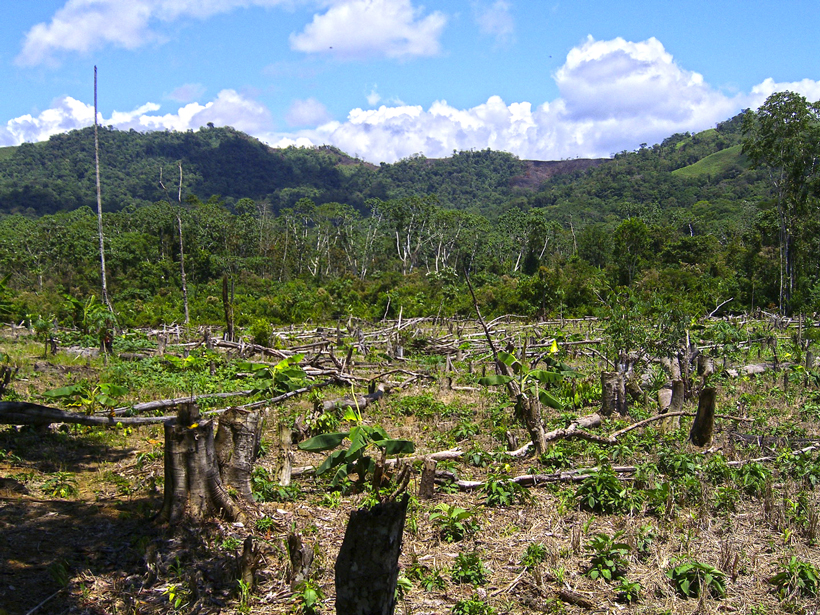
Could Amazonian Deforestation Increase Cloudiness and Rain?

by S. Palus 4 May 201529 April 2022

In trading trees for pastures, patchwork differences in vegetation heights increase cloudiness in downwind regions.

Posts pagination

Newer posts 1 … 5 6 7
Over a dark blue-green square appear the words Special Report: The State of the Science 1 Year On.

Features from AGU Publications

Research Spotlights

How Internal Waves Transport Energy Thousands of Miles Across the Ocean

26 March 202626 March 2026
Editors' Highlights

Simplified Noon-Temperature Calculations for Planetary Bodies   

26 March 202626 March 2026
Editors' Vox

The Future of Earth’s Future

24 March 202624 March 2026
Eos logo at left; AGU logo at right

About Eos
ENGAGE
Awards
Contact

Advertise
Submit
Career Center
Sitemap

© 2026 American Geophysical Union. All rights reserved Powered by Newspack