• About
  • Special Reports
  • Topics
    • Climate
    • Earth Science
    • Oceans
    • Space & Planets
    • Health & Ecosystems
    • Culture & Policy
    • Education & Careers
    • Opinions
  • Projects
    • Postcards From the Field
    • ENGAGE
    • Editors’ Highlights
    • Editors’ Vox
    • Eos en Español
    • Eos 简体中文版
    • Print Archive: 2015–2025
  • Policy Tracker
  • Blogs
    • Research & Developments
    • The Landslide Blog
  • Newsletter
  • Submit to Eos
  • AGU.org
  • Career Center
  • Join AGU
  • Give to AGU
  • About
  • Special Reports
  • Topics
    • Climate
    • Earth Science
    • Oceans
    • Space & Planets
    • Health & Ecosystems
    • Culture & Policy
    • Education & Careers
    • Opinions
  • Projects
    • Postcards From the Field
    • ENGAGE
    • Editors’ Highlights
    • Editors’ Vox
    • Eos en Español
    • Eos 简体中文版
    • Print Archive: 2015–2025
  • Policy Tracker
  • Blogs
    • Research & Developments
    • The Landslide Blog
  • Newsletter
  • Submit to Eos
Skip to content
  • AGU.org
  • Career Center
  • Join AGU
  • Give to AGU
Eos

Eos

Science News by AGU

Support Eos
Sign Up for Newsletter
  • About
  • Special Reports
  • Topics
    • Climate
    • Earth Science
    • Oceans
    • Space & Planets
    • Health & Ecosystems
    • Culture & Policy
    • Education & Careers
    • Opinions
  • Projects
    • Postcards From the Field
    • ENGAGE
    • Editors’ Highlights
    • Editors’ Vox
    • Eos en Español
    • Eos 简体中文版
    • Print Archive: 2015–2025
  • Policy Tracker
  • Blogs
    • Research & Developments
    • The Landslide Blog
  • Newsletter
  • Submit to Eos

British Columbia

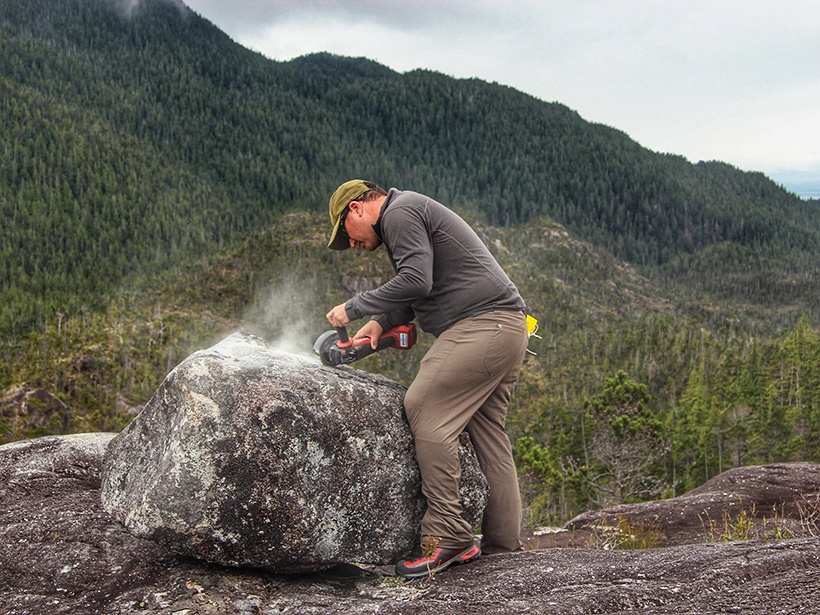
A researcher collects a rock sample for dating
Posted inResearch Spotlights

More Evidence Humans Migrated to the Americas via Coastal Route

by Terri Cook 7 February 201928 October 2022

A new chronology shows that ice-free areas existed along the British Columbia coast earlier than previously thought.

Southern Alaska’s Lisianski Inlet, near the site of a systematic survey of the Queen Charlotte-Fairweather Fault.
Posted inScience Updates

A Closer Look at an Undersea Source of Alaskan Earthquakes

by D. S. Brothers, P. Haeussler, Amy E. East, U. ten Brink, B. Andrews, P. Dartnell, N. Miller and J. Kluesner 15 August 20178 November 2021

A systematic survey offers a striking portrait of movement along a 500-kilometer-long undersea section of the Queen Charlotte–Fairweather fault off the coast of southeastern Alaska.
Posted inNews

Assessing Earthquake Risks in the Pacific Northwest

by Randy Showstack 28 October 201428 October 2022

While megaquakes occasionally occur along the Cascadia margin, smaller but more frequent crustal earthquakes are a more immediate threat, according to a natural hazards expert.

Posted inScience Updates

Detecting Near-Field Tsunamis off the Coast of British Columbia

by T. L. Insua and K. Moran 16 September 201428 October 2022

A Near-Field Tsunami Initiative for the Coast of British Columbia;
Port Alberni, British Columbia, 27–28 March 2014

Posts pagination

Newer posts 1 2
Over a dark blue-green square appear the words Special Report: The State of the Science 1 Year On.

Features from AGU Publications

Research Spotlights

Patchier Permafrost Is Linked to More Intense Hillslope Erosion

14 October 202614 October 2026
Editors' Highlights

Limits of Satellite Detection of Extreme Carbon Cycle Events

7 October 20267 October 2026
Editors' Vox

Where Fire Ends, Chemistry Begins

30 September 202630 September 2026
Eos logo at left; AGU logo at right

About Eos
ENGAGE
Awards
Contact

Advertise
Submit
Career Center
Sitemap

© 2026 American Geophysical Union. All rights reserved Powered by Newspack