• About
  • Special Reports
  • Topics
    • Climate
    • Earth Science
    • Oceans
    • Space & Planets
    • Health & Ecosystems
    • Culture & Policy
    • Education & Careers
    • Opinions
  • Projects
    • Postcards From the Field
    • ENGAGE
    • Editors’ Highlights
    • Editors’ Vox
    • Eos en Español
    • Eos 简体中文版
    • Print Archive: 2015–2025
  • Policy Tracker
  • Blogs
    • Research & Developments
    • The Landslide Blog
  • Newsletter
  • Submit to Eos
  • AGU.org
  • Career Center
  • Join AGU
  • Give to AGU
  • About
  • Special Reports
  • Topics
    • Climate
    • Earth Science
    • Oceans
    • Space & Planets
    • Health & Ecosystems
    • Culture & Policy
    • Education & Careers
    • Opinions
  • Projects
    • Postcards From the Field
    • ENGAGE
    • Editors’ Highlights
    • Editors’ Vox
    • Eos en Español
    • Eos 简体中文版
    • Print Archive: 2015–2025
  • Policy Tracker
  • Blogs
    • Research & Developments
    • The Landslide Blog
  • Newsletter
  • Submit to Eos
Skip to content
  • AGU.org
  • Career Center
  • Join AGU
  • Give to AGU
Eos

Eos

Science News by AGU

Support Eos
Sign Up for Newsletter
  • About
  • Special Reports
  • Topics
    • Climate
    • Earth Science
    • Oceans
    • Space & Planets
    • Health & Ecosystems
    • Culture & Policy
    • Education & Careers
    • Opinions
  • Projects
    • Postcards From the Field
    • ENGAGE
    • Editors’ Highlights
    • Editors’ Vox
    • Eos en Español
    • Eos 简体中文版
    • Print Archive: 2015–2025
  • Policy Tracker
  • Blogs
    • Research & Developments
    • The Landslide Blog
  • Newsletter
  • Submit to Eos

eclogites

Close-up of an outcrop of an eclogite from the Monviso area of Italy showing a vug, or hole, containing red garnet crystals and green pyroxene crystals.
Posted inNews

Holey Eclogite!

by Alka Tripathy-Lang 1 July 202215 November 2022

Scientists have found holes filled with minerals that indicate fluid-filled pores exist many tens of kilometers below Earth’s surface. But no, The Core fans, you still can’t get amethyst-laden geodes in the mantle.

Posted inEditors' Highlights

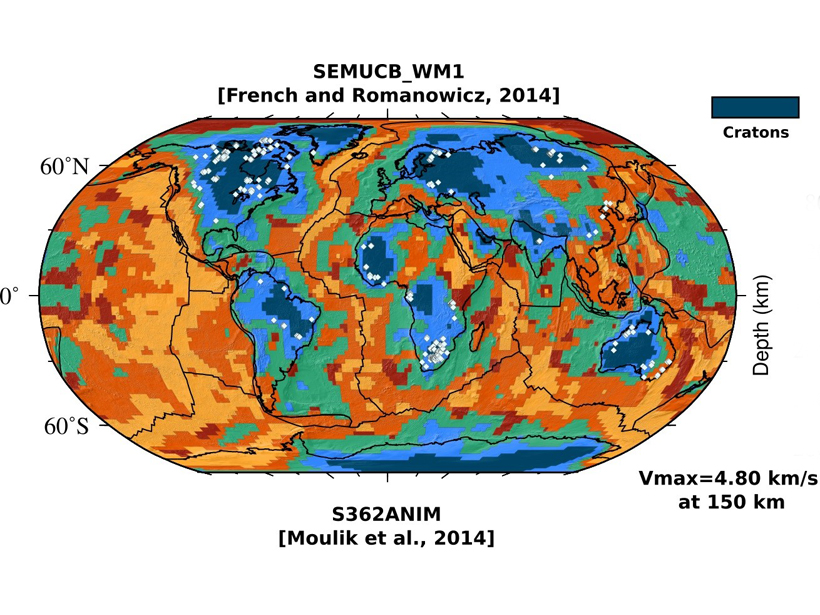
Are Diamonds Ubiquitous Beneath Old Stable Continents?

by Sergei Lebedev 7 August 20182 March 2023

Although rare at the Earth’s surface, diamonds may be commonplace at depths of 120 to 150 kilometers below the surface within the lithosphere of old continents.

Posted inResearch Spotlights

Variable Mantle Lies Below Ancient Pieces of Earth's Crust

Cody Sullivan by C. Sullivan 16 March 20164 August 2023

Underneath old and stable pieces of Earth's crust in North America, the mantle's uppermost portion contains multiple layers that change the velocities of seismic waves.
Posted inResearch Spotlights

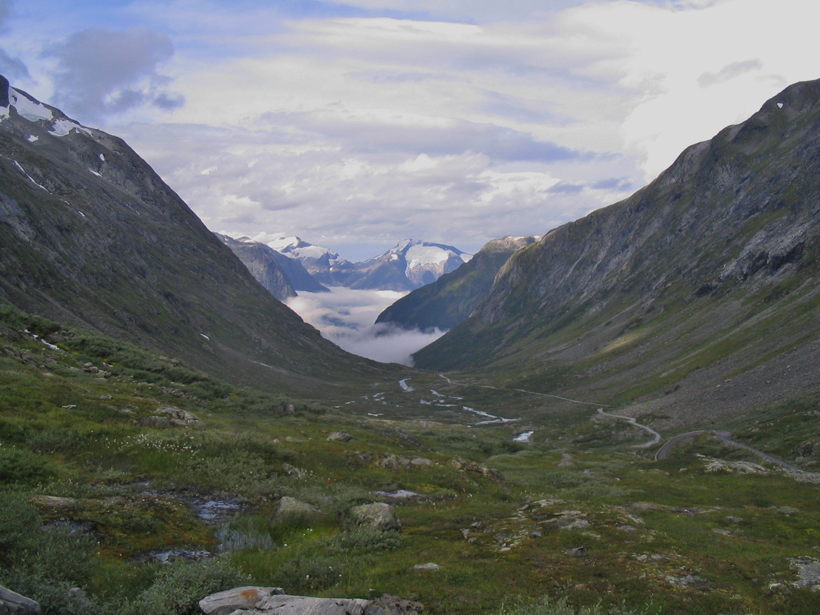
New Insights into the Formation of Old Norwegian Mountains

by S. Palus 8 May 20152 March 2023

Researchers look to minerals in rocks from Norway's Western Gneiss Region to determine when the mountain-making period came to a close in the region.

Over a dark blue-green square appear the words Special Report: The State of the Science 1 Year On.

Features from AGU Publications

Research Spotlights

New Method Could Improve U.S. Forecasting of West Nile Virus

20 February 202620 February 2026
Editors' Highlights

Why More Rain Doesn’t Mean More Erosion in Mountains

20 February 202620 February 2026
Editors' Vox

A Double-Edged Sword: The Global Oxychlorine Cycle on Mars

10 February 202610 February 2026
Eos logo at left; AGU logo at right

About Eos
ENGAGE
Awards
Contact

Advertise
Submit
Career Center
Sitemap

© 2026 American Geophysical Union. All rights reserved Powered by Newspack