• About
  • Special Reports
  • Topics
    • Climate
    • Earth Science
    • Oceans
    • Space & Planets
    • Health & Ecosystems
    • Culture & Policy
    • Education & Careers
    • Opinions
  • Projects
    • Postcards From the Field
    • ENGAGE
    • Editors’ Highlights
    • Editors’ Vox
    • Eos en Español
    • Eos 简体中文版
    • Print Archive: 2015–2025
  • Policy Tracker
  • Blogs
    • Research & Developments
    • The Landslide Blog
  • Newsletter
  • Submit to Eos
  • AGU.org
  • Career Center
  • Join AGU
  • Give to AGU
  • About
  • Special Reports
  • Topics
    • Climate
    • Earth Science
    • Oceans
    • Space & Planets
    • Health & Ecosystems
    • Culture & Policy
    • Education & Careers
    • Opinions
  • Projects
    • Postcards From the Field
    • ENGAGE
    • Editors’ Highlights
    • Editors’ Vox
    • Eos en Español
    • Eos 简体中文版
    • Print Archive: 2015–2025
  • Policy Tracker
  • Blogs
    • Research & Developments
    • The Landslide Blog
  • Newsletter
  • Submit to Eos
Skip to content
  • AGU.org
  • Career Center
  • Join AGU
  • Give to AGU
Eos

Eos

Science News by AGU

Support Eos
Sign Up for Newsletter
  • About
  • Special Reports
  • Topics
    • Climate
    • Earth Science
    • Oceans
    • Space & Planets
    • Health & Ecosystems
    • Culture & Policy
    • Education & Careers
    • Opinions
  • Projects
    • Postcards From the Field
    • ENGAGE
    • Editors’ Highlights
    • Editors’ Vox
    • Eos en Español
    • Eos 简体中文版
    • Print Archive: 2015–2025
  • Policy Tracker
  • Blogs
    • Research & Developments
    • The Landslide Blog
  • Newsletter
  • Submit to Eos

Jupiter

Posted inResearch Spotlights

What Makes Jupiter's Aurora Pulse?

by Mark Zastrow 13 November 20154 May 2022

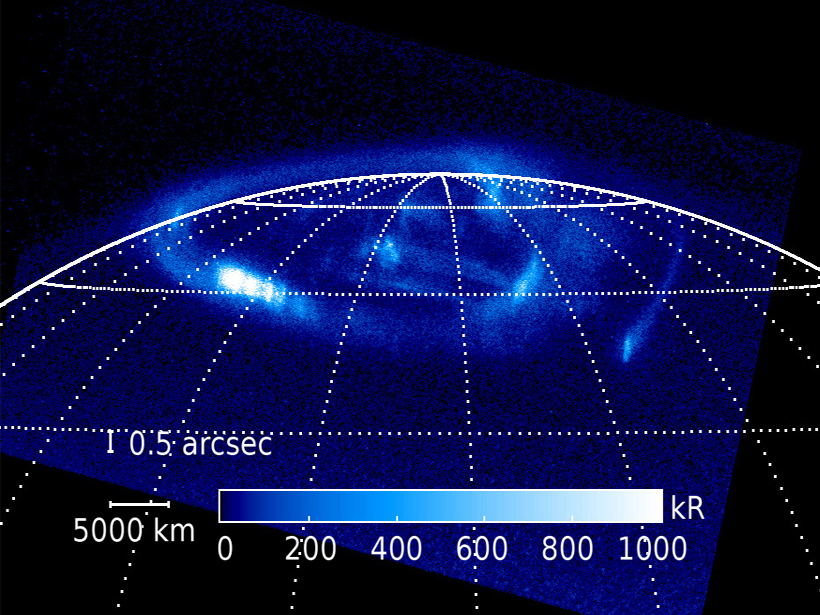
The aurora crowning Jupiter's poles—the most powerful in the solar system—flares up when plasma is injected into its magnetic field.
Posted inResearch Spotlights

How Powerful Is Jupiter's Aurora?

by Mark Zastrow 8 September 201511 August 2022

Scientists have mapped Jupiter's spectacular aurora in unprecedented detail with the Hubble Space Telescope.
Posted inResearch Spotlights

Gaseous Planets May Have Huge Luminous Rings Caused by Lightning

by Mark Zastrow 15 July 201513 April 2023

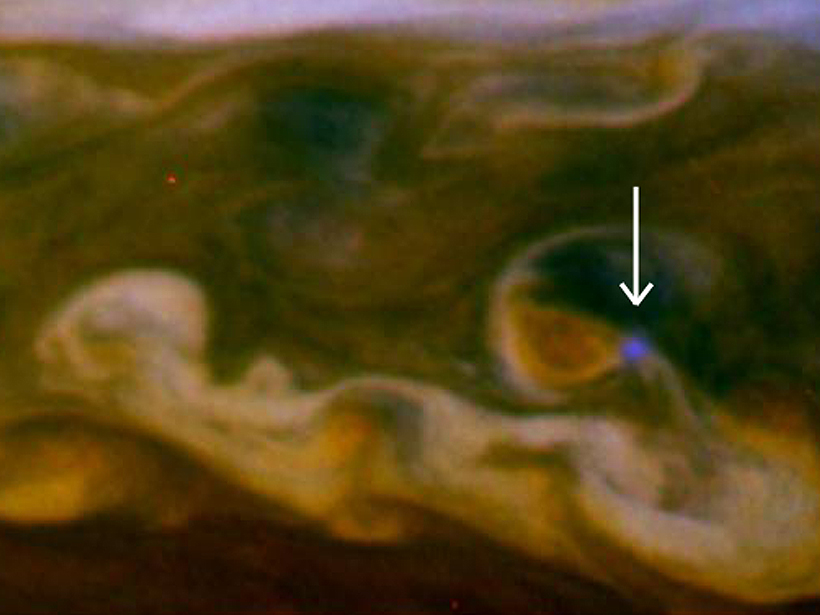
What business do elves have in the upper atmospheres of gas giants? Plenty, it seems. The enormous ring-shaped phenomena triggered by lightning may occur on Jupiter, Saturn, and exoplanets.

Posts pagination

Newer posts 1 … 5 6 7
Over a dark blue-green square appear the words Special Report: The State of the Science 1 Year On.

Features from AGU Publications

Research Spotlights

Sea Turtles, Shrinking Beaches, and Rising Seas

16 March 202616 March 2026
Editors' Highlights

Long-Term and Recent Activity of the Brenner Fault Finally Reconciled

19 March 202619 March 2026
Editors' Vox

Rates of Mineral Dissolution from the Flask to Enhanced Weathering

20 March 202619 March 2026
Eos logo at left; AGU logo at right

About Eos
ENGAGE
Awards
Contact

Advertise
Submit
Career Center
Sitemap

© 2026 American Geophysical Union. All rights reserved Powered by Newspack