• About
  • Sections
  • Topics
    • Climate
    • Earth Science
    • Oceans
    • Space & Planets
    • Health & Ecosystems
    • Culture & Policy
    • Education & Careers
    • Opinions
  • Projects
    • ENGAGE
    • Editors’ Highlights
    • Editors’ Vox
    • Eos en Español
    • Eos 简体中文版
    • Print Archive
  • Science Policy Tracker
  • Blogs
    • Research & Developments
    • The Landslide Blog
  • Newsletter
  • Submit to Eos
  • AGU.org
  • Career Center
  • Join AGU
  • Give to AGU
  • About
  • Sections
  • Topics
    • Climate
    • Earth Science
    • Oceans
    • Space & Planets
    • Health & Ecosystems
    • Culture & Policy
    • Education & Careers
    • Opinions
  • Projects
    • ENGAGE
    • Editors’ Highlights
    • Editors’ Vox
    • Eos en Español
    • Eos 简体中文版
    • Print Archive
  • Science Policy Tracker
  • Blogs
    • Research & Developments
    • The Landslide Blog
  • Newsletter
  • Submit to Eos
Skip to content
  • AGU.org
  • Career Center
  • Join AGU
  • Give to AGU
Eos

Eos

Science News by AGU

Support Eos
Sign Up for Newsletter
  • About
  • Sections
  • Topics
    • Climate
    • Earth Science
    • Oceans
    • Space & Planets
    • Health & Ecosystems
    • Culture & Policy
    • Education & Careers
    • Opinions
  • Projects
    • ENGAGE
    • Editors’ Highlights
    • Editors’ Vox
    • Eos en Español
    • Eos 简体中文版
    • Print Archive
  • Science Policy Tracker
  • Blogs
    • Research & Developments
    • The Landslide Blog
  • Newsletter
  • Submit to Eos

lithosphere

Different scenarios influencing plate thickness
Posted inEditors' Highlights

Frequency Dependent Plates

by Thorsten W. Becker 16 October 202030 September 2022

Rocks stretch, break, and flow, depending on how and under which conditions they are loaded. A new formulation to better capture Earth’s rheology is explored in the context of plate thickness.
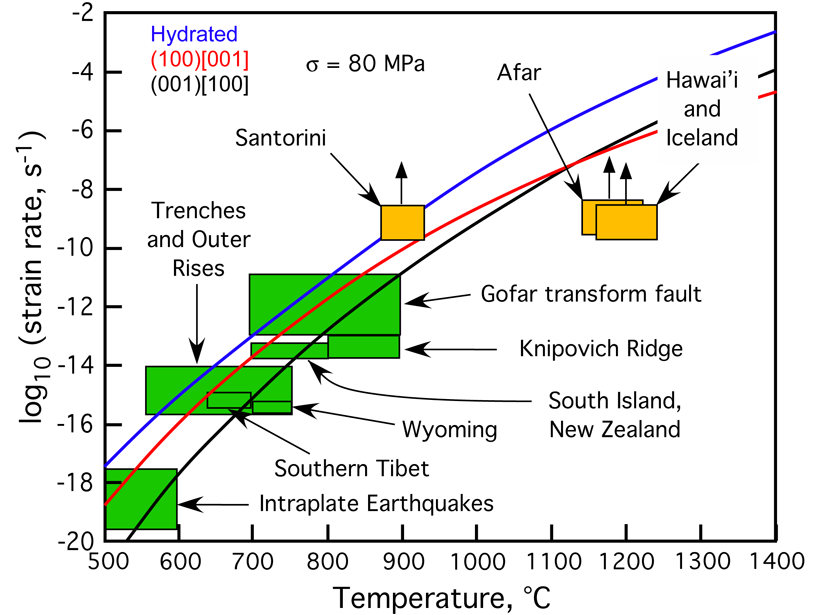
A plot showing the calculated ranges of temperature and strain rate at which earthquakes occur, based on the depth range of earthquakes recorded by local networks of land or ocean bottom seismometers
Posted inEditors' Highlights

Strain Rate: The Overlooked Control on Earthquake Depth

by R. E. Abercrombie and J. Escartin 20 August 20201 October 2021

Regional strain rate may play as significant a role as temperature in governing the depth distribution of earthquakes in mantle lithosphere.
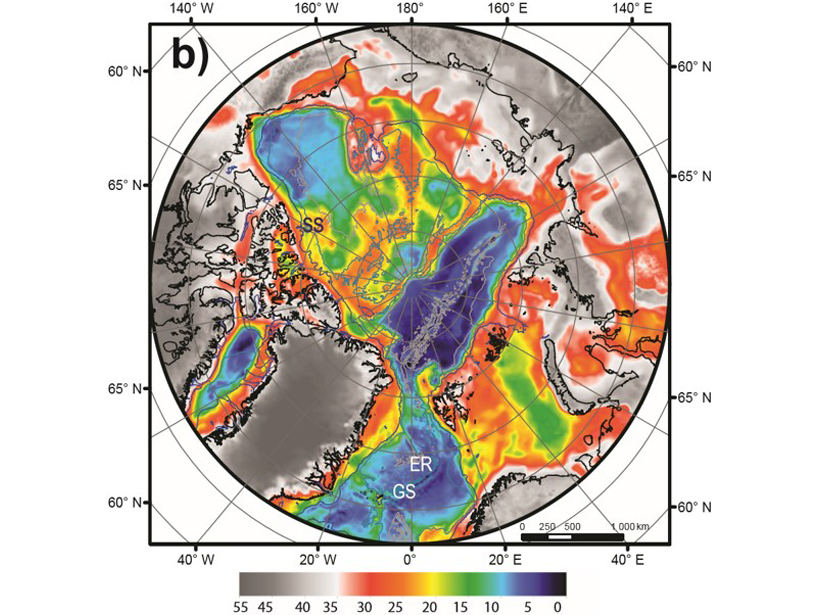
Figuring showing thickness of the crust in the High Arctic and Circum-Arctic regions
Posted inEditors' Highlights

Revealing the Arctic Crust

by Claudio Faccenna 25 July 201924 March 2023

A new model, ArcCRUST, reveals with unprecedent resolution the geometry and the thermal state of the oceanic crust of the High Arctic and Circum-Arctic domain.
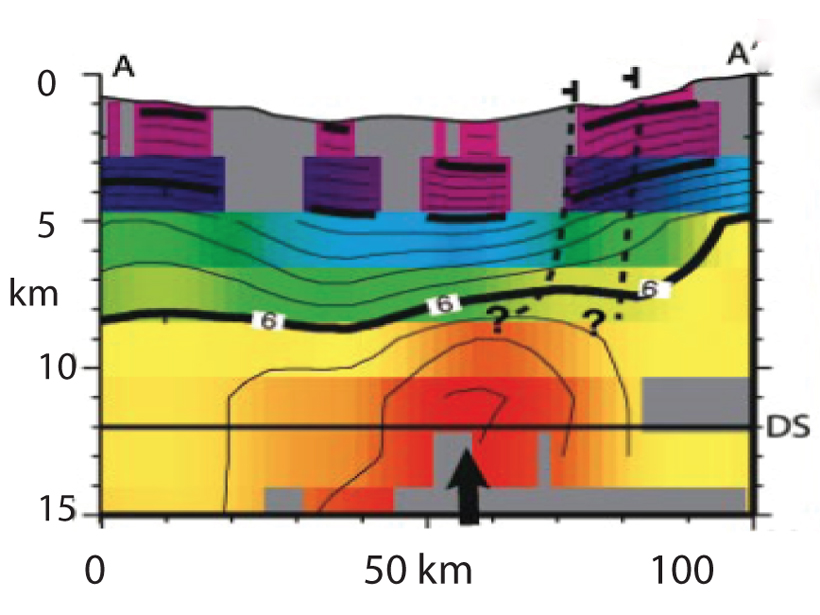
Posted inEditors' Highlights

The Many Magmatic Modifications to the African Continent

by J. Geissman 9 January 20185 October 2022

How the very slow moving African Continent, with a lithosphere of quite varied age elements and thickness, has responded to ongoing asthenospheric modification.

Posted inAGU News

Booker Receives 2017 William Gilbert Award

by AGU 25 October 201718 April 2023

John R. Booker will receive the 2017 William Gilbert Award at the 2017 American Geophysical Union Fall Meeting, to be held 11–15 December in New Orleans, La. The award recognizes “outstanding and unselfish work in magnetism of Earth materials and of the Earth and planets.”

Posted inAGU News

Behr Receives 2016 Jason Morgan Early Career Award

by AGU 1 November 201621 April 2023

Whitney Behr will receive the 2016 Jason Morgan Early Career Award at the 2016 American Geophysical Union Fall Meeting, to be held 12–16 December in San Francisco, Calif. The award is for significant early-career contributions in Tectonophysics.
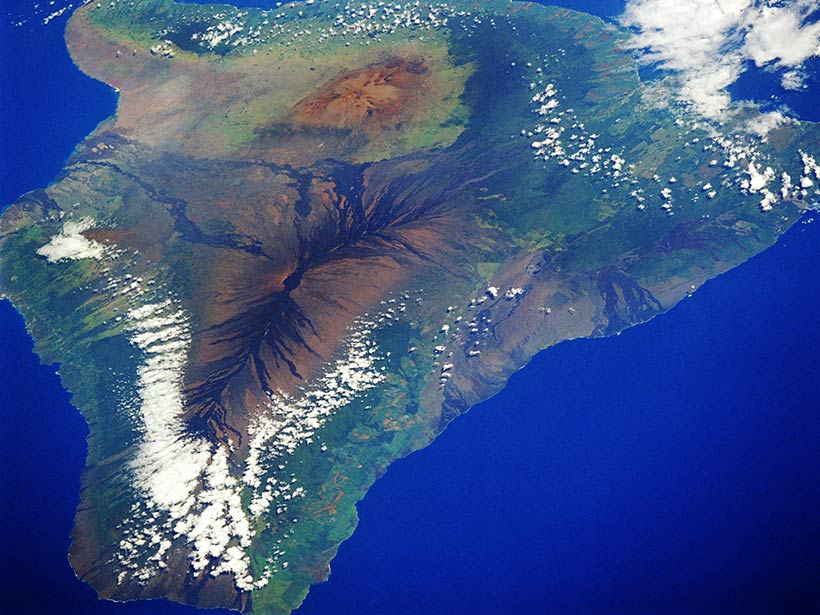
Satellite image of the island of Hawaii.
Posted inResearch Spotlights

A Hole in Earth’s Surface

by W. Yan 26 April 20169 November 2022

Research shows that a broken lithosphere underneath the island of Hawai'i could explain the island's patterns of seismic activity.

Posted inResearch Spotlights

Aftershocks of Old Quakes Still Shake New Madrid Seismic Zone

by L. Strelich 24 November 201518 October 2022

Geodetic data show that earthquakes in 1450 and 1811–1812 may be responsible for present-day seismic activity in the region.

Posted inAGU News

Bryan L. Isacks Receives 2014 Walter H. Bucher Medal

by AGU 8 January 201522 May 2023

Bryan L. Isacks was awarded the 2014 Walter H. Bucher Medal at the AGU Fall Meeting Honors Ceremony, held on 17 December 2014 in San Francisco, Calif. The medal is for “original contributions to the basic knowledge of the crust and lithosphere.”

Posts pagination

Newer posts 1 2 3 4
A view of a bridge, with the New Orleans skyline visible in the distance between the bridge and the water. A purple tint, a teal curved line representing a river, and the text “#AGU25 coverage from Eos” overlie the photo.

Features from AGU Publications

Research Spotlights

Watershed Sustainability Project Centers Place-Based Research

4 December 20254 December 2025
Editors' Highlights

Changes in Slab Dip Cause Rapid Changes in Plate Motion

4 December 20252 December 2025
Editors' Vox

Hydrothermal Circulation and Its Impact on the Earth System

3 December 20253 December 2025
Eos logo at left; AGU logo at right

About Eos
ENGAGE
Awards
Contact

Advertise
Submit
Career Center
Sitemap

© 2025 American Geophysical Union. All rights reserved Powered by Newspack