• About
  • Special Reports
  • Topics
    • Climate
    • Earth Science
    • Oceans
    • Space & Planets
    • Health & Ecosystems
    • Culture & Policy
    • Education & Careers
    • Opinions
  • Projects
    • Postcards From the Field
    • ENGAGE
    • Editors’ Highlights
    • Editors’ Vox
    • Eos en Español
    • Eos 简体中文版
    • Print Archive: 2015–2025
  • Policy Tracker
  • Blogs
    • Research & Developments
    • The Landslide Blog
  • Newsletter
  • Submit to Eos
  • AGU.org
  • Career Center
  • Join AGU
  • Give to AGU
  • About
  • Special Reports
  • Topics
    • Climate
    • Earth Science
    • Oceans
    • Space & Planets
    • Health & Ecosystems
    • Culture & Policy
    • Education & Careers
    • Opinions
  • Projects
    • Postcards From the Field
    • ENGAGE
    • Editors’ Highlights
    • Editors’ Vox
    • Eos en Español
    • Eos 简体中文版
    • Print Archive: 2015–2025
  • Policy Tracker
  • Blogs
    • Research & Developments
    • The Landslide Blog
  • Newsletter
  • Submit to Eos
Skip to content
  • AGU.org
  • Career Center
  • Join AGU
  • Give to AGU
Eos

Eos

Science News by AGU

Support Eos
Sign Up for Newsletter
  • About
  • Special Reports
  • Topics
    • Climate
    • Earth Science
    • Oceans
    • Space & Planets
    • Health & Ecosystems
    • Culture & Policy
    • Education & Careers
    • Opinions
  • Projects
    • Postcards From the Field
    • ENGAGE
    • Editors’ Highlights
    • Editors’ Vox
    • Eos en Español
    • Eos 简体中文版
    • Print Archive: 2015–2025
  • Policy Tracker
  • Blogs
    • Research & Developments
    • The Landslide Blog
  • Newsletter
  • Submit to Eos

Yellowstone

Posted inScience Updates

Studying Yellowstone by Integrating Deep Carbon Science

by S. M. Morrison, M. Pistone and L. Kohl 23 June 201722 February 2022

Second Deep Carbon Observatory Summer School; Yellowstone National Park, Montana and Wyoming, 23–28 July 2016

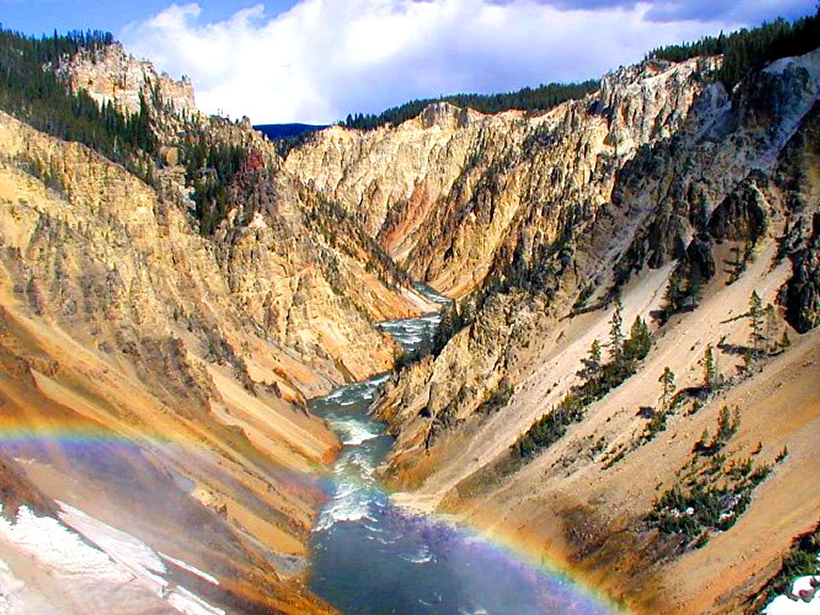
View of the Grand Canyon of Yellowstone National Park
Posted inNews

Pinpointing the Trigger Behind Yellowstone's Last Supereruption

by A. Woodward 4 January 201712 September 2022

Geologists suggest that mixing of magma melt pockets could have caused the explosion a little more than 600,000 years ago.

Yellowstone-National-Park-beehive-geyser
Posted inNews

Can Carbon Dioxide Trigger Geyser Eruptions?

JoAnna Wendel, freelance science writer and illustrator by JoAnna Wendel 16 March 20166 October 2022

Researchers looking at geyser discharge water in Yellowstone National Park found that dissolved carbon dioxide could be involved in a geyser's eruption.

Posts pagination

Newer posts 1 2
Over a dark blue-green square appear the words Special Report: The State of the Science 1 Year On.

Features from AGU Publications

Research Spotlights

In Alaska, Wildfires Help Prevent Future Burns. Will That Feedback Loop Hold?

24 September 202625 September 2026
Editors' Highlights

Reducing Uncertainty in Groundwater Models Using Airborne Geophysics

28 September 202625 September 2026
Editors' Vox

Where Fire Ends, Chemistry Begins

30 September 202630 September 2026
Eos logo at left; AGU logo at right

About Eos
ENGAGE
Awards
Contact

Advertise
Submit
Career Center
Sitemap

© 2026 American Geophysical Union. All rights reserved Powered by Newspack