• About
  • Special Reports
  • Topics
    • Climate
    • Earth Science
    • Oceans
    • Space & Planets
    • Health & Ecosystems
    • Culture & Policy
    • Education & Careers
    • Opinions
  • Projects
    • Postcards From the Field
    • ENGAGE
    • Editors’ Highlights
    • Editors’ Vox
    • Eos en Español
    • Eos 简体中文版
    • Print Archive: 2015–2025
  • Policy Tracker
  • Blogs
    • Research & Developments
    • The Landslide Blog
  • Newsletter
  • Submit to Eos
  • AGU.org
  • Career Center
  • Join AGU
  • Give to AGU
  • About
  • Special Reports
  • Topics
    • Climate
    • Earth Science
    • Oceans
    • Space & Planets
    • Health & Ecosystems
    • Culture & Policy
    • Education & Careers
    • Opinions
  • Projects
    • Postcards From the Field
    • ENGAGE
    • Editors’ Highlights
    • Editors’ Vox
    • Eos en Español
    • Eos 简体中文版
    • Print Archive: 2015–2025
  • Policy Tracker
  • Blogs
    • Research & Developments
    • The Landslide Blog
  • Newsletter
  • Submit to Eos
Skip to content
  • AGU.org
  • Career Center
  • Join AGU
  • Give to AGU
Eos

Eos

Science News by AGU

Support Eos
Sign Up for Newsletter
  • About
  • Special Reports
  • Topics
    • Climate
    • Earth Science
    • Oceans
    • Space & Planets
    • Health & Ecosystems
    • Culture & Policy
    • Education & Careers
    • Opinions
  • Projects
    • Postcards From the Field
    • ENGAGE
    • Editors’ Highlights
    • Editors’ Vox
    • Eos en Español
    • Eos 简体中文版
    • Print Archive: 2015–2025
  • Policy Tracker
  • Blogs
    • Research & Developments
    • The Landslide Blog
  • Newsletter
  • Submit to Eos
Katherine Kornei, Science Writer

Katherine Kornei

Katherine Kornei is a freelance science journalist covering Earth and space science. Her bylines frequently appear in Eos, Science, and The New York Times. Katherine holds a Ph.D. in astronomy from the University of California, Los Angeles.
Copper engraving of Lisbon, Portugal, during 1755 earthquake.
Posted inNews

Caribbean Sediment Traced to 1755 Portuguese Quake and Tsunami

Katherine Kornei, Science Writer by Katherine Kornei 19 September 201731 October 2024

Archaeologists digging in Martinique chanced upon the first tsunami deposit from the earthquake found in the New World. The tsunami left a strong trace, it seems, because the wave went up a river.

Artist's rendering of asteroid.
Posted inNews

Big Space Rock to Pass near Earth on Friday

Katherine Kornei, Science Writer by Katherine Kornei 31 August 201710 October 2021

An asteroid named for Florence Nightingale will make its closest approach to our planet since 1890 but will remain a safe distance away.
Posted inNews

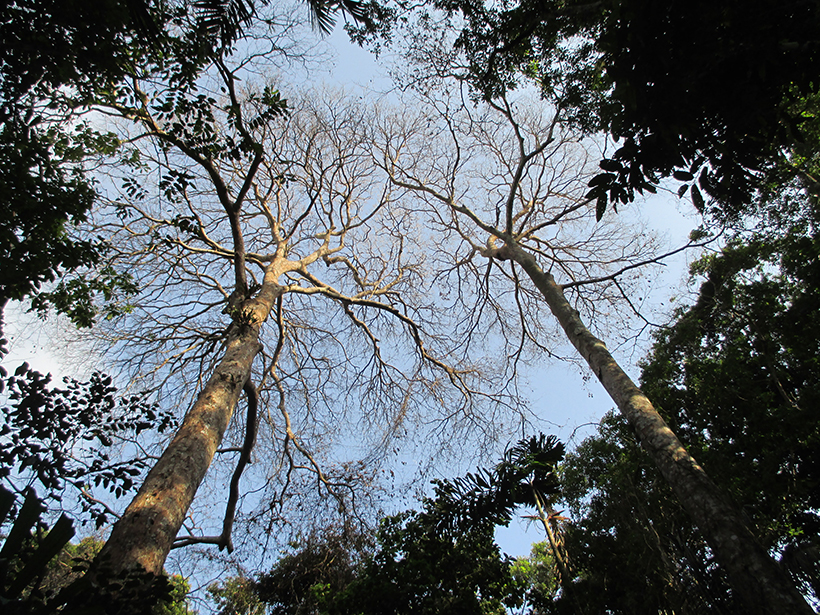
Panama Study: Tallest Tropical Trees Died Mostly from Lightning

Katherine Kornei, Science Writer by Katherine Kornei 30 August 201714 February 2023

On Barro Colorado Island in the Panama Canal, scientists map lightning strikes and find that they kill mainly the loftiest trees, likely disturbing the forest ecology.
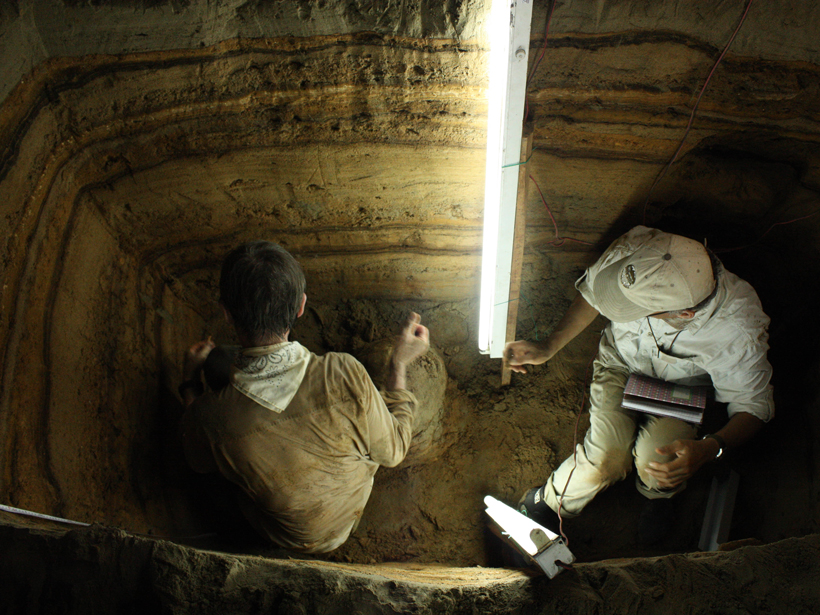
Using fluorescent lights to look for charcoal and shells in sediment layers in a cave in Indonesia to use to radiocarbon date tsunami deposits.
Posted inNews

Indonesian Cave Reveals Nearly 5,000 Years of Tsunamis

Katherine Kornei, Science Writer by Katherine Kornei 7 August 201716 March 2022

Researchers explore a coastal cave containing layers of sand deposited by 11 prehistoric tsunamis and demonstrate that the time period between massive waves is highly variable.

Strips and bands of color off the western coast of Australia indicate the MH370 search area.
Posted inNews

Seafloor Data from Lost Airliner Search Are Publicly Released

Katherine Kornei, Science Writer by Katherine Kornei 21 July 201726 September 2023

Detailed maps of the bottom of the Indian Ocean reveal deep canyons and landslides but no wreckage of Malaysia Airlines flight MH370, which went missing in 2014.

First-grade teacher Sheri Bittle (above) uses her phone amid the rubble of her classroom destroyed by a 21 May 2013 tornado in Moore, Okla.
Posted inNews

Algorithm Discerns Where Tweets Came from to Track Disasters

Katherine Kornei, Science Writer by Katherine Kornei 17 July 201719 January 2023

New pilot system that analyzed more than 35 million flood-related Twitter posts to determine their geographic origin might help first responders locate and react more quickly to calamities.

Asperitas clouds over Burnie, Tasmania.
Posted inNews

Science Explains “Rough and Chaotic” Cloud Feature

Katherine Kornei, Science Writer by Katherine Kornei 6 June 201713 February 2023

Research on the newest entry in the International Cloud Atlas produces insights into what these cloud features are made of and how they form.

Destruction after the 2011 Tuscaloosa-Birmingham tornado.
Posted inNews

Tornado Casualties Depend More on Storm Energy Than Population

Katherine Kornei, Science Writer by Katherine Kornei 18 May 20172 February 2022

National Weather Service data from nearly 900 tornadoes and a principle of economics reveal the relationship between storm energy, population, and casualty count.

A large crack splits the ice about 100 meters from the face of Bowdoin Glacier.
Posted inNews

New Technique Reveals Iceberg Calving Process

Katherine Kornei, Science Writer by Katherine Kornei 1 May 20177 February 2023

Researchers used unmanned aerial vehicle data to model the growth of a fracture that broke a 1-kilometer-long iceberg off a Greenland glacier.

A glacial outburst flood from Lhotse Glacier on 12 June 2016 threatens a stone wall adjacent to a village in Nepal.
Posted inNews

Glacial Outburst Flood near Mount Everest Caught on Video

Katherine Kornei, Science Writer by Katherine Kornei 14 March 20179 March 2023

More than 2 million cubic meters of water, hidden deep within Lhotse Glacier, spilled down toward the village of Chukhung, Nepal, in 2016.

Posts pagination

Newer posts 1 … 26 27 28 29 Older posts
Over a dark blue-green square appear the words Special Report: The State of the Science 1 Year On.

Features from AGU Publications

Research Spotlights

How Internal Waves Transport Energy Thousands of Miles Across the Ocean

26 March 202626 March 2026
Editors' Highlights

What’s Under the Water Matters

27 March 202626 March 2026
Editors' Vox

The Future of Earth’s Future

24 March 202624 March 2026
Eos logo at left; AGU logo at right

About Eos
ENGAGE
Awards
Contact

Advertise
Submit
Career Center
Sitemap

© 2026 American Geophysical Union. All rights reserved Powered by Newspack