• About
  • Sections
  • Topics
    • Climate
    • Earth Science
    • Oceans
    • Space & Planets
    • Health & Ecosystems
    • Culture & Policy
    • Education & Careers
    • Opinions
  • Projects
    • ENGAGE
    • Editors’ Highlights
    • Editors’ Vox
    • Eos en Español
    • Eos 简体中文版
    • Print Archive
  • Science Policy Tracker
  • Blogs
    • Research & Developments
    • The Landslide Blog
  • Newsletter
  • Submit to Eos
  • AGU.org
  • Career Center
  • Join AGU
  • Give to AGU
  • About
  • Sections
  • Topics
    • Climate
    • Earth Science
    • Oceans
    • Space & Planets
    • Health & Ecosystems
    • Culture & Policy
    • Education & Careers
    • Opinions
  • Projects
    • ENGAGE
    • Editors’ Highlights
    • Editors’ Vox
    • Eos en Español
    • Eos 简体中文版
    • Print Archive
  • Science Policy Tracker
  • Blogs
    • Research & Developments
    • The Landslide Blog
  • Newsletter
  • Submit to Eos
Skip to content
  • AGU.org
  • Career Center
  • Join AGU
  • Give to AGU
Eos

Eos

Science News by AGU

Support Eos
Sign Up for Newsletter
  • About
  • Sections
  • Topics
    • Climate
    • Earth Science
    • Oceans
    • Space & Planets
    • Health & Ecosystems
    • Culture & Policy
    • Education & Careers
    • Opinions
  • Projects
    • ENGAGE
    • Editors’ Highlights
    • Editors’ Vox
    • Eos en Español
    • Eos 简体中文版
    • Print Archive
  • Science Policy Tracker
  • Blogs
    • Research & Developments
    • The Landslide Blog
  • Newsletter
  • Submit to Eos

Michel Van Camp

Illustration of an atom being held in place by six lasers.
Posted inFeatures

Lasers and Ultracold Atoms for a Changing Earth

by Michel Van Camp, F. Pereira dos Santos, Michael Murböck, Gérard Petit and Jürgen Müller 20 December 20219 March 2023

Applying new technology rooted in quantum mechanics and relativity to terrestrial and space geodesy will sharpen our understanding of how the planet responds to natural and human-induced changes.

A superconducting gravimeter Belgium's Membach station has measured Earth’s gravitational field for more than 22 years
Posted inScience Updates

Recording Belgium’s Gravitational History

by Michel Van Camp, O. Francis and T. Lecocq 29 December 201728 October 2021

Instruments at Belgium’s Membach geophysical station set a new record for monitoring gravitational fluctuations caused by storm surges, groundwater fluctuations, and the Moon’s tidal pull.
Posted inEditors' Vox

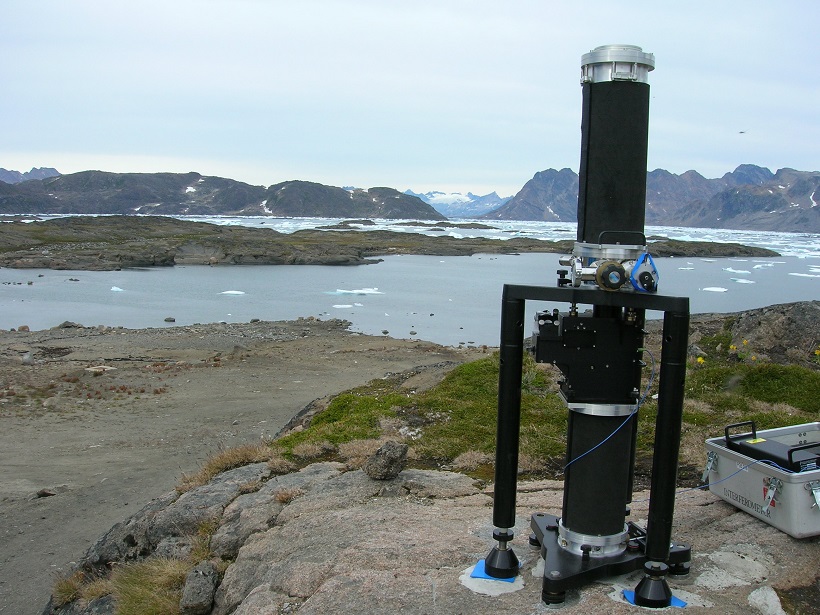
The Gravity of Geophysics

by Michel Van Camp, O. de Viron, A. Watlet, B. Meurers, O. Francis and Corentin Caudron 13 November 201728 October 2021

A recent article in Reviews of Geophysics examined terrestrial techniques for measuring changes in gravity over time and their application to the geosciences.

A view of a bridge, with the New Orleans skyline visible in the distance between the bridge and the water. A purple tint, a teal curved line representing a river, and the text “#AGU25 coverage from Eos” overlie the photo.

Features from AGU Publications

Research Spotlights

An Ecosystem Never Forgets

19 December 202519 December 2025
Editors' Highlights

Frictional Properties of the Nankai Accretionary Prism

11 December 20259 December 2025
Editors' Vox

Hydrothermal Circulation and Its Impact on the Earth System

3 December 20253 December 2025
Eos logo at left; AGU logo at right

About Eos
ENGAGE
Awards
Contact

Advertise
Submit
Career Center
Sitemap

© 2025 American Geophysical Union. All rights reserved Powered by Newspack