• About
  • Special Reports
  • Topics
    • Climate
    • Earth Science
    • Oceans
    • Space & Planets
    • Health & Ecosystems
    • Culture & Policy
    • Education & Careers
    • Opinions
  • Projects
    • Postcards From the Field
    • ENGAGE
    • Editors’ Highlights
    • Editors’ Vox
    • Eos en Español
    • Eos 简体中文版
    • Print Archive: 2015–2025
  • Policy Tracker
  • Blogs
    • Research & Developments
    • The Landslide Blog
  • Newsletter
  • Submit to Eos
  • AGU.org
  • Career Center
  • Join AGU
  • Give to AGU
  • About
  • Special Reports
  • Topics
    • Climate
    • Earth Science
    • Oceans
    • Space & Planets
    • Health & Ecosystems
    • Culture & Policy
    • Education & Careers
    • Opinions
  • Projects
    • Postcards From the Field
    • ENGAGE
    • Editors’ Highlights
    • Editors’ Vox
    • Eos en Español
    • Eos 简体中文版
    • Print Archive: 2015–2025
  • Policy Tracker
  • Blogs
    • Research & Developments
    • The Landslide Blog
  • Newsletter
  • Submit to Eos
Skip to content
  • AGU.org
  • Career Center
  • Join AGU
  • Give to AGU
Eos

Eos

Science News by AGU

Support Eos
Sign Up for Newsletter
  • About
  • Special Reports
  • Topics
    • Climate
    • Earth Science
    • Oceans
    • Space & Planets
    • Health & Ecosystems
    • Culture & Policy
    • Education & Careers
    • Opinions
  • Projects
    • Postcards From the Field
    • ENGAGE
    • Editors’ Highlights
    • Editors’ Vox
    • Eos en Español
    • Eos 简体中文版
    • Print Archive: 2015–2025
  • Policy Tracker
  • Blogs
    • Research & Developments
    • The Landslide Blog
  • Newsletter
  • Submit to Eos

P. Waldron

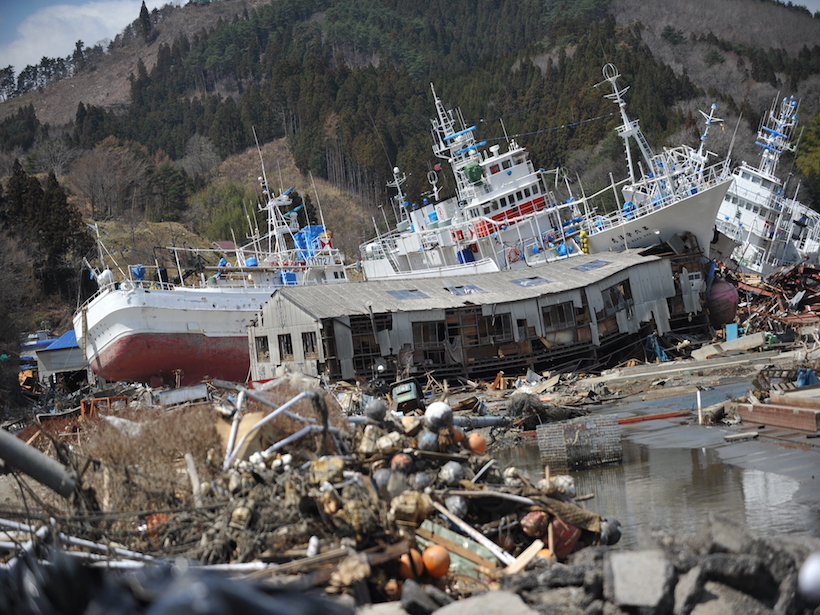
Deformed buildings, beached boats, and debris litter a coastline in Japan.
Posted inNews

What Controls Giant Subduction Earthquakes?

by P. Waldron 15 October 202016 March 2022

Subduction zones with a low dipping angle and thick sediments can produce giant earthquakes; this finding lets researchers estimate worst-case scenarios for coastlines around the world.

Smoke and flames rise up from a well pad in proximity to houses
Posted inNews

More Gas Wells Linked to More Symptoms in Pennsylvania Residents

by P. Waldron 30 September 202025 March 2022

Natural gas production has been booming in southwestern Pennsylvania, but it may also yield multiple health complaints, especially for residents surrounded by oil and gas facilities.

Perspective looking upward from the base of a large tree
Posted inFeatures

Critical Zone Science Comes of Age

by P. Waldron 24 September 202022 March 2022

The developing field, which unites Earth scientists to examine the planet’s surface as a single, unified entity, is unraveling the complex, interconnected processes that support life on Earth.

A caribou runs along a hill with Denali in the background
Posted inNews

Cold Cuts: Glaciers Sculpt Steep Peaks

by P. Waldron 20 May 202024 February 2022

In environments raked by glaciers, tall peaks like Denali still survive, held up by surprisingly thin crust.

Over a dark blue-green square appear the words Special Report: The State of the Science 1 Year On.

Features from AGU Publications

Research Spotlights

A Road Map to Truly Sustainable Water Systems in Space

9 February 20269 February 2026
Editors' Highlights

Why Are Thunderstorms More Intense Over Land Than Ocean?

9 February 20269 February 2026
Editors' Vox

Coastal Wetlands Restoration, Carbon, and the Hidden Role of Groundwater

9 February 20269 February 2026
Eos logo at left; AGU logo at right

About Eos
ENGAGE
Awards
Contact

Advertise
Submit
Career Center
Sitemap

© 2026 American Geophysical Union. All rights reserved Powered by Newspack