
Editors’ Highlights are summaries of recent papers by AGU’s journal editors.
Source: AGU Advances
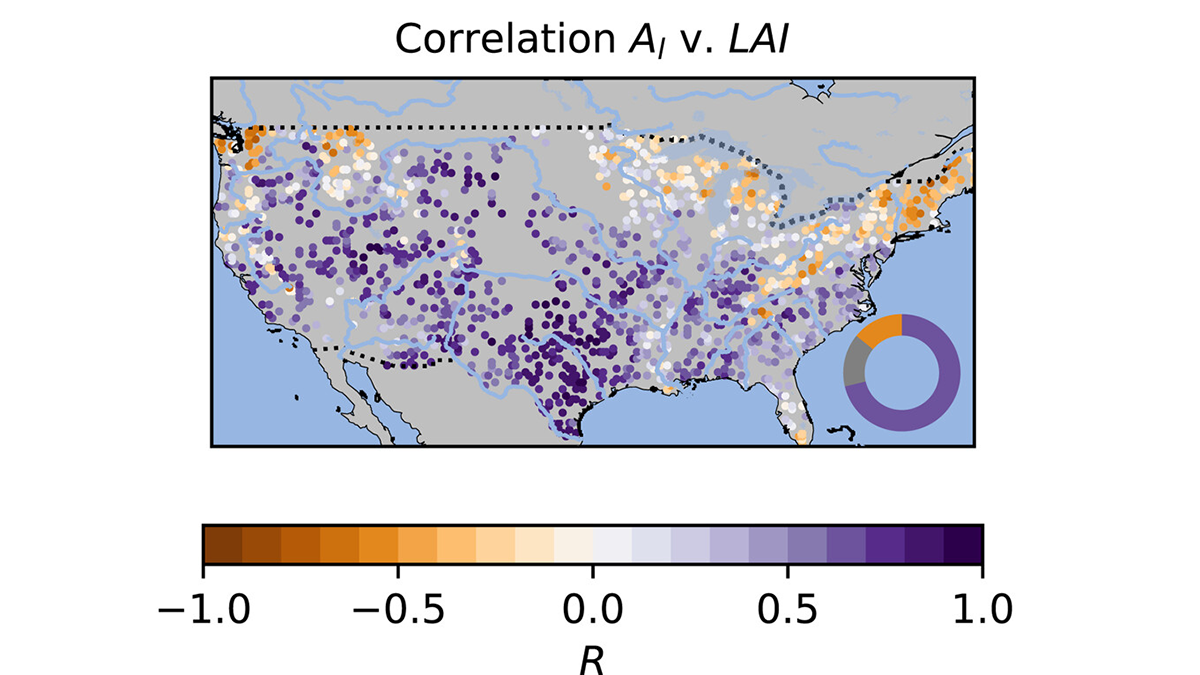
One of the striking phenomena that can be observed during long lasting droughts is that trees start to lose their leaves either by leaf browning or leaf shedding. Using a computer model of optimal tree growth, Quetin et al. [2026] show that it is beneficial for trees to shed their leaves during droughts for two reasons. First, because the leaf area that can lose water to the atmosphere is reduced, further water stress is avoided. Second, because it is advantageous from a biomass and energy perspective to lose leaves that cannot contribute to carbon assimilation but still cost energy to maintain. The authors further support their hypothesis by showing that incorporate the leaf shedding mechanism yields estimates of leaf area that better match observations.
Citation: Quetin, G. R., Anderegg, L. D. L., & Trugman, A. T. (2026). Leaf shedding during drought reduces hydraulic stress in trees. AGU Advances, 7, e2025AV001907. https://doi.org/10.1029/2025AV001907
—Marc F. P. Bierkens, Editor, AGU Advances