• About
  • Special Reports
  • Topics
    • Climate
    • Earth Science
    • Oceans
    • Space & Planets
    • Health & Ecosystems
    • Culture & Policy
    • Education & Careers
    • Opinions
  • Projects
    • Postcards From the Field
    • ENGAGE
    • Editors’ Highlights
    • Editors’ Vox
    • Eos en Español
    • Eos 简体中文版
    • Print Archive: 2015–2025
  • Policy Tracker
  • Blogs
    • Research & Developments
    • The Landslide Blog
  • Newsletter
  • Submit to Eos
  • AGU.org
  • Career Center
  • Join AGU
  • Give to AGU
  • About
  • Special Reports
  • Topics
    • Climate
    • Earth Science
    • Oceans
    • Space & Planets
    • Health & Ecosystems
    • Culture & Policy
    • Education & Careers
    • Opinions
  • Projects
    • Postcards From the Field
    • ENGAGE
    • Editors’ Highlights
    • Editors’ Vox
    • Eos en Español
    • Eos 简体中文版
    • Print Archive: 2015–2025
  • Policy Tracker
  • Blogs
    • Research & Developments
    • The Landslide Blog
  • Newsletter
  • Submit to Eos
Skip to content
  • AGU.org
  • Career Center
  • Join AGU
  • Give to AGU
Eos

Eos

Science News by AGU

Support Eos
Sign Up for Newsletter
  • About
  • Special Reports
  • Topics
    • Climate
    • Earth Science
    • Oceans
    • Space & Planets
    • Health & Ecosystems
    • Culture & Policy
    • Education & Careers
    • Opinions
  • Projects
    • Postcards From the Field
    • ENGAGE
    • Editors’ Highlights
    • Editors’ Vox
    • Eos en Español
    • Eos 简体中文版
    • Print Archive: 2015–2025
  • Policy Tracker
  • Blogs
    • Research & Developments
    • The Landslide Blog
  • Newsletter
  • Submit to Eos

Saima May Sidik

木星大气层的图像,其中充满了奇特的、螺旋状的、蓝色和浅橙色的云。
Posted inResearch Spotlights

业余爱好者能为木星研究做些什么?

by Saima May Sidik 12 November 202412 November 2024

天文学家希望业余爱好者能帮助他们监测木星的天气。

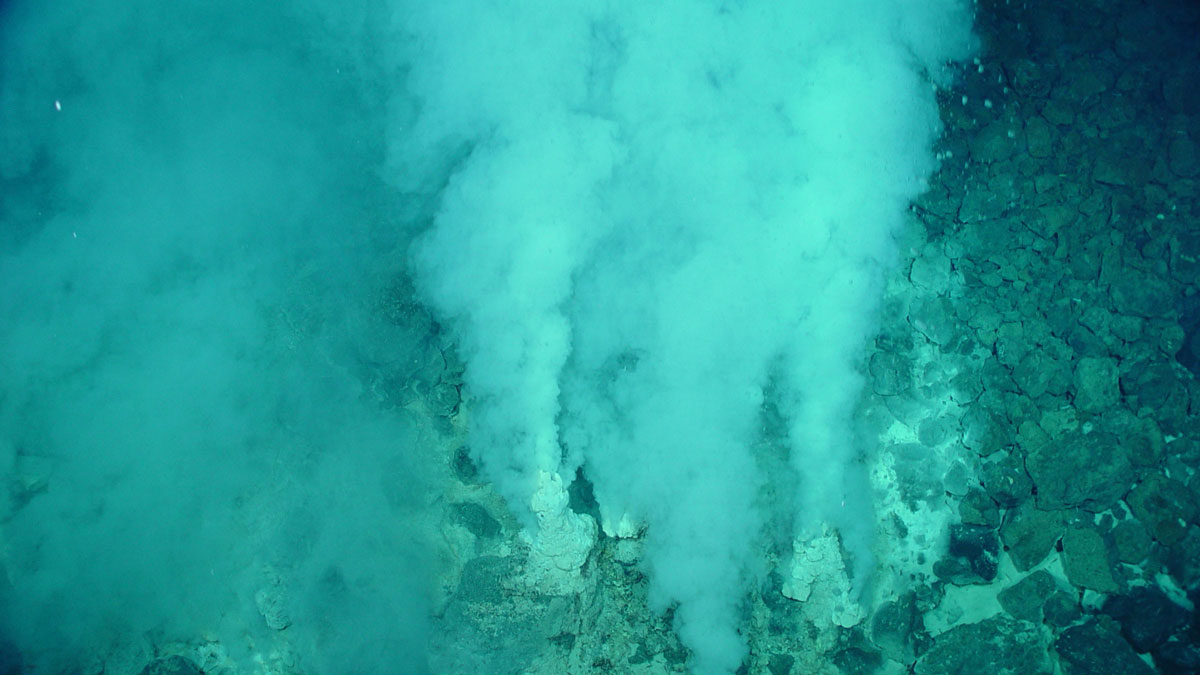
Plumes of gas emanate from the seafloor.
Posted inResearch Spotlights

A New View of Deep Earth’s Carbon Emissions

by Saima May Sidik 7 November 20247 November 2024

Advances in plate tectonics research allow a deeper understanding of how greenhouse gases escape from within the planet.

Artist’s interpretation of a river on Mars, stretching off into the distance, where there is a wall of ice. Red soil is on either side of the water.
Posted inResearch Spotlights

How an Ocean-Sized Lake May Have Formed on Ancient Mars

by Saima May Sidik 6 November 20246 November 2024

The catastrophic collapse of Mars’s atmosphere may have melted its polar ice cap, creating an ice-covered southern sea.

In this artist’s rendition, a satellite consisting of two umbrella-shaped instruments and two solar panels is seen in the foreground. In the background, a crescent of Earth is shown in the blackness of space.
Posted inNews

Next NASA Field Campaign Could Fund Projects in Drylands or Tropics

by Saima May Sidik 1 November 20241 November 2024

Scientific feedback can improve proposals and signal support for large-scale, intensive climate research.
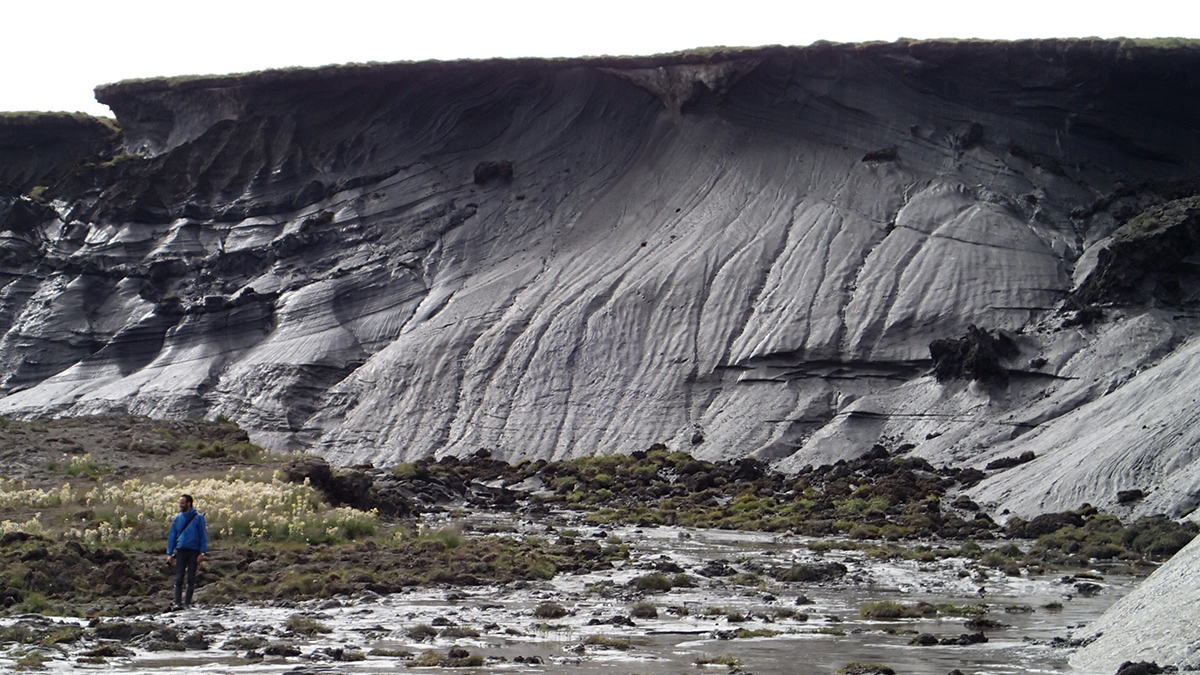
A person in a blue jacket is dwarfed by a gray cliffside of thawing permafrost.
Posted inResearch Spotlights

Thawing Permafrost Is Affecting Climate, but It’s Unclear by How Much

by Saima May Sidik 29 October 202429 October 2024

Models produce widely varying estimates of how ecosystems in the northern permafrost region are currently affecting the global greenhouse gas budget.
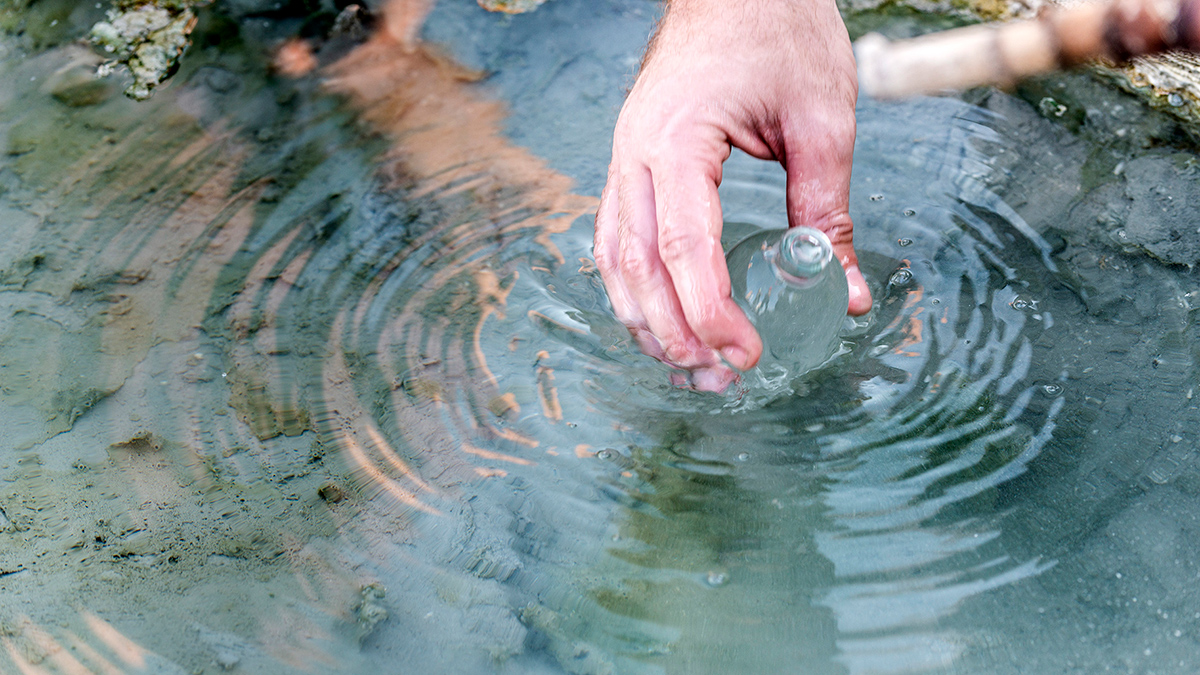
A person’s hand is shown dipping a sampling bottle into a shallow pool of water.
Posted inNews

Lack of Water Quality Data Is a Form of Environmental Injustice

by Saima May Sidik 21 October 202416 December 2024

There’s a dearth of information on the health of lakes in marginalized communities.

A thin stream of water on a dirt surface curves off to the left out of frame. Two large mountains—one a snowy peak, one not—are in the distance.
Posted inResearch Spotlights

Each Glacier Has a Unique Organic Matter Composition

by Saima May Sidik 15 October 202415 October 2024

Like snowflakes, no two glaciers are alike: Carbon-containing compounds released from glaciers vary from place to place, meaning climate and ecosystem effects of melting could vary as well.
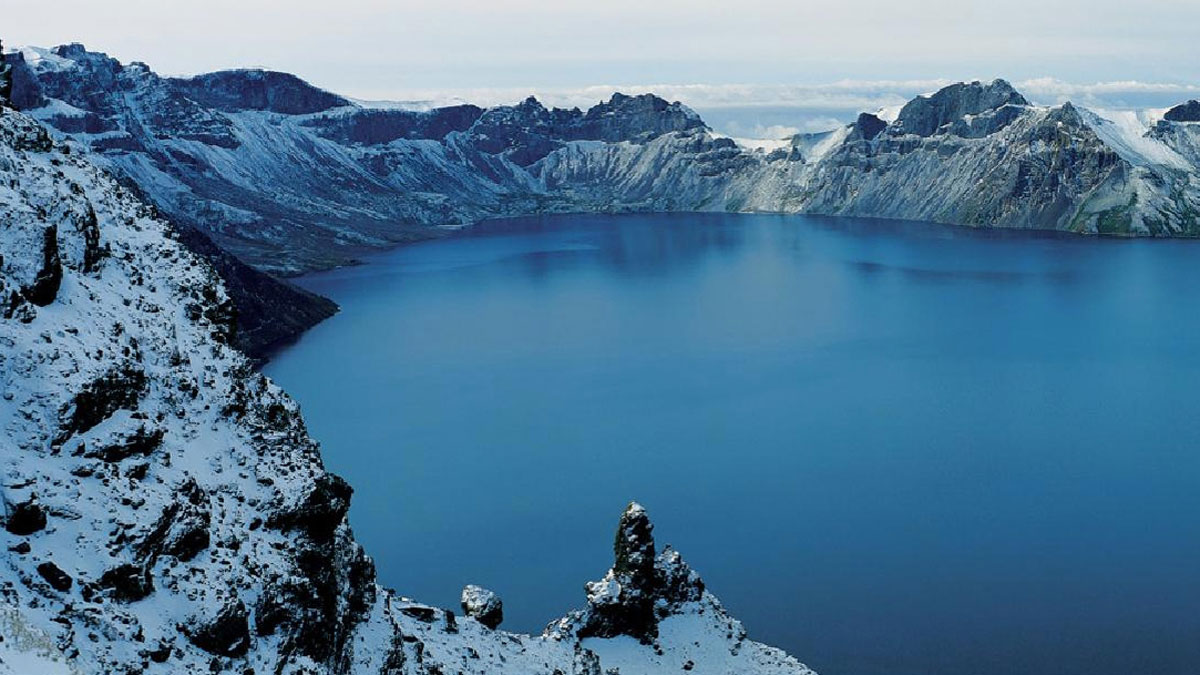
A strikingly blue lake surrounded by the snowcapped rock walls of a volcano.
Posted inResearch Spotlights

New Details About a Very Old Eruption and Flood

by Saima May Sidik 9 October 20249 October 2024

One of the most dramatic volcanic eruptions in history occurred more than 1,000 years ago. Scientists are still piecing together the aftermath.
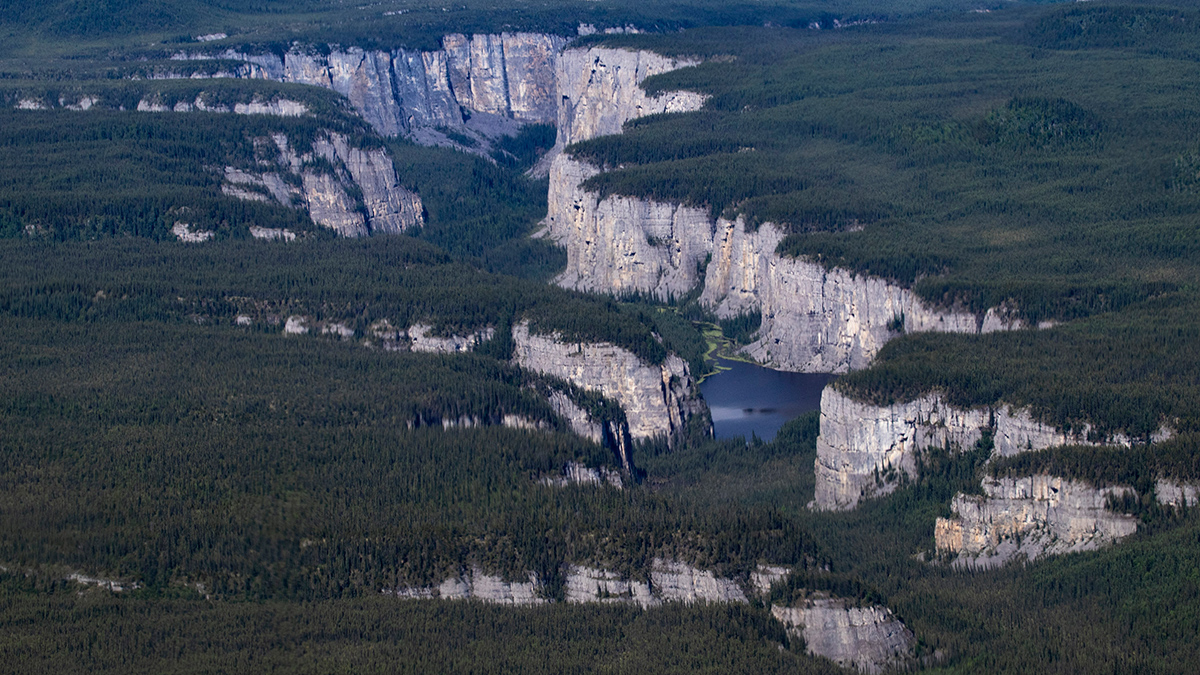
A deep canyon, which can form when rocks shift.
Posted inResearch Spotlights

High-Pressure Reactions Can Turn Nonporous Rocks into Sponges

by Saima May Sidik 23 September 202423 September 2024

Mathematical models describe how water moves through rocks in deep Earth.
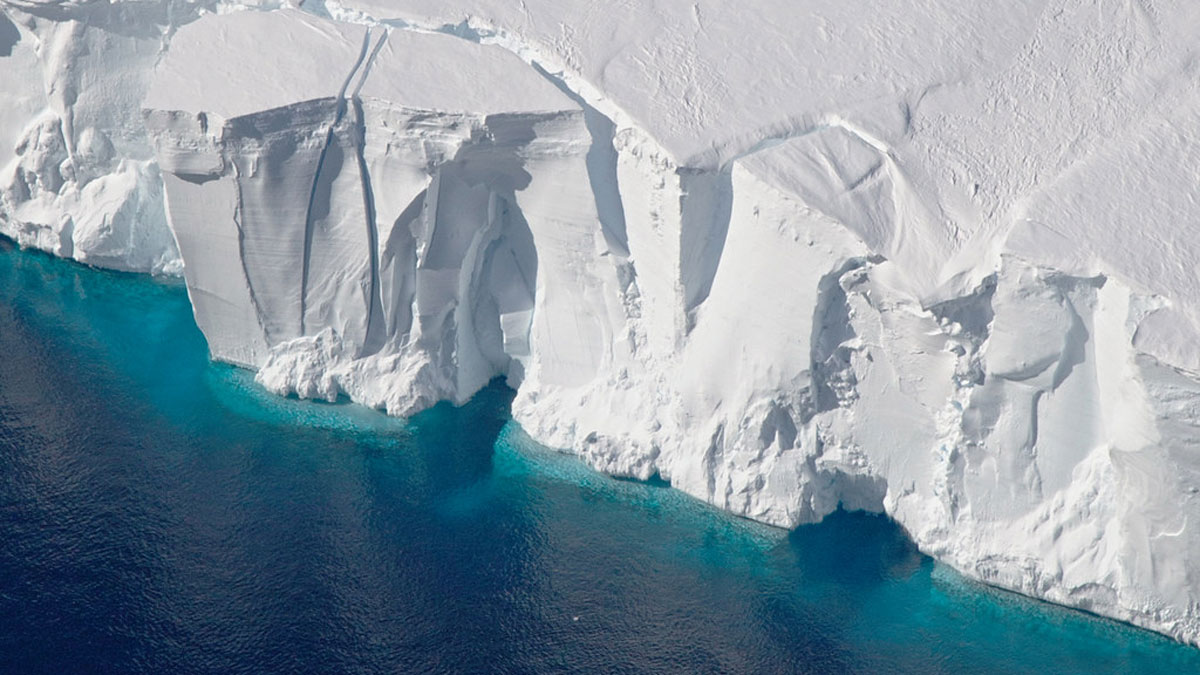
A photo of an Antarctic ice shelf in the process of calving (meaning a section is breaking off the front to become an iceberg). The water in front of the ice shelf is a deep blue.
Posted inResearch Spotlights

Phytoplankton Shield Ice Shelves from Summer Heat

by Saima May Sidik 20 September 202420 September 2024

Spring blooms shade Antarctic ice shelves, causing them to melt 7% more slowly than they would if they were surrounded by clear, bloomless waters.

Posts pagination

Newer posts 1 … 5 6 7 8 9 … 15 Older posts
Over a dark blue-green square appear the words Special Report: The State of the Science 1 Year On.

Features from AGU Publications

Research Spotlights

Rapid-Scan Satellite Data Offer Clues to Typhoon Intensity

17 November 202617 November 2026
Editors' Highlights

Rethinking Where Rivers Begin

18 November 202616 November 2026
Editors' Vox

Bringing Python Solutions to Earth Science Challenges

19 November 202619 November 2026
Eos logo at left; AGU logo at right

About Eos
ENGAGE
Awards
Contact

Advertise
Submit
Career Center
Sitemap

© 2026 American Geophysical Union. All rights reserved Powered by Newspack