• About
  • Sections
  • Topics
    • Climate
    • Earth Science
    • Oceans
    • Space & Planets
    • Health & Ecosystems
    • Culture & Policy
    • Education & Careers
    • Opinions
  • Projects
    • Postcards From the Field
    • ENGAGE
    • Editors’ Highlights
    • Editors’ Vox
    • Eos en Español
    • Eos 简体中文版
    • Print Archive: 2015–2025
  • Science Policy Tracker
  • Blogs
    • Research & Developments
    • The Landslide Blog
  • Newsletter
  • Submit to Eos
  • AGU.org
  • Career Center
  • Join AGU
  • Give to AGU
  • About
  • Sections
  • Topics
    • Climate
    • Earth Science
    • Oceans
    • Space & Planets
    • Health & Ecosystems
    • Culture & Policy
    • Education & Careers
    • Opinions
  • Projects
    • Postcards From the Field
    • ENGAGE
    • Editors’ Highlights
    • Editors’ Vox
    • Eos en Español
    • Eos 简体中文版
    • Print Archive: 2015–2025
  • Science Policy Tracker
  • Blogs
    • Research & Developments
    • The Landslide Blog
  • Newsletter
  • Submit to Eos
Skip to content
  • AGU.org
  • Career Center
  • Join AGU
  • Give to AGU
Eos

Eos

Science News by AGU

Support Eos
Sign Up for Newsletter
  • About
  • Sections
  • Topics
    • Climate
    • Earth Science
    • Oceans
    • Space & Planets
    • Health & Ecosystems
    • Culture & Policy
    • Education & Careers
    • Opinions
  • Projects
    • Postcards From the Field
    • ENGAGE
    • Editors’ Highlights
    • Editors’ Vox
    • Eos en Español
    • Eos 简体中文版
    • Print Archive: 2015–2025
  • Science Policy Tracker
  • Blogs
    • Research & Developments
    • The Landslide Blog
  • Newsletter
  • Submit to Eos

William J. Randel

Editor, JGR Atmospheres
Satellite measures of the impact of large boreal forest fires on ozone
Posted inEditors' Highlights

Satellite Measurements of Stratospheric Forest Fire Smoke

by William J. Randel 6 December 201918 November 2022

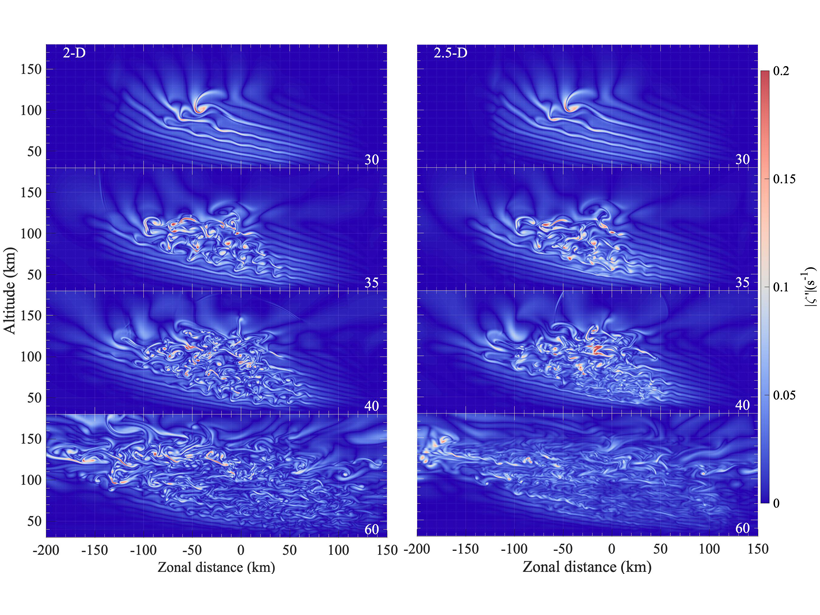
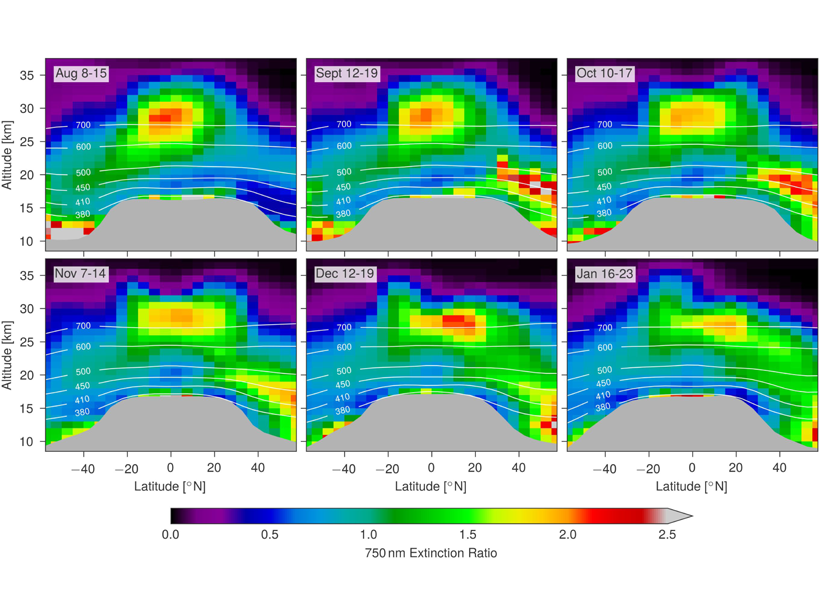
Intense boreal forest fires in August 2017 caused smoke plumes that reached record levels in the stratosphere; satellite measurements show that the effects rivaled a moderate volcanic eruption.
Map of continental USA showing horizontal distribution of the mean of the logarithmic eddy dissipation rate in the troposphere
Posted inEditors' Highlights

Radiosondes Measure Atmospheric Turbulence Over North America

by William J. Randel 16 August 201925 July 2022

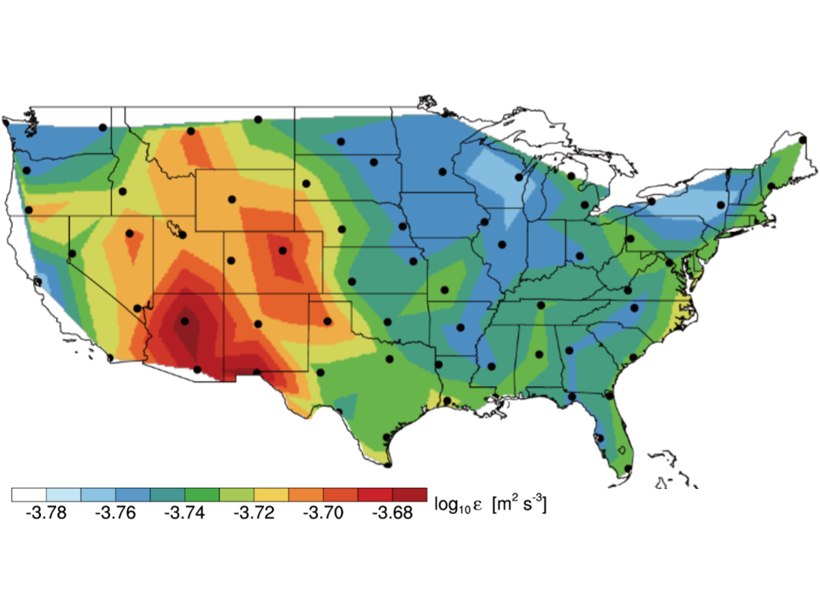
Analyses of high-resolution radiosonde balloon measurements have provided a novel climatology of atmospheric turbulence parameters in the troposphere and lower stratosphere.

Posted inEditors' Highlights

New Lidar Comparisons of Temperatures Near the Mesopause

by William J. Randel 22 October 201816 March 2023

For the first time, simultaneous measurements of upper atmosphere temperatures over altitudes 80 to 110 kilometers have been made by two complementary lidar techniques.
Posted inEditors' Highlights

New Characterization of the Mesospheric Polar Vortices

by William J. Randel 2 October 201816 March 2023

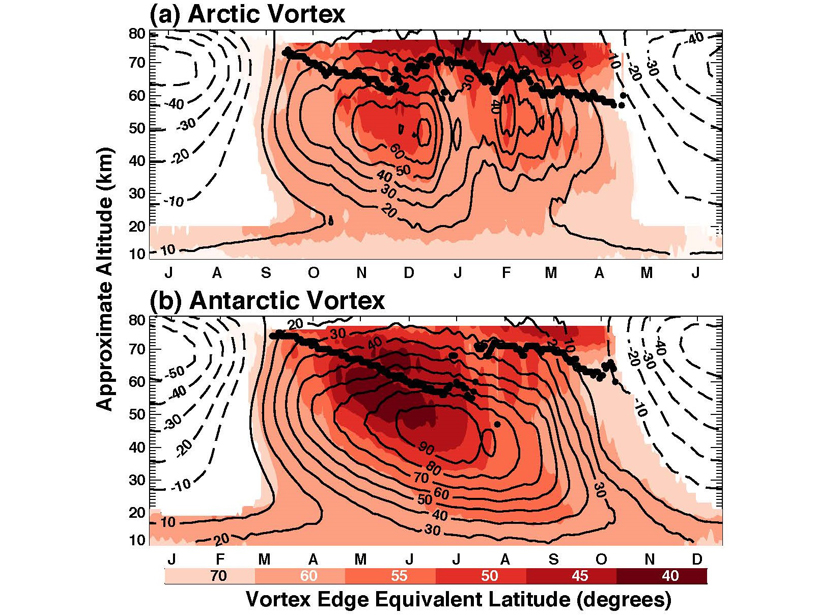
Polar vortices play a central role in coupling the atmosphere from the ground to the middle atmosphere. New satellite diagnostics describe mesospheric polar vortices and coupling to lower altitudes.
Posted inEditors' Highlights

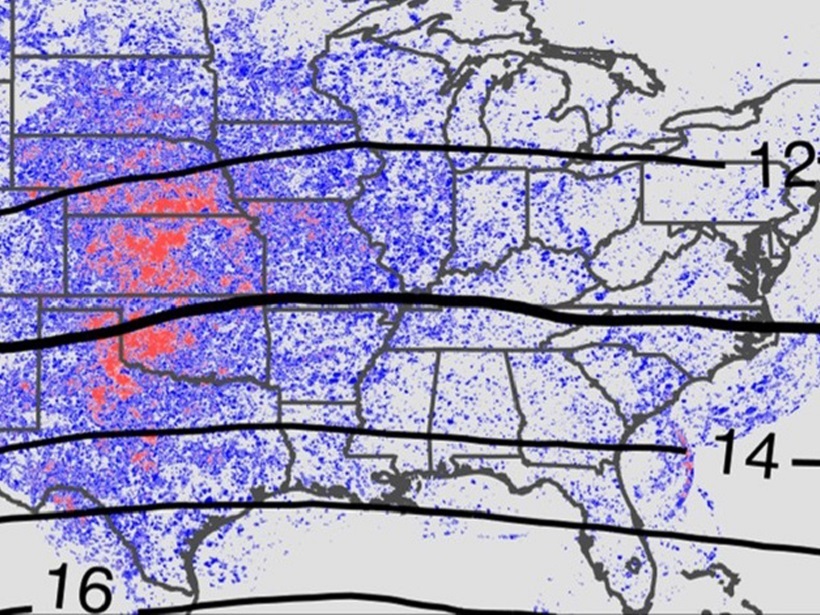
Continental Convection Reaches New Highs

by William J. Randel 12 March 201829 March 2022

Ten years of high-resolution gridded NEXRAD radar data provide a new data set to quantify tropopause-overshooting convection over the continental United States.

Posted inEditors' Highlights

New Estimates of Ozone Transport in Extratropical Cyclones

by William J. Randel 26 January 201829 March 2022

Cross-tropopause ozone transport in midlatitude cyclones, coincident with dry air intrusions, is derived from satellite and reanalysis data organized in cyclone-centric coordinates.

Posts pagination

Newer posts 1 2
A view of a bridge, with the New Orleans skyline visible in the distance between the bridge and the water. A purple tint, a teal curved line representing a river, and the text “#AGU25 coverage from Eos” overlie the photo.

Features from AGU Publications

Research Spotlights

AI Sheds Light on Hard-to-Study Ocean Currents

14 January 202614 January 2026
Editors' Highlights

Where the Tianshan Will Break Next: Strain, Slip, and Seismic Hazard

14 January 20269 January 2026
Editors' Vox

Hydrothermal Circulation and Its Impact on the Earth System

3 December 20253 December 2025
Eos logo at left; AGU logo at right

About Eos
ENGAGE
Awards
Contact

Advertise
Submit
Career Center
Sitemap

© 2026 American Geophysical Union. All rights reserved Powered by Newspack