

Accounting for the newfound bubble effect could improve estimates of how sea-terminating glaciers melt underwater—and better anticipate their shrinkage as oceans warm.
News

Posted inNews
Dust Is Melting Snow—And Current Models Can’t Keep Up
Mountain snowpack melts quicker when coated in dust. This cyclical problem is forcing water forecasts to evolve.

Posted inNews
Arctic Warming Triggers Abrupt Ecosystem Shift in North America’s Deepest Lake

Great Slave Lake’s huge cold water mass shielded it from impacts of the rapidly warming climate—until now.

Posted inNews
Rates of Groundwater Depletion in India Could Triple by Midcentury

Climate change is contributing to crop stress associated with a growing demand for freshwater.
Posted inNews
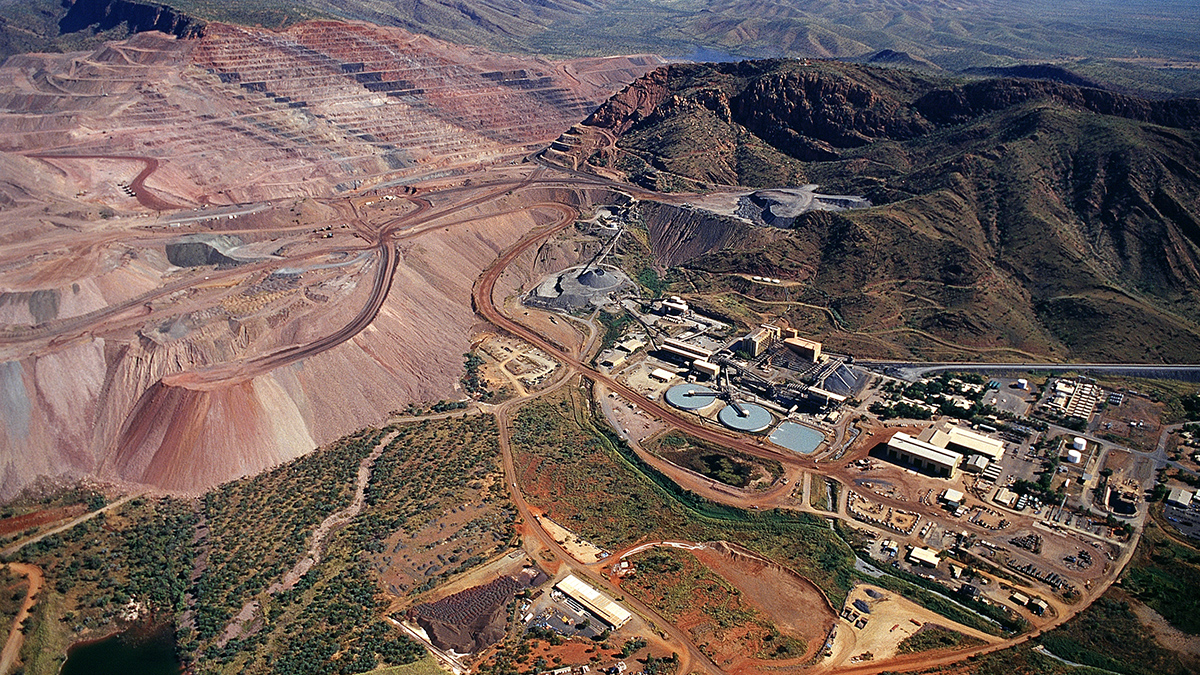
Continental Breakup Shot Pink Diamonds to Earth’s Surface
What was once the world’s most prolific pink diamond mine has always been an anomaly. New research suggests that the end of an ancient supercontinent helped rocket its precious gems to the surface.

Posted inNews
Crowdsourced Science Pulls Off a Daring WWII Data Rescue

Newly declassified documents are making wartime weather observations in the Pacific Theater more robust, and could improve climate models today.

Posted inNews
Rainfall from Tropical Storms Might Be on the Downswing

Two decades’ worth of satellite data suggest that the rainfall rates of tropical cyclones might be decreasing relative to background levels.

Posted inNews
Meteor Impact Site Holds 200-Million-Year-Old Atmospheric Snapshot
Minerals formed in short-lived hydrothermal systems set off by a meteor impact in France preserved information about noble gases in the ancient atmosphere.

Posted inNews
Digitally Preserving Svalbard’s Fragile Geology
A team of researchers is making the iconic rock outcrops of Svalbard available to the world through an open-source database of virtual geological models.

Posted inNews
South American Rainforests Are on the Brink of Becoming Carbon Sources
Plants’ ability to stock carbon ceased during the 2015–2016 El Niño, as temperatures skyrocketed and trees died.