
Editors’ Highlights are summaries of recent papers by AGU’s journal editors.
Source: Earth and Space Science
The archiving of planetary-scale datasets is a major undertaking, involving multiple teams and powerful infrastructure. It is often an underrated task, but it is absolutely essential to: (1) preserving datasets that were acquired at considerable expense; (2) making them available in consistent and accessible form to other scientists; and (3) ensuring the broadest possible scientific output from a planetary mission.
Planetary datasets from space missions are broadly used by the scientific community and for education and outreach activities, as well. Coverage of planetary missions is not consistent, however, while there is a rich trove of easily accessible Martian datasets, pre-Magellan (1989) data of Venus acquired through satellite and ground-telescopes are largely underrepresented in open archives. Yet, Venus has been object of great fascination and investigation well before the ‘90s, with many historical radar and radiometric datasets that have yet to be fully explored.
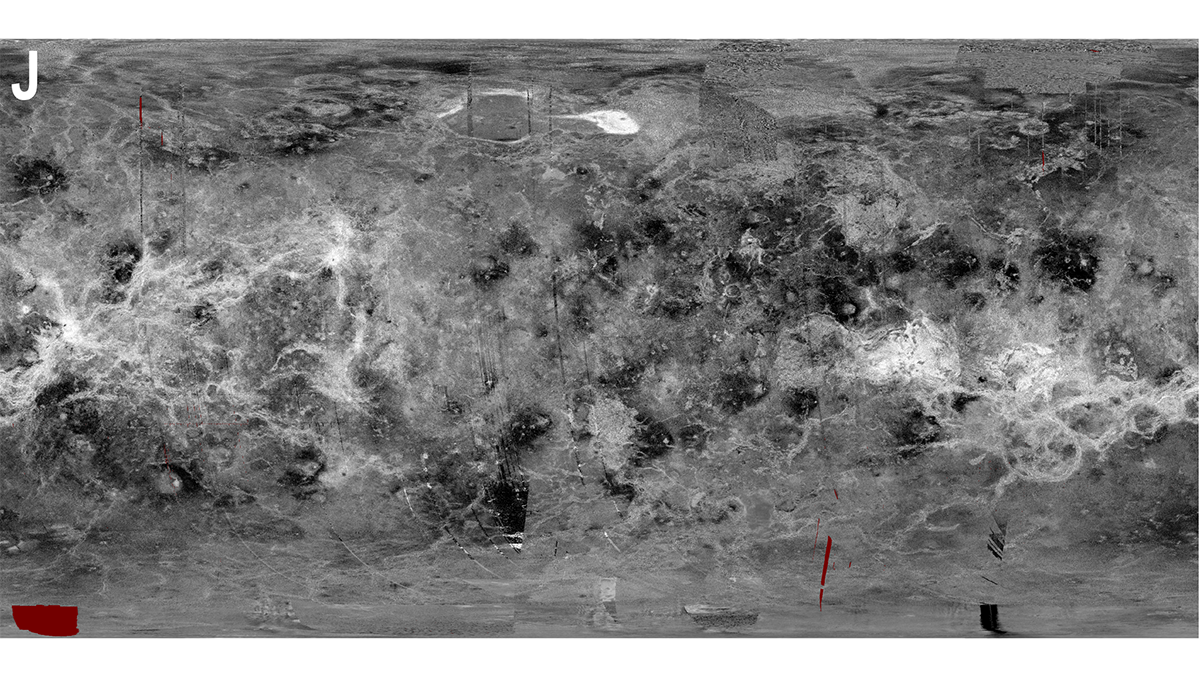
Austin et al. [2026] report on a timely, community-focused “data rescue” effort to make legacy Venus datasets openly reusable. In the process, the authors also compose a global mosaic of the Venusian surface overlaying historic observations to a georeferenced mosaic of Magellan data. The archive is freely distributed through a Zenodo repository.
This effort has produced a valuable resource for the planning of future missions to Venus.
Citation: Austin, T. J., O’Rourke, J. G., & Nelson, D. M. (2026). Preservation of historically and scientifically important geospatial data from Venus. Earth and Space Science, 13, e2025EA004846. https://doi.org/10.1029/2025EA004846
—Graziella Caprarelli, Editor-in-Chief, Earth and Space Science