• About
  • Special Reports
  • Topics
    • Climate
    • Earth Science
    • Oceans
    • Space & Planets
    • Health & Ecosystems
    • Culture & Policy
    • Education & Careers
    • Opinions
  • Projects
    • Postcards From the Field
    • ENGAGE
    • Editors’ Highlights
    • Editors’ Vox
    • Eos en Español
    • Eos 简体中文版
    • Print Archive: 2015–2025
  • Policy Tracker
  • Blogs
    • Research & Developments
    • The Landslide Blog
  • Newsletter
  • Submit to Eos
  • AGU.org
  • Career Center
  • Join AGU
  • Give to AGU
  • About
  • Special Reports
  • Topics
    • Climate
    • Earth Science
    • Oceans
    • Space & Planets
    • Health & Ecosystems
    • Culture & Policy
    • Education & Careers
    • Opinions
  • Projects
    • Postcards From the Field
    • ENGAGE
    • Editors’ Highlights
    • Editors’ Vox
    • Eos en Español
    • Eos 简体中文版
    • Print Archive: 2015–2025
  • Policy Tracker
  • Blogs
    • Research & Developments
    • The Landslide Blog
  • Newsletter
  • Submit to Eos
Skip to content
  • AGU.org
  • Career Center
  • Join AGU
  • Give to AGU
Eos

Eos

Science News by AGU

Support Eos
Sign Up for Newsletter
  • About
  • Special Reports
  • Topics
    • Climate
    • Earth Science
    • Oceans
    • Space & Planets
    • Health & Ecosystems
    • Culture & Policy
    • Education & Careers
    • Opinions
  • Projects
    • Postcards From the Field
    • ENGAGE
    • Editors’ Highlights
    • Editors’ Vox
    • Eos en Español
    • Eos 简体中文版
    • Print Archive: 2015–2025
  • Policy Tracker
  • Blogs
    • Research & Developments
    • The Landslide Blog
  • Newsletter
  • Submit to Eos

Research Spotlights

Research spotlights are plain-language summaries of recent articles published in AGU’s suite of 24 journals.

Posted inResearch Spotlights

Model of Solar Cycle's Impact on Climate Gets Upgrade

by Mark Zastrow 7 December 201527 March 2023

A new model of how the Sun's 11-year cycle affects climate leads to slight changes in model results on atmospheric chemistry, but temperature and wind results are consistent with the previous model.

Posted inResearch Spotlights

Mercury's Magnetosphere Model Gets Retro Makeover

by Mark Zastrow 3 December 201527 July 2022

New observations from Mercury revive a once-abandoned model for its magnetic field, resulting in a new profile that better fits the data.

Posted inResearch Spotlights

Cloud Overlap Observations Put Simulations to the Test

Sarah Stanley, Science Writer by Sarah Stanley 2 December 201520 July 2022

Fine-scale simulations of cumulus cloud layers could help improve weather and climate models.

Posted inResearch Spotlights

Aerosols May Play a Big Part in Atmospheric Absorption

by L. Strelich 2 December 20156 July 2022

A new study shows that aerosols have a strong impact on the reflectivity of the Earth's atmosphere, absorbing more solar radiation within the atmospheric layers than previously thought.

Posted inResearch Spotlights

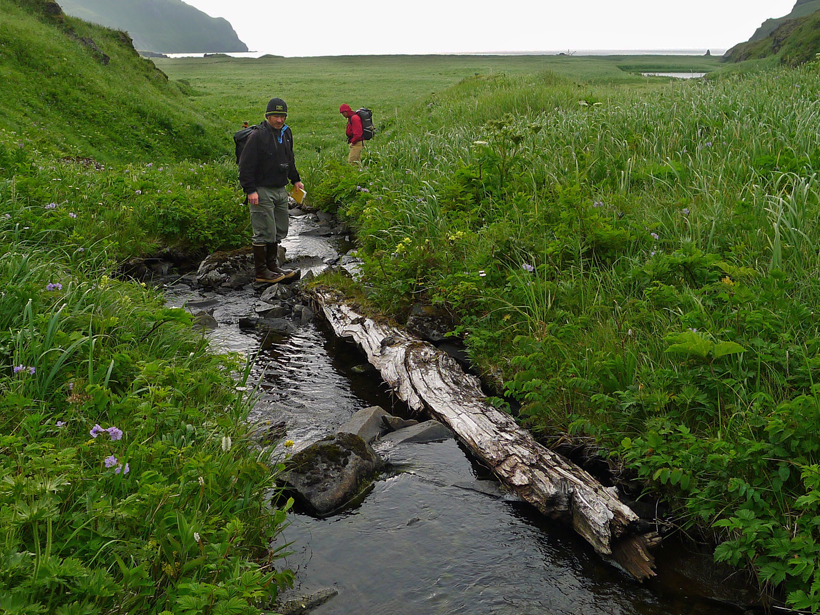
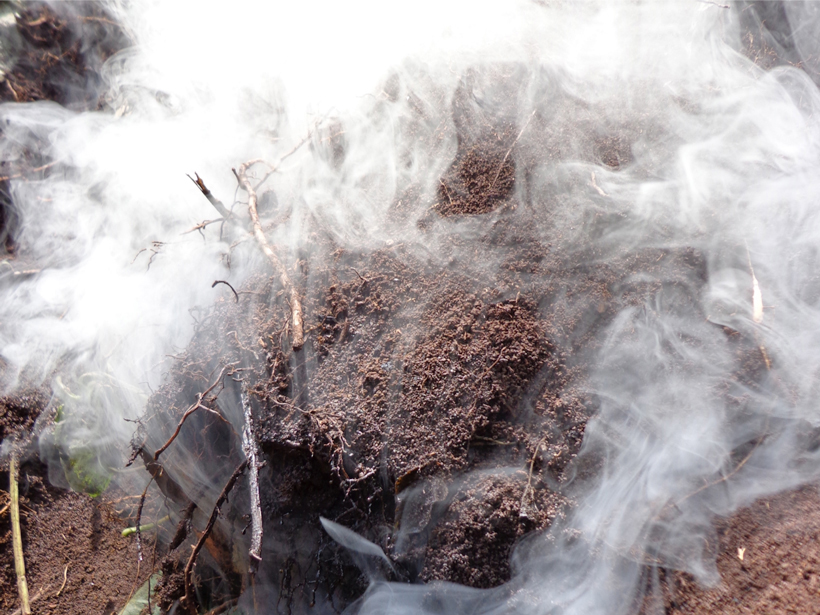
Alaskan Wildfires Influence Permafrost Recovery

by David Shultz 1 December 20155 January 2022

Warming climate reduces permafrost's ability to recover following wildfires in Alaskan lowland forest.

Posted inResearch Spotlights

Convection Cycles, Atmosphere, and Ocean Work Symbiotically

by L. Strelich 30 November 20157 March 2023

Scientists review studies of the tropical Madden-Julian Oscillation to better frame its role in air-sea interactions.

Posted inResearch Spotlights

Forecast Versus Reality: High-Resolution Weather Prediction

by L. Strelich 25 November 201525 February 2022

Researchers test the High-Resolution Rapid Refresh model with real-life observational data to evaluate forecast accuracy.

Posted inResearch Spotlights

Aftershocks of Old Quakes Still Shake New Madrid Seismic Zone

by L. Strelich 24 November 201518 October 2022

Geodetic data show that earthquakes in 1450 and 1811–1812 may be responsible for present-day seismic activity in the region.

Posted inResearch Spotlights

Cooling Galápagos Sea Surface Temperatures Affect Local Penguins

by David Shultz 23 November 201512 January 2022

The Galápagos cold pool is expanding northward as a result of climate change, and local penguin populations are rising.

Posted inResearch Spotlights

Slow-Moving Glide Avalanches Still Pack a Punch

by N. McGuire 20 November 201520 November 2015

Predicting glide avalanches and explaining how they work are difficult tasks, but the forces they exert can be calculated fairly well.

Posts pagination

Newer posts 1 … 176 177 178 179 180 … 202 Older posts
Over a dark blue-green square appear the words Special Report: The State of the Science 1 Year On.

Features from AGU Publications

Research Spotlights

Drought Drove the Amazon’s 2023 Switch to a Carbon Source

25 February 202625 February 2026
Editors' Highlights

Satellite View of the California Wildfires of January 2025

27 February 202626 February 2026
Editors' Vox

A Double-Edged Sword: The Global Oxychlorine Cycle on Mars

10 February 202610 February 2026
Eos logo at left; AGU logo at right

About Eos
ENGAGE
Awards
Contact

Advertise
Submit
Career Center
Sitemap

© 2026 American Geophysical Union. All rights reserved Powered by Newspack