• About
  • Special Reports
  • Topics
    • Climate
    • Earth Science
    • Oceans
    • Space & Planets
    • Health & Ecosystems
    • Culture & Policy
    • Education & Careers
    • Opinions
  • Projects
    • Postcards From the Field
    • ENGAGE
    • Editors’ Highlights
    • Editors’ Vox
    • Eos en Español
    • Eos 简体中文版
    • Print Archive: 2015–2025
  • Policy Tracker
  • Blogs
    • Research & Developments
    • The Landslide Blog
  • Newsletter
  • Submit to Eos
  • AGU.org
  • Career Center
  • Join AGU
  • Give to AGU
  • About
  • Special Reports
  • Topics
    • Climate
    • Earth Science
    • Oceans
    • Space & Planets
    • Health & Ecosystems
    • Culture & Policy
    • Education & Careers
    • Opinions
  • Projects
    • Postcards From the Field
    • ENGAGE
    • Editors’ Highlights
    • Editors’ Vox
    • Eos en Español
    • Eos 简体中文版
    • Print Archive: 2015–2025
  • Policy Tracker
  • Blogs
    • Research & Developments
    • The Landslide Blog
  • Newsletter
  • Submit to Eos
Skip to content
  • AGU.org
  • Career Center
  • Join AGU
  • Give to AGU
Eos

Eos

Science News by AGU

Support Eos
Sign Up for Newsletter
  • About
  • Special Reports
  • Topics
    • Climate
    • Earth Science
    • Oceans
    • Space & Planets
    • Health & Ecosystems
    • Culture & Policy
    • Education & Careers
    • Opinions
  • Projects
    • Postcards From the Field
    • ENGAGE
    • Editors’ Highlights
    • Editors’ Vox
    • Eos en Español
    • Eos 简体中文版
    • Print Archive: 2015–2025
  • Policy Tracker
  • Blogs
    • Research & Developments
    • The Landslide Blog
  • Newsletter
  • Submit to Eos

Research Spotlights

Research spotlights are plain-language summaries of recent articles published in AGU’s suite of 24 journals.

Posted inResearch Spotlights

Large-Scale Electric Currents May Flow Through Mercury’s Crust

by J. Orwig 18 March 20157 July 2025

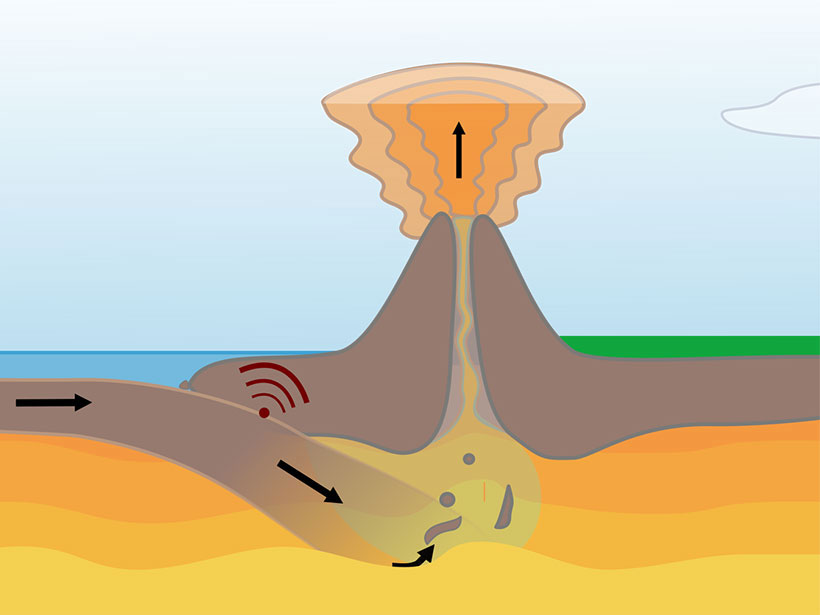
NASA's MESSENGER spacecraft discovered electric currents in Mercury's magnetosphere directed toward and away from the planet. Do the currents reach the planet? If so, where do they go?

Posted inResearch Spotlights

Gravity Waves Drive Global Changes in Earth's Upper Atmosphere

by E. Betz 13 March 201517 March 2015

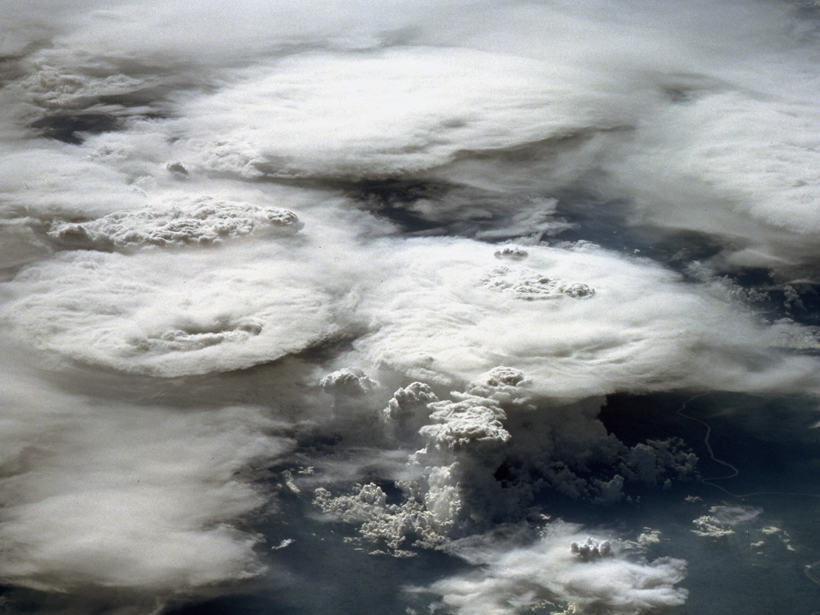
Deep convective objects such as the plumes in thunderstorms can trigger gravity waves, which disturb the wind and temperatures hundreds of kilometers above Earth's surface.

Posted inResearch Spotlights

Shape of Stream Channels Gives Clues to Sediment Size

by S. Palus 12 March 201527 April 2022

The shape can also reveal information on the force required to carve sediment from its bank.

Posted inResearch Spotlights

Unusual Echo Signal in Atmospheric E Layer

by J. Orwig 11 March 201520 October 2021

Metallic plasma layers in Earth's ionosphere interfere with radio communications and produce odd echo behavior at specific frequencies.

Posted inResearch Spotlights

Satellite Data Yield Detailed Picture of the Lunar Wake

by J. Rosen 9 March 20157 July 2025

Researchers use satellite data to characterize the physical properties of the lunar wake and the processes that govern it.

Posted inResearch Spotlights

How Do Tiny Ice Crystals Help Sea Ice Stay Thick?

by S. Palus 9 March 20159 August 2022

Supercooled water contributes to sea ice growth in Antarctica.

Posted inResearch Spotlights

Precooled Aerosols Are Better Raindrop Nuclei

by C. Schultz 6 March 20153 February 2022

Cooling inorganic and organic aqueous solutions makes the particles into more robust seeds of clouds.

Posted inResearch Spotlights

A Modified Technique to Remotely Detect Subsurface Melt

by C. Schultz 5 March 20158 July 2024

Adapting a much-used analytical method to consider anisotropy opens up the approach to new uses.

Posted inResearch Spotlights

Shooting Stars and Cosmic Dust Help Form Clouds, Fertilize Plankton

by E. Betz 5 March 20157 March 2022

Tons of cosmic dust enter Earth’s atmosphere each day, triggering a range of phenomena that scientists are only just beginning to understand.

Posted inResearch Spotlights

Survey Shows Where Arctic Marine Bird Populations Thrive

by C. Minnehan 4 March 201514 January 2022

"Hot spots" of species richness currently include the Bering Sea, Lancaster Sound, Baffin Bay, and Davis Strait. Will this change as sea ice melts?

Posts pagination

Newer posts 1 … 197 198 199 200 201 … 210 Older posts
Over a dark blue-green square appear the words Special Report: The State of the Science 1 Year On.

Features from AGU Publications

Research Spotlights

Briny “Death Pools” Hold Clues to Early Life

22 September 202622 September 2026
Editors' Highlights

Seasonality is Changing for Extreme Dry and Humid Heat Events 

18 September 202617 September 2026
Editors' Vox

In Appreciation of AGU’s Outstanding Reviewers of 2025

14 September 202610 September 2026
Eos logo at left; AGU logo at right

About Eos
ENGAGE
Awards
Contact

Advertise
Submit
Career Center
Sitemap

© 2026 American Geophysical Union. All rights reserved Powered by Newspack