• About
  • Special Reports
  • Topics
    • Climate
    • Earth Science
    • Oceans
    • Space & Planets
    • Health & Ecosystems
    • Culture & Policy
    • Education & Careers
    • Opinions
  • Projects
    • Postcards From the Field
    • ENGAGE
    • Editors’ Highlights
    • Editors’ Vox
    • Eos en Español
    • Eos 简体中文版
    • Print Archive: 2015–2025
  • Policy Tracker
  • Blogs
    • Research & Developments
    • The Landslide Blog
  • Newsletter
  • Submit to Eos
  • AGU.org
  • Career Center
  • Join AGU
  • Give to AGU
  • About
  • Special Reports
  • Topics
    • Climate
    • Earth Science
    • Oceans
    • Space & Planets
    • Health & Ecosystems
    • Culture & Policy
    • Education & Careers
    • Opinions
  • Projects
    • Postcards From the Field
    • ENGAGE
    • Editors’ Highlights
    • Editors’ Vox
    • Eos en Español
    • Eos 简体中文版
    • Print Archive: 2015–2025
  • Policy Tracker
  • Blogs
    • Research & Developments
    • The Landslide Blog
  • Newsletter
  • Submit to Eos
Skip to content
  • AGU.org
  • Career Center
  • Join AGU
  • Give to AGU
Eos

Eos

Science News by AGU

Support Eos
Sign Up for Newsletter
  • About
  • Special Reports
  • Topics
    • Climate
    • Earth Science
    • Oceans
    • Space & Planets
    • Health & Ecosystems
    • Culture & Policy
    • Education & Careers
    • Opinions
  • Projects
    • Postcards From the Field
    • ENGAGE
    • Editors’ Highlights
    • Editors’ Vox
    • Eos en Español
    • Eos 简体中文版
    • Print Archive: 2015–2025
  • Policy Tracker
  • Blogs
    • Research & Developments
    • The Landslide Blog
  • Newsletter
  • Submit to Eos

bacteria & microbes

Researchers spot microbial respiration in the dry valleys of Antarctica
Posted inResearch Spotlights

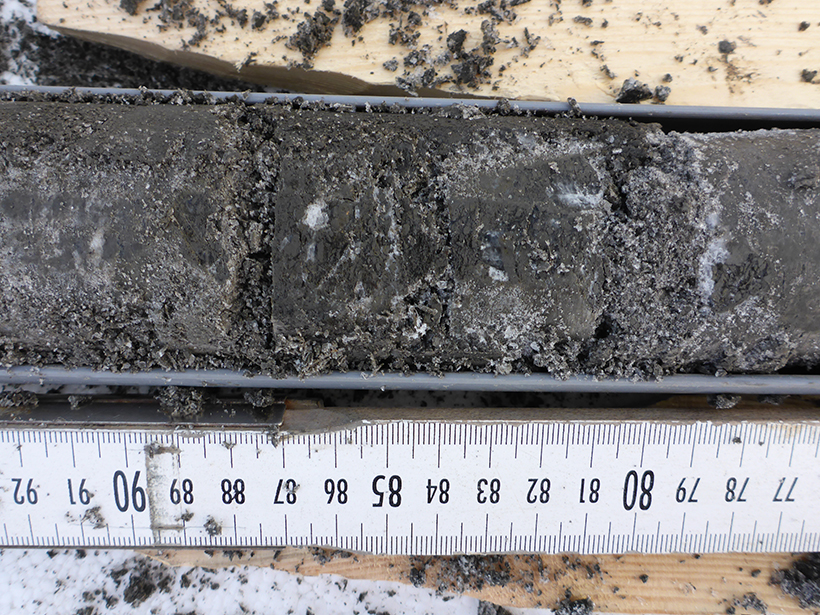
Searching for Organic Carbon in the Dry Valleys of Antarctica

by E. Underwood 6 December 20179 February 2023

Researchers identify the first evidence of microbial respiration in desiccated Antarctic permafrost soils.
Researchers look at submarine permafrost cores to track microbial growth
Posted inResearch Spotlights

Microbes May Thrive in Subsea Permafrost Long After Flooding

Sarah Stanley, Science Writer by Sarah Stanley 1 September 20179 December 2021

Two cores from the East Siberian Arctic Shelf reveal how microbial communities develop over thousands of years as submarine permafrost slowly thaws.

Microbes in snow could contribute to faster melting and impact downstream ecosystems
Posted inResearch Spotlights

Antarctic Microbes Shape Nutrient Content of Snowmelt

Sarah Stanley, Science Writer by Sarah Stanley 20 July 20178 February 2023

As temperatures continue to rise, snow-dwelling microbes could accelerate melting and influence downstream ecosystems.

A “dead cart” depicted in an antique engraving.
Posted inNews

Plague Bug May Have Lurked in Medieval England Between Outbreaks

Bas den Hond, Science Writer by Bas den Hond 8 May 201723 March 2023

A new analysis of climate records in England and Europe’s Low Countries suggests that the disease-causing bacterium persisted in rodents between recurrences in people.

Microbes in the soil are central players in converting carbon into greenhouse gases.
Posted inAGU News

How Do Microbial Ecosystems and Climate Change Interact?

Billy M. Williams, director, Science, AGU by B. M. Williams 18 April 201720 April 2023

The American Society for Microbiology and the American Geophysical Union offer insights from a transdisciplinary collaboration of their scientists regarding this question and areas for further study.

Algae in the Great Calcite Belt may play an important role in fluctuating atmospheric carbon levels.
Posted inResearch Spotlights

Tiny Creatures Form Massive, Bright Ring Around Antarctica

Sarah Stanley, Science Writer by Sarah Stanley 26 January 201727 September 2022

Dense algae populations in the Great Calcite Belt could cause carbon dioxide release from the ocean into the atmosphere.

Crews work on a relief well at California’s Aliso Canyon gas field after a leak that began in December 2015.
Posted inNews

Soil Bacteria Could Help Absorb Natural Gas Leaks

Aaron Sidder, freelance science writer by Aaron Sidder 14 December 201618 May 2022

For the first time, new research examines the response of terrestrial soil microbes to a massive natural gas blowout and offers hope for new remediation strategies.

cyanobacteria coated in clay minerals
Posted inNews

How Did Fragile Early Microbes Become Fossils?

Lucas Joel by L. Joel 12 August 201630 January 2023

During the Ediacaran period more than a half billion years ago, clay mineral coats likely shielded delicate remains, helping them become exquisitely preserved in rock, recent experiments suggest.

Magnetic mineral stripes in beach sand.
Posted inNews

Bacteria Preserve Record of Earth's Magnetic Fields

by E. Deatrick 1 August 201621 July 2022

Tiny yet stable magnetized particles created by microbes long ago could help scientists better determine the strength and orientation of ancient magnetic fields.

Phytoplankton blooms help to cycle nitrate in the Southern Ocean.
Posted inResearch Spotlights

A New Mechanism for Nitrogen Cycling in the Southern Ocean

Sarah Stanley, Science Writer by Sarah Stanley 29 July 201617 August 2022

A nitrite-oxidizing enzyme may work in reverse for some microbes in the Antarctic autumn.

Posts pagination

Newer posts 1 … 16 17 18 19 20 21 Older posts
Over a dark blue-green square appear the words Special Report: The State of the Science 1 Year On.

Features from AGU Publications

Research Spotlights

How Internal Waves Transport Energy Thousands of Miles Across the Ocean

26 March 202626 March 2026
Editors' Highlights

Revolutionizing Interference Detection to Protect the Silence of the Cosmos

1 April 202626 March 2026
Editors' Vox

The Future of Earth’s Future

24 March 202624 March 2026
Eos logo at left; AGU logo at right

About Eos
ENGAGE
Awards
Contact

Advertise
Submit
Career Center
Sitemap

© 2026 American Geophysical Union. All rights reserved Powered by Newspack