• About
  • Special Reports
  • Topics
    • Climate
    • Earth Science
    • Oceans
    • Space & Planets
    • Health & Ecosystems
    • Culture & Policy
    • Education & Careers
    • Opinions
  • Projects
    • Postcards From the Field
    • ENGAGE
    • Editors’ Highlights
    • Editors’ Vox
    • Eos en Español
    • Eos 简体中文版
    • Print Archive: 2015–2025
  • Policy Tracker
  • Blogs
    • Research & Developments
    • The Landslide Blog
  • Newsletter
  • Submit to Eos
  • AGU.org
  • Career Center
  • Join AGU
  • Give to AGU
  • About
  • Special Reports
  • Topics
    • Climate
    • Earth Science
    • Oceans
    • Space & Planets
    • Health & Ecosystems
    • Culture & Policy
    • Education & Careers
    • Opinions
  • Projects
    • Postcards From the Field
    • ENGAGE
    • Editors’ Highlights
    • Editors’ Vox
    • Eos en Español
    • Eos 简体中文版
    • Print Archive: 2015–2025
  • Policy Tracker
  • Blogs
    • Research & Developments
    • The Landslide Blog
  • Newsletter
  • Submit to Eos
Skip to content
  • AGU.org
  • Career Center
  • Join AGU
  • Give to AGU
Eos

Eos

Science News by AGU

Support Eos
Sign Up for Newsletter
  • About
  • Special Reports
  • Topics
    • Climate
    • Earth Science
    • Oceans
    • Space & Planets
    • Health & Ecosystems
    • Culture & Policy
    • Education & Careers
    • Opinions
  • Projects
    • Postcards From the Field
    • ENGAGE
    • Editors’ Highlights
    • Editors’ Vox
    • Eos en Español
    • Eos 简体中文版
    • Print Archive: 2015–2025
  • Policy Tracker
  • Blogs
    • Research & Developments
    • The Landslide Blog
  • Newsletter
  • Submit to Eos

dust

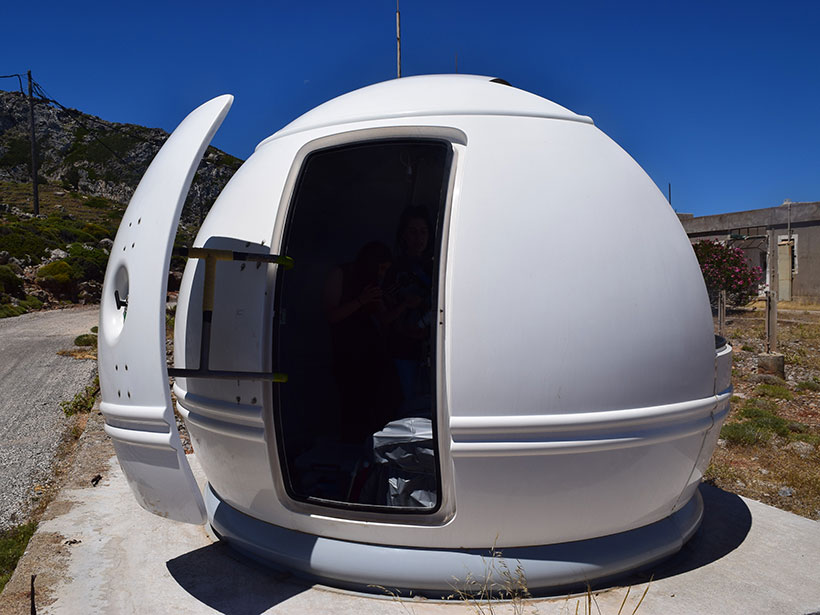
A white, rounded hut that serves as a direct Sun polarimeter
Posted inNews

Have We Got Dust All Wrong?

by S. Dimitropoulos 25 September 202026 October 2021

Scientists are challenging conventional notions of how dust particles are aligned; “everything we’ve so far hypothesized about the impact of dust on the atmosphere might be misplaced.”
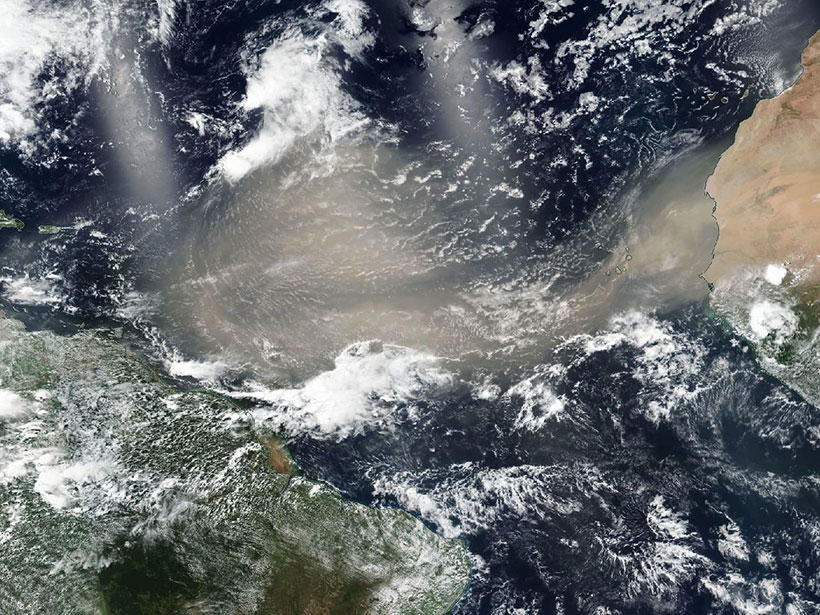
Satellite imagery showing a dust cloud spanning the tropical North Atlantic on 20 June 2020
Posted inResearch Spotlights

Trans-Atlantic Dusts May Not Enrich Amazon as Much as Thought

by David Shultz 16 September 20202 November 2021

New research indicates that nutrient loads delivered to South American ecosystems by dust originating in Africa are far lower than suggested in previous studies.

Map of the mid Atlantic showing comparison between models and observations of where Saharan dust deposition occurs
Posted inEditors' Highlights

Saharan Dust Reaching the Americas Comes from El Djouf

by Alessandra Giannini 28 August 20202 February 2022

The Saharan dust that crosses the Atlantic and fertilizes the Amazon may be coming from the El Djouf region between Mauritania and Mali, which is farther west than previously thought.
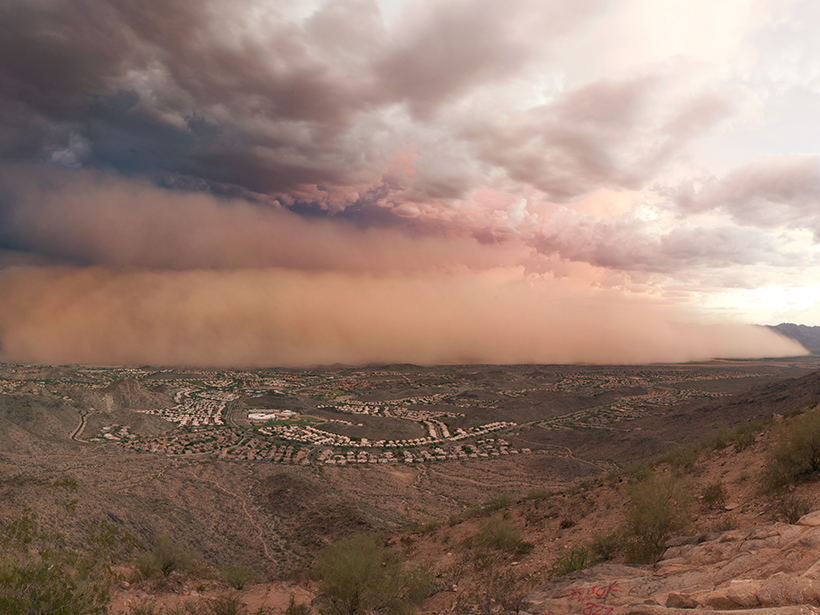
A dust storm approaches the outskirts of Phoenix in 2011.
Posted inResearch Spotlights

Dust Storms Associated with Increase in Critical Care Visits

by David Shultz 11 August 202029 September 2021

Fine particulate matter from dust storms can exacerbate respiratory diseases, and now scientists have shown that critical care hospital visits spike during and after such events.
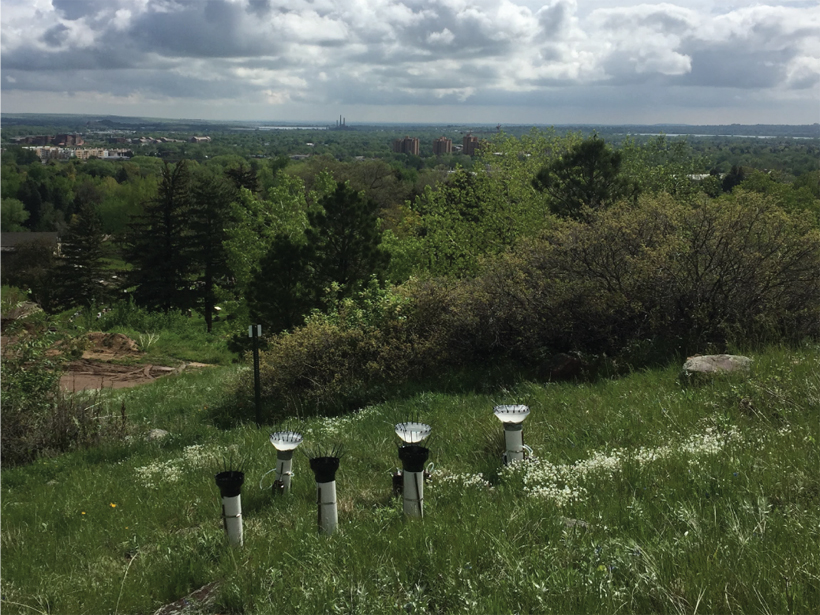
Photograph of bulk deposition collectors capturing atmospheric dust at Four Pines, Colorado
Posted inEditors' Highlights

Dust in the Wind: Human Impacts to the Colorado Front Range

by Amy E. East 1 July 202010 March 2023

A recent increase in airborne dust has been attributed to both climate and land use, with human activity playing a substantial role, especially in summertime at low elevations.

Posted inEditors' Vox

Lifting the Veil on Martian Dust Storms

by Anni Määttänen and C. Newman 23 June 20202 February 2022

A special collection in JGR Planets presents insights from a long-awaited global dust storm on Mars in 2018 that was closely scrutinized by five orbiting and two landed spacecraft.
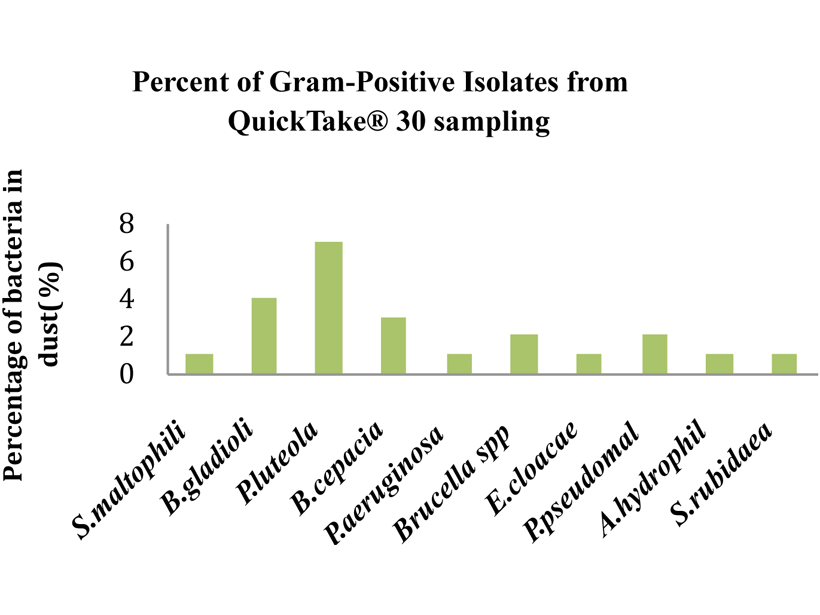
Chart showing percent of gram-positive isolates from sampling
Posted inEditors' Highlights

Dangerous Bacteria Catch a Ride on Saharan Dust

by Gabriel Filippelli 19 June 20202 February 2022

Saharan dust events can spread bacterial pathogens over long distances, but we may be able to predict the human health risk from exposure.

Cross section of a rock consisting of fossilized cyanobacteria
Posted inNews

Dust in the Atmosphere May Have Fertilized the Ancient Ocean

Rachel Crowell, Science Writer by Rachel Crowell 5 February 202017 February 2023

New research investigates dust’s role in primary production during the Carboniferous and Permian periods.

Close-up image of gravel and dust on an asphalt
Posted inNews

Road Dust: A Health Hazard Hidden in Plain Sight

Megan Sever, Science Writer by Megan Sever 7 November 201927 August 2025

Legacy heavy metals from past industrial activity combine with traffic paint; asphalt; and bits of tires, brakes, and car parts to create toxic dust on our roadways.

Greenery forefronts an image of a dust storm clouding the horizon
Posted inNews

Dusting Off the Arid Antiquity of the Sahara

Sarah Derouin, Science Writer by Sarah Derouin 14 October 20192 March 2023

New research on the geochemistry of Canary Islands paleosols shows that the Sahara has been an arid dust producer for at least 4.8 million years.

Posts pagination

Newer posts 1 … 4 5 6 7 8 Older posts
Over a dark blue-green square appear the words Special Report: The State of the Science 1 Year On.

Features from AGU Publications

Research Spotlights

As Wildfires Increase in the West, So Does Suppression Spending

10 June 202610 June 2026
Editors' Highlights

Multi-Scale Fault Roughness Encapsulated in a Friction Law

11 June 202611 June 2026
Editors' Vox

Small-Scale Indian Ocean Dynamics Underpin Marine Ecology and Climate

4 June 20263 June 2026
Eos logo at left; AGU logo at right

About Eos
ENGAGE
Awards
Contact

Advertise
Submit
Career Center
Sitemap

© 2026 American Geophysical Union. All rights reserved Powered by Newspack