• About
  • Special Reports
  • Topics
    • Climate
    • Earth Science
    • Oceans
    • Space & Planets
    • Health & Ecosystems
    • Culture & Policy
    • Education & Careers
    • Opinions
  • Projects
    • Postcards From the Field
    • ENGAGE
    • Editors’ Highlights
    • Editors’ Vox
    • Eos en Español
    • Eos 简体中文版
    • Print Archive: 2015–2025
  • Policy Tracker
  • Blogs
    • Research & Developments
    • The Landslide Blog
  • Newsletter
  • Submit to Eos
  • AGU.org
  • Career Center
  • Join AGU
  • Give to AGU
  • About
  • Special Reports
  • Topics
    • Climate
    • Earth Science
    • Oceans
    • Space & Planets
    • Health & Ecosystems
    • Culture & Policy
    • Education & Careers
    • Opinions
  • Projects
    • Postcards From the Field
    • ENGAGE
    • Editors’ Highlights
    • Editors’ Vox
    • Eos en Español
    • Eos 简体中文版
    • Print Archive: 2015–2025
  • Policy Tracker
  • Blogs
    • Research & Developments
    • The Landslide Blog
  • Newsletter
  • Submit to Eos
Skip to content
  • AGU.org
  • Career Center
  • Join AGU
  • Give to AGU
Eos

Eos

Science News by AGU

Support Eos
Sign Up for Newsletter
  • About
  • Special Reports
  • Topics
    • Climate
    • Earth Science
    • Oceans
    • Space & Planets
    • Health & Ecosystems
    • Culture & Policy
    • Education & Careers
    • Opinions
  • Projects
    • Postcards From the Field
    • ENGAGE
    • Editors’ Highlights
    • Editors’ Vox
    • Eos en Español
    • Eos 简体中文版
    • Print Archive: 2015–2025
  • Policy Tracker
  • Blogs
    • Research & Developments
    • The Landslide Blog
  • Newsletter
  • Submit to Eos

Great Lakes

Posted inNews

Algae Blooms and Gas Wells Drive Lake Erie Methane Emissions

by R. Heisman 29 March 20162 November 2021

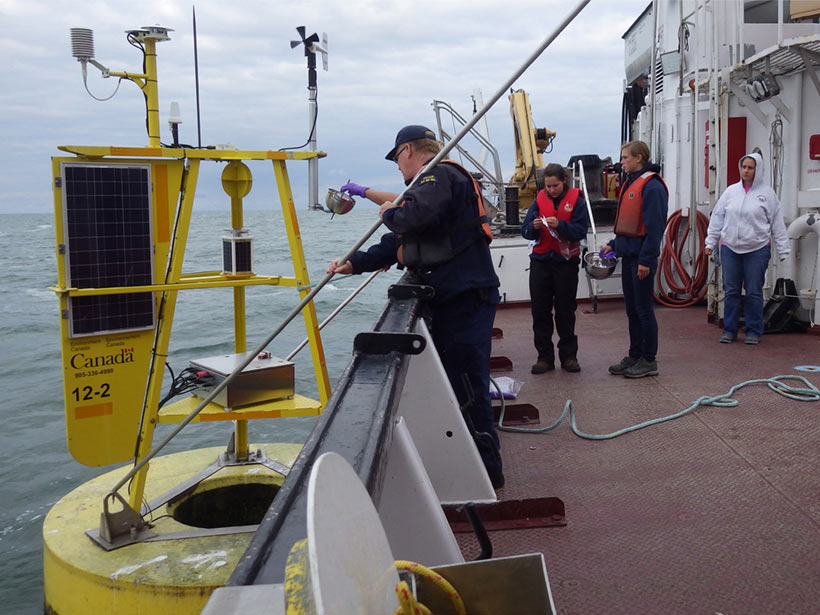
In one of the first studies to investigate large lakes as methane sources, researchers found that Lake Erie is releasing more of the potent greenhouse gas than expected.
Posted inResearch Spotlights

Great Lakes Hold Sway over Water and Carbon Cycling

by L. Strelich 21 October 20151 March 2023

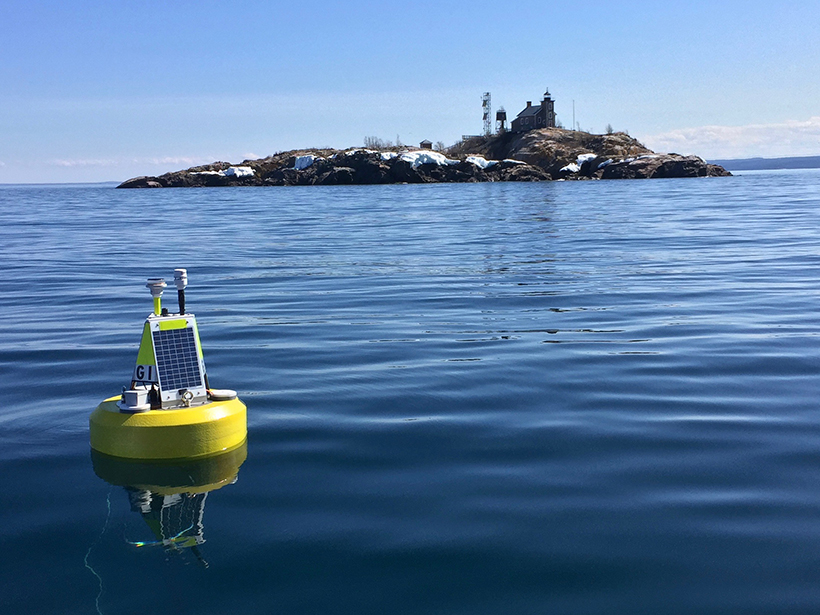
The largest body of fresh water on Earth governs the exchange of gases between water and the atmosphere that makes it a carbon sink for the entire region.

High waves buffet Michigan’s Grand Haven Lighthouse, located on the eastern shore of Lake Michigan.
Posted inScience Updates

Water Levels Surge on Great Lakes

by A. D. Gronewold, A. H. Clites, J. Bruxer, K. W. Kompoltowicz, J. P. Smith, T. S. Hunter and C. Wong 17 March 201518 August 2025

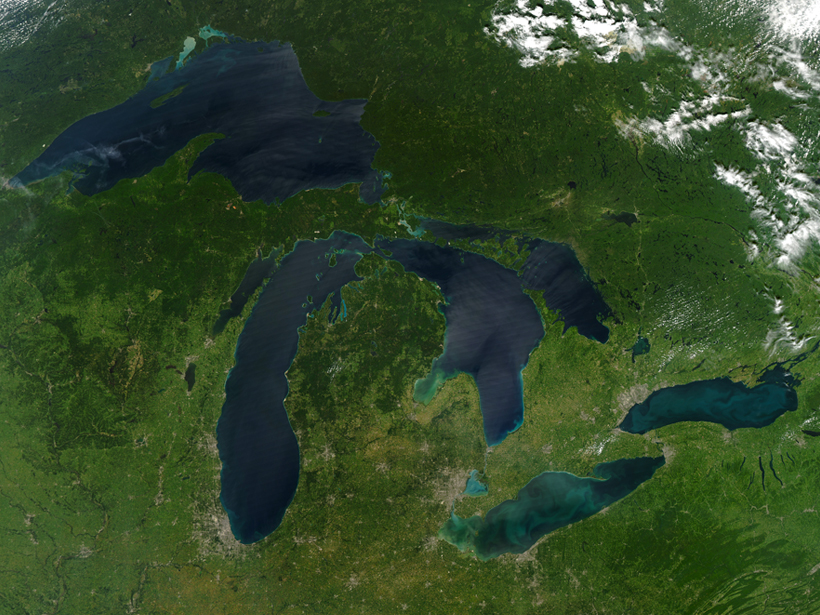
The recent 2-year surge represents one of the most rapid rates of water level change on the Great Lakes in recorded history and marks the end of an unprecedented period of low water levels.
Posted inNews

Miners Left a Pollution Trail in the Great Lakes 6000 Years Ago

by J. Rosen 24 December 201410 September 2025

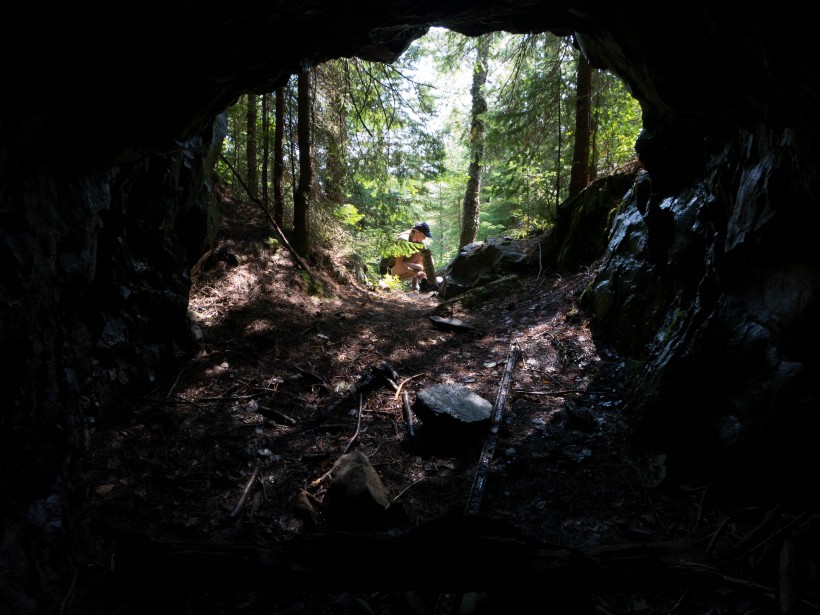
Scientists find evidence of ancient copper mining in polluted lake sediments from Isle Royale National Park.

Posts pagination

Newer posts 1 2 3
Over a dark blue-green square appear the words Special Report: The State of the Science 1 Year On.

Features from AGU Publications

Research Spotlights

Making a Map to Make a Difference

11 February 202611 February 2026
Editors' Highlights

Rocky Shore Erosion Shaped by Multi-Scale Tectonics

16 February 202613 February 2026
Editors' Vox

A Double-Edged Sword: The Global Oxychlorine Cycle on Mars

10 February 202610 February 2026
Eos logo at left; AGU logo at right

About Eos
ENGAGE
Awards
Contact

Advertise
Submit
Career Center
Sitemap

© 2026 American Geophysical Union. All rights reserved Powered by Newspack