• About
  • Sections
  • Topics
    • Climate
    • Earth Science
    • Oceans
    • Space & Planets
    • Health & Ecosystems
    • Culture & Policy
    • Education & Careers
    • Opinions
  • Projects
    • Postcards From the Field
    • ENGAGE
    • Editors’ Highlights
    • Editors’ Vox
    • Eos en Español
    • Eos 简体中文版
    • Print Archive: 2015–2025
  • Science Policy Tracker
  • Blogs
    • Research & Developments
    • The Landslide Blog
  • Newsletter
  • Submit to Eos
  • AGU.org
  • Career Center
  • Join AGU
  • Give to AGU
  • About
  • Sections
  • Topics
    • Climate
    • Earth Science
    • Oceans
    • Space & Planets
    • Health & Ecosystems
    • Culture & Policy
    • Education & Careers
    • Opinions
  • Projects
    • Postcards From the Field
    • ENGAGE
    • Editors’ Highlights
    • Editors’ Vox
    • Eos en Español
    • Eos 简体中文版
    • Print Archive: 2015–2025
  • Science Policy Tracker
  • Blogs
    • Research & Developments
    • The Landslide Blog
  • Newsletter
  • Submit to Eos
Skip to content
  • AGU.org
  • Career Center
  • Join AGU
  • Give to AGU
Eos

Eos

Science News by AGU

Support Eos
Sign Up for Newsletter
  • About
  • Sections
  • Topics
    • Climate
    • Earth Science
    • Oceans
    • Space & Planets
    • Health & Ecosystems
    • Culture & Policy
    • Education & Careers
    • Opinions
  • Projects
    • Postcards From the Field
    • ENGAGE
    • Editors’ Highlights
    • Editors’ Vox
    • Eos en Español
    • Eos 简体中文版
    • Print Archive: 2015–2025
  • Science Policy Tracker
  • Blogs
    • Research & Developments
    • The Landslide Blog
  • Newsletter
  • Submit to Eos

insects

Bee sitting in sandstone hole.
Posted inNews

Rock-Chomping Bees Burrow into Sandstone

JoAnna Wendel, freelance science writer and illustrator by JoAnna Wendel 26 September 201611 January 2022

A previously unknown species of rock-excavating bees, discovered 40 years ago but not reported in the scientific literature, finally gets the spotlight.

Posted inResearch Spotlights

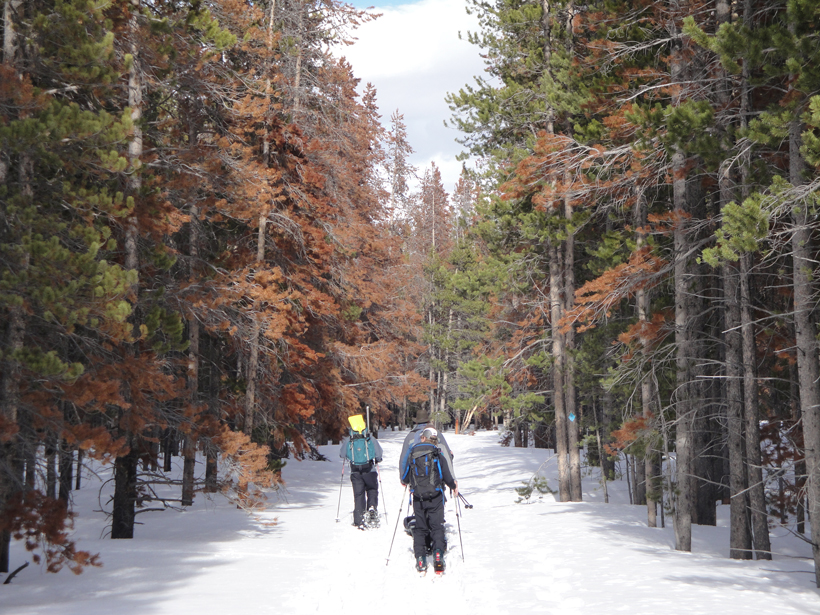
Bark Beetles Cause Big Tree Die-Offs, but Streams Flow Steadily

by L. Strelich 9 March 201611 January 2022

Recent beetle epidemics have driven tree die-offs across North America, and previous studies predicted an increase in annual streamflow would follow—but a new study shows this may not be the case.

Posted inResearch Spotlights

Silk Insect Nets Can Reshape Creek Beds

by E. Betz 16 December 201411 January 2022

Colonies of tiny caddisflies slow stream sediment transport with their silk nets.

Posts pagination

Newer posts 1 2 3
A view of a bridge, with the New Orleans skyline visible in the distance between the bridge and the water. A purple tint, a teal curved line representing a river, and the text “#AGU25 coverage from Eos” overlie the photo.

Features from AGU Publications

Research Spotlights

Temperatures Are Rising, but What About Humidity?

8 January 20268 January 2026
Editors' Highlights

Successful Liquid Lake Conditions in a Cold Martian Paleoclimate

8 January 20268 January 2026
Editors' Vox

Hydrothermal Circulation and Its Impact on the Earth System

3 December 20253 December 2025
Eos logo at left; AGU logo at right

About Eos
ENGAGE
Awards
Contact

Advertise
Submit
Career Center
Sitemap

© 2026 American Geophysical Union. All rights reserved Powered by Newspack