• About
  • Special Reports
  • Topics
    • Climate
    • Earth Science
    • Oceans
    • Space & Planets
    • Health & Ecosystems
    • Culture & Policy
    • Education & Careers
    • Opinions
  • Projects
    • Postcards From the Field
    • ENGAGE
    • Editors’ Highlights
    • Editors’ Vox
    • Eos en Español
    • Eos 简体中文版
    • Print Archive: 2015–2025
  • Policy Tracker
  • Blogs
    • Research & Developments
    • The Landslide Blog
  • Newsletter
  • Submit to Eos
  • AGU.org
  • Career Center
  • Join AGU
  • Give to AGU
  • About
  • Special Reports
  • Topics
    • Climate
    • Earth Science
    • Oceans
    • Space & Planets
    • Health & Ecosystems
    • Culture & Policy
    • Education & Careers
    • Opinions
  • Projects
    • Postcards From the Field
    • ENGAGE
    • Editors’ Highlights
    • Editors’ Vox
    • Eos en Español
    • Eos 简体中文版
    • Print Archive: 2015–2025
  • Policy Tracker
  • Blogs
    • Research & Developments
    • The Landslide Blog
  • Newsletter
  • Submit to Eos
Skip to content
  • AGU.org
  • Career Center
  • Join AGU
  • Give to AGU
Eos

Eos

Science News by AGU

Support Eos
Sign Up for Newsletter
  • About
  • Special Reports
  • Topics
    • Climate
    • Earth Science
    • Oceans
    • Space & Planets
    • Health & Ecosystems
    • Culture & Policy
    • Education & Careers
    • Opinions
  • Projects
    • Postcards From the Field
    • ENGAGE
    • Editors’ Highlights
    • Editors’ Vox
    • Eos en Español
    • Eos 简体中文版
    • Print Archive: 2015–2025
  • Policy Tracker
  • Blogs
    • Research & Developments
    • The Landslide Blog
  • Newsletter
  • Submit to Eos

Journal of Geophysical Research: Oceans
Visit the journal.

Posted inEditors' Vox

They Got to “Ask-Me-Anything.” So, What Did They Want to Know?

by Kristopher B. Karnauskas 6 June 201616 February 2023

On behalf of JGR: Oceans, I consented to a Reddit Science AMA. What did an anonymous public want to learn about oceanography and climate science? More importantly, what can we learn from them?
giant-squid-larva
Posted inResearch Spotlights

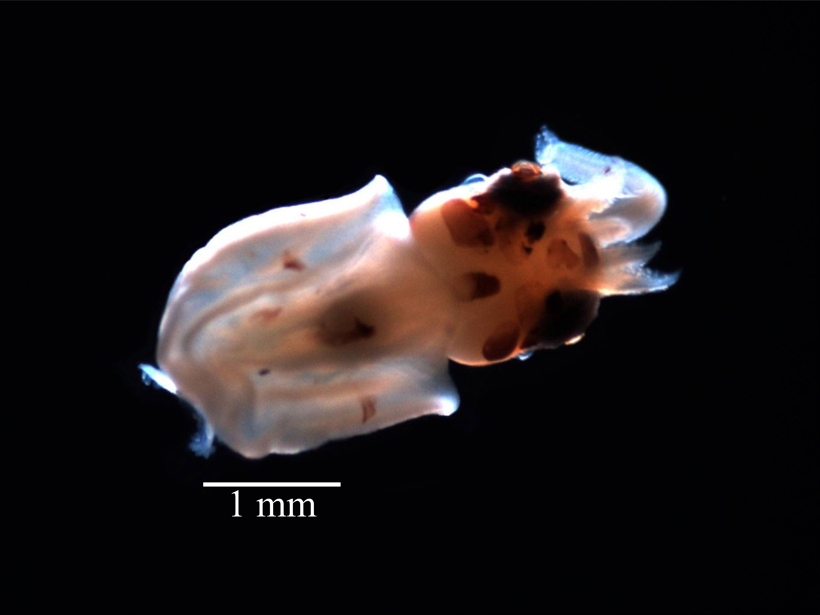
Understanding the Distribution of Juvenile Jumbo Squid

by Terri Cook 9 May 201622 October 2021

An expanding zone of shallow, oxygen-depleted water in the eastern tropical Pacific Ocean may be vertically restricting the habitat of this important source of food, according to a recent study.

Posted inResearch Spotlights

Drifting Floats Reveal Nitrate Patterns in Mediterranean Sea

Kate Wheeling, freelance science writer by Kate Wheeling 30 March 201622 July 2022

Next-generation autonomous platforms allow scientists to understand physical mechanisms that control nitrate availability in the Mediterranean surface water.

Posted inResearch Spotlights

Uncertainty Evaluations Improve Biogeochemical Simulations

by Terri Cook 15 March 201627 September 2022

Results from the first decade-long reanalysis simulation of northwest European shelf biogeochemistry show the importance of quantifying the uncertainty in these indicators to inform marine policy.

Posted inResearch Spotlights

The Unique Radar Signature of Rain Falling on Water

by Mark Zastrow 19 February 201614 January 2022

If rain falls on an ocean and nobody's there to see it, how can we determine its effect on the Earth's climate? A new study shows us how space-based radar could help.

Posted inResearch Spotlights

Satellites Reveal Dynamics of Suspended Mineral Particles

by Terri Cook 18 February 20165 September 2023

A case study of the Irish Sea evaluates the use of ocean color data to measure the optical properties of sedimentary particles in offshore waters.

Posted inResearch Spotlights

Tracking Long-Term Changes in Global Sea Level Extremes

Sarah Stanley, Science Writer by Sarah Stanley 27 January 201610 March 2023

Large-scale climate change may drive trends in extreme sea level events.

Posted inResearch Spotlights

Arctic Tides Drive Water Mixing and Sea Ice Loss

by L. Strelich 14 January 201611 January 2022

Researchers model ice-ocean interaction to study how tides can influence Arctic Ocean circulation and sea ice volume.

Posted inResearch Spotlights

Rising Temperatures Release Methane Locked in the Seabed

by L. Strelich 12 November 201531 July 2023

New research shows that when ice in the seafloor melts, single-cell organisms metabolize the methane released, preventing the greenhouse gas from reaching the atmosphere.

Posted inResearch Spotlights

Underwater Gliders Find Swirling Vortices of Warm, Salty Water

by David Shultz 13 October 201522 July 2022

Vortices formed off the west coast of Sardinia could play a large role in Mediterranean water circulation and mixing and are significant for marine ecosystems and regional climate.

Posts pagination

Newer posts 1 … 12 13 14 15 Older posts
Over a dark blue-green square appear the words Special Report: The State of the Science 1 Year On.

Features from AGU Publications

Research Spotlights

How Wildfires Worsen Flood Risk

30 April 202630 April 2026
Editors' Highlights

Drivers of Day-to-Day Temperature Swings Across Continents

1 May 20261 May 2026
Editors' Vox

Hydrothermal Heat Flow as a Window into Subsurface Arc Magmas

28 April 20261 May 2026
Eos logo at left; AGU logo at right

About Eos
ENGAGE
Awards
Contact

Advertise
Submit
Career Center
Sitemap

© 2026 American Geophysical Union. All rights reserved Powered by Newspack