• About
  • Special Reports
  • Topics
    • Climate
    • Earth Science
    • Oceans
    • Space & Planets
    • Health & Ecosystems
    • Culture & Policy
    • Education & Careers
    • Opinions
  • Projects
    • Postcards From the Field
    • ENGAGE
    • Editors’ Highlights
    • Editors’ Vox
    • Eos en Español
    • Eos 简体中文版
    • Print Archive: 2015–2025
  • Policy Tracker
  • Blogs
    • Research & Developments
    • The Landslide Blog
  • Newsletter
  • Submit to Eos
  • AGU.org
  • Career Center
  • Join AGU
  • Give to AGU
  • About
  • Special Reports
  • Topics
    • Climate
    • Earth Science
    • Oceans
    • Space & Planets
    • Health & Ecosystems
    • Culture & Policy
    • Education & Careers
    • Opinions
  • Projects
    • Postcards From the Field
    • ENGAGE
    • Editors’ Highlights
    • Editors’ Vox
    • Eos en Español
    • Eos 简体中文版
    • Print Archive: 2015–2025
  • Policy Tracker
  • Blogs
    • Research & Developments
    • The Landslide Blog
  • Newsletter
  • Submit to Eos
Skip to content
  • AGU.org
  • Career Center
  • Join AGU
  • Give to AGU
Eos

Eos

Science News by AGU

Support Eos
Sign Up for Newsletter
  • About
  • Special Reports
  • Topics
    • Climate
    • Earth Science
    • Oceans
    • Space & Planets
    • Health & Ecosystems
    • Culture & Policy
    • Education & Careers
    • Opinions
  • Projects
    • Postcards From the Field
    • ENGAGE
    • Editors’ Highlights
    • Editors’ Vox
    • Eos en Español
    • Eos 简体中文版
    • Print Archive: 2015–2025
  • Policy Tracker
  • Blogs
    • Research & Developments
    • The Landslide Blog
  • Newsletter
  • Submit to Eos

Mars

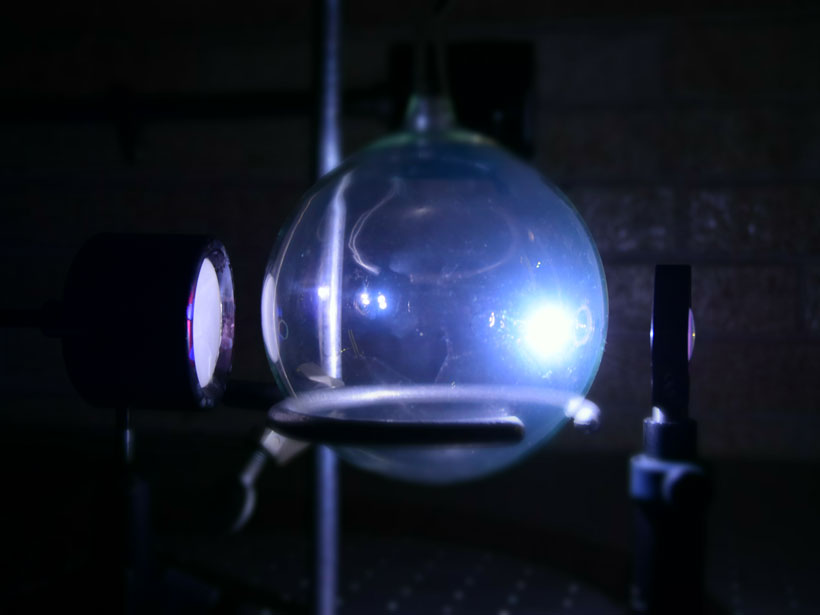
Laboratory experiment used to simulate the shock wave made by an asteroid impact on Mars
Posted inResearch Spotlights

Rover and Lasers Unlock Clues to Early Martian Atmosphere

Aaron Sidder, freelance science writer by Aaron Sidder 3 April 201924 April 2024

Sediments from the Curiosity rover and experiments using tanks of gas and laser beams helped reveal how water continued to flow on Mars after the planet lost its atmospheric carbon dioxide.

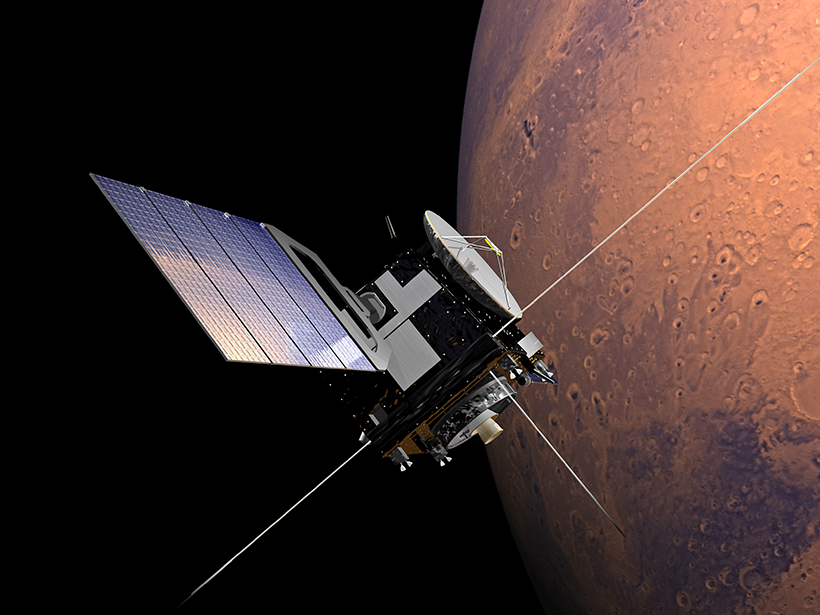
An artist’s rendering of the Mars Express spacecraft
Posted inResearch Spotlights

The Accidental Particle Accelerator Orbiting Mars

by Mark Zastrow 3 April 201920 October 2021

The radar aboard the Mars Express spacecraft can generate ion beams arcing through space above the planet, which could lead to a new way of studying the plasma surrounding it.
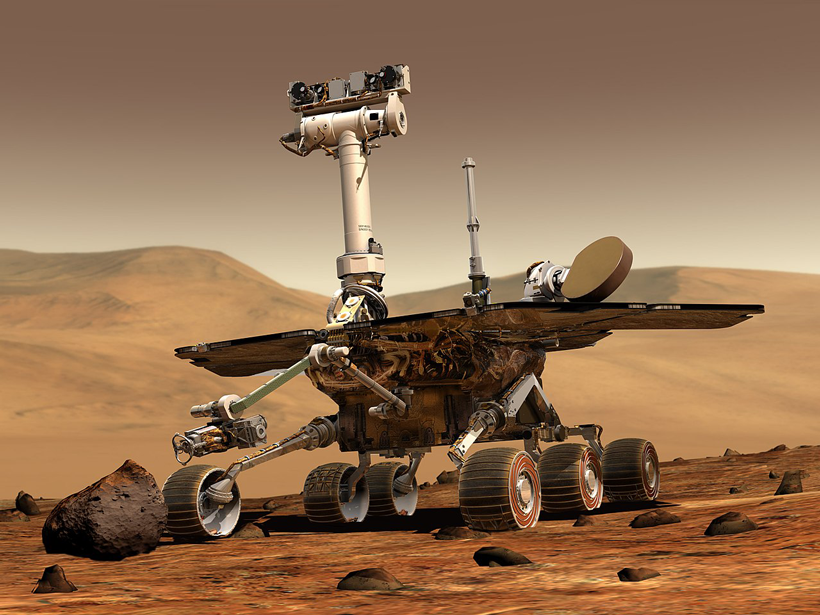
Illustration of a NASA Mars Exploration Rover on the surface of Mars
Posted inOpinions

Rest in Peace, Spirit and Opportunity

by R. Anderson 28 March 201917 January 2023

A scientist on the rover team offers a remembrance of two intrepid explorers.
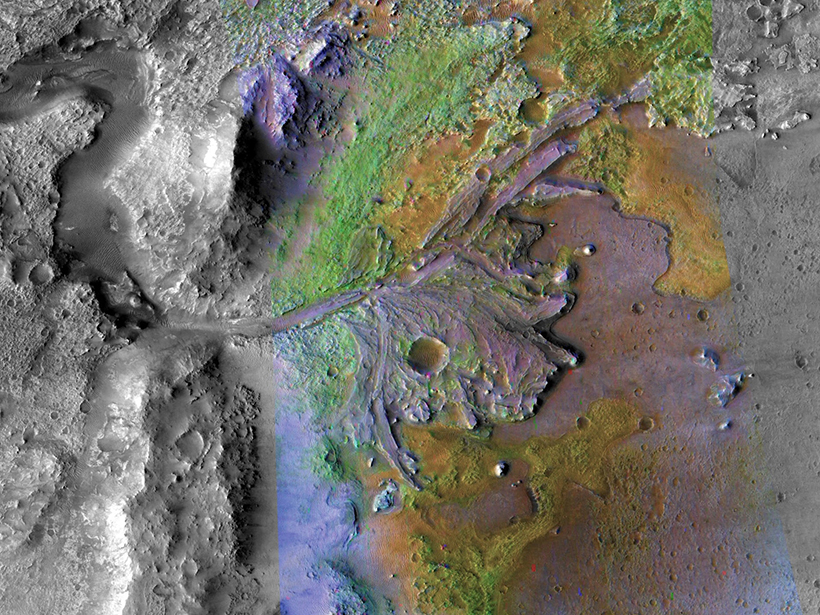
Jezero Crater River Delta on Mars
Posted inNews

What Ancient Rivers on Mars Reveal About Its “Great Drying”

Jenessa Duncombe, Staff Writer by Jenessa Duncombe 27 March 201923 February 2023

Dried-up rivers on Mars suggest that the planet was wet in the not-too-distant past.
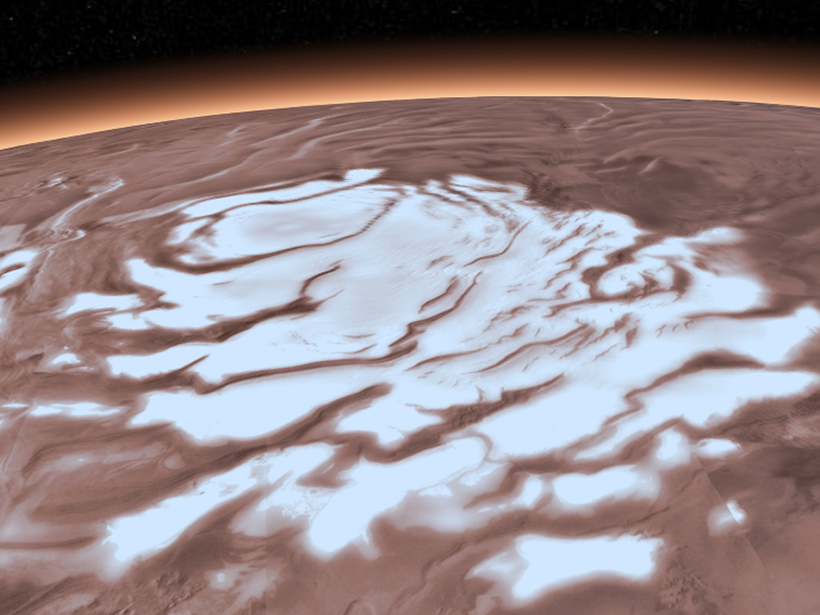
Perspective view of Mars’s south polar ice cap
Posted inResearch Spotlights

Local Heat Source Needed to Form Liquid Water Lake on Mars

by Terri Cook 12 March 201910 March 2022

Thermal modeling suggests that active magmatism in the past few hundred thousand years could account for the presence of a large lake previously hypothesized beneath the Red Planet’s southern ice cap.
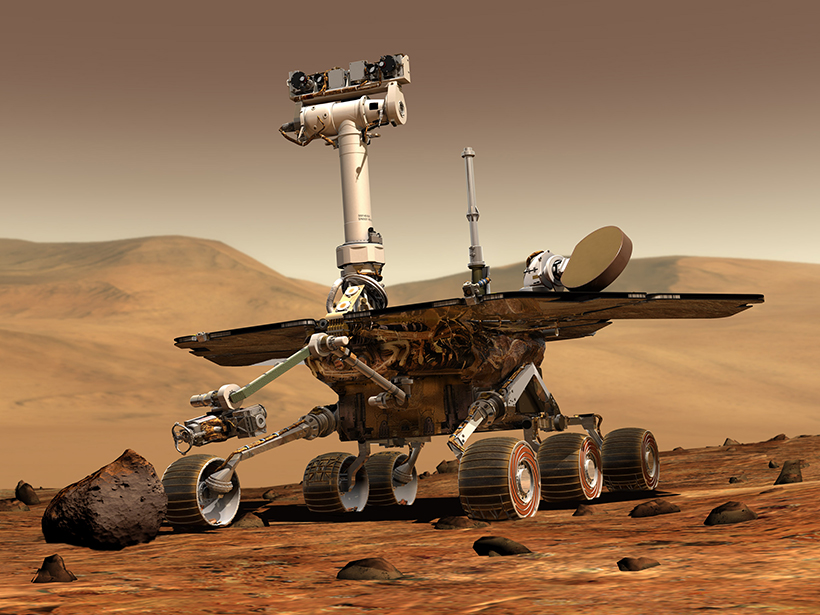
The Opportunity rover on Mars
Posted inNews

Opportunity Rover Mission Complete

Kimberly M. S. Cartier, News Writing and Production Intern for Eos.org by Kimberly M. S. Cartier 13 February 201917 January 2023

The rover explored Mars’s surface for nearly 15 years and discovered ample evidence of the planet’s wet history.

A picture of Phobos, the larger of Mars’s two moons
Posted inResearch Spotlights

New Hints About How Martian Moons Formed

by E. Underwood 11 February 201928 July 2022

A new study finds that Phobos includes chunks of Martian crust.

Rosalind Franklin, the upcoming rover in Europe’s ExoMars mission
Posted inNews

Future Mars Rover Named for DNA Pioneer Rosalind Franklin

Kimberly M. S. Cartier, News Writing and Production Intern for Eos.org by Kimberly M. S. Cartier 7 February 201917 January 2023

The rover will explore a once water rich region on Mars’s surface and search for evidence of current and past life.
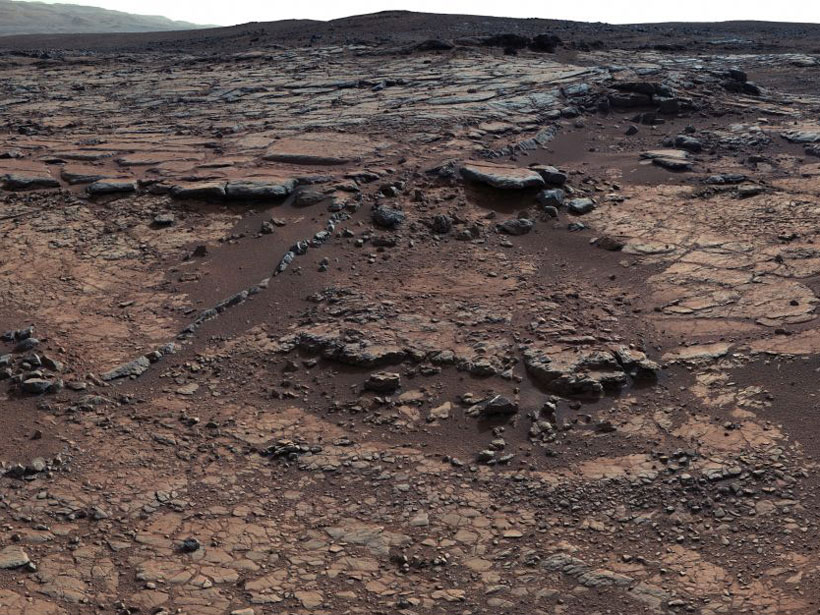
A view of Yellowknife Bay in Mars’s Gale crater
Posted inResearch Spotlights

Researchers Bring Early Martian Water Chemistry to Life

Sarah Stanley, Science Writer by Sarah Stanley 25 January 20193 January 2023

Lab experiments constrain conditions necessary for a key mineral to have formed in ancient lagoons and a crater lake.

Posted inEditors' Highlights

Thermal Signature of Martian River Deposits Suggests Cementation

by B. Pirenne 24 January 201910 March 2023

Are there indications of extended aqueous processes beyond the period of widespread fluvial activity on Mars?

Posts pagination

Newer posts 1 … 15 16 17 18 19 … 25 Older posts
Over a dark blue-green square appear the words Special Report: The State of the Science 1 Year On.

Features from AGU Publications

Research Spotlights

How Internal Waves Transport Energy Thousands of Miles Across the Ocean

26 March 202626 March 2026
Editors' Highlights

An Ancient Landscape Beneath the East Antarctic Ice Sheet

8 April 20266 April 2026
Editors' Vox

The Future of Earth’s Future

24 March 202624 March 2026
Eos logo at left; AGU logo at right

About Eos
ENGAGE
Awards
Contact

Advertise
Submit
Career Center
Sitemap

© 2026 American Geophysical Union. All rights reserved Powered by Newspack