• About
  • Special Reports
  • Topics
    • Climate
    • Earth Science
    • Oceans
    • Space & Planets
    • Health & Ecosystems
    • Culture & Policy
    • Education & Careers
    • Opinions
  • Projects
    • Postcards From the Field
    • ENGAGE
    • Editors’ Highlights
    • Editors’ Vox
    • Eos en Español
    • Eos 简体中文版
    • Print Archive: 2015–2025
  • Policy Tracker
  • Blogs
    • Research & Developments
    • The Landslide Blog
  • Newsletter
  • Submit to Eos
  • AGU.org
  • Career Center
  • Join AGU
  • Give to AGU
  • About
  • Special Reports
  • Topics
    • Climate
    • Earth Science
    • Oceans
    • Space & Planets
    • Health & Ecosystems
    • Culture & Policy
    • Education & Careers
    • Opinions
  • Projects
    • Postcards From the Field
    • ENGAGE
    • Editors’ Highlights
    • Editors’ Vox
    • Eos en Español
    • Eos 简体中文版
    • Print Archive: 2015–2025
  • Policy Tracker
  • Blogs
    • Research & Developments
    • The Landslide Blog
  • Newsletter
  • Submit to Eos
Skip to content
  • AGU.org
  • Career Center
  • Join AGU
  • Give to AGU
Eos

Eos

Science News by AGU

Support Eos
Sign Up for Newsletter
  • About
  • Special Reports
  • Topics
    • Climate
    • Earth Science
    • Oceans
    • Space & Planets
    • Health & Ecosystems
    • Culture & Policy
    • Education & Careers
    • Opinions
  • Projects
    • Postcards From the Field
    • ENGAGE
    • Editors’ Highlights
    • Editors’ Vox
    • Eos en Español
    • Eos 简体中文版
    • Print Archive: 2015–2025
  • Policy Tracker
  • Blogs
    • Research & Developments
    • The Landslide Blog
  • Newsletter
  • Submit to Eos

meetings & workshops

A Basler BT-67 fixed wing aircraft releases oil dispersant over oil from the Deepwater Horizon spill on 5 May 2010.
Posted inNews

Oil Spill Response Knowledge Grows, but New Risks Emerge

by L. G. Shields 3 April 201818 May 2022

Oil spill expert Nancy Kinner discusses lessons learned from Deepwater Horizon, dangers of aging infrastructure and atomized dispersants, and a Russian plan that imperils Arctic waters.
Posted inEditors' Vox

Coupled from the Start

by P. A. Dirmeyer 2 April 201818 February 2022

Atmosphere and land model development has historically been segregated but coupled processes crucial to prediction and extremes can be properly represented only with a holistic approach.

Scientists of the LimnoAlp consortium take physicochemical measurements of the water column of Lago Nero, an alpine lake in southern Switzerland, during winter
Posted inScience Updates

Winter Conditions Are Changing Rapidly in Alpine Lake Ecosystems

by A. Bruder, M. Kainz and M. Tonolla 27 March 20189 December 2021

LimnoAlp Workshop; Lake Cadagno, Switzerland, 10–15 September 2017
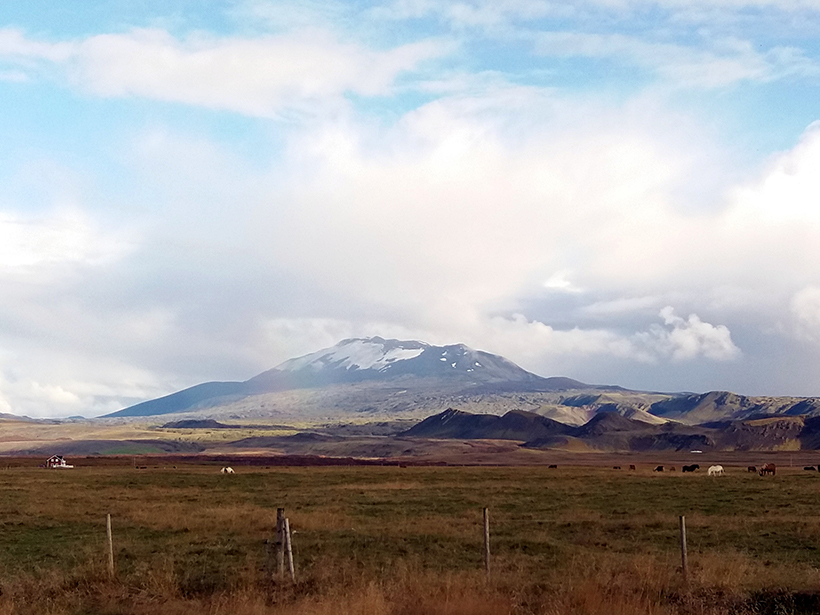
Hekla volcano, Iceland
Posted inScience Updates

Nordic Workshop Takes on Major Puzzles of Paleomagnetism

by M. C. Brown, T. H. Torsvik and L. J. Pesonen 23 March 201829 September 2021

8th Nordic Paleomagnetism Workshop; Leirubakki, Iceland, 30 September to 7 October 2017
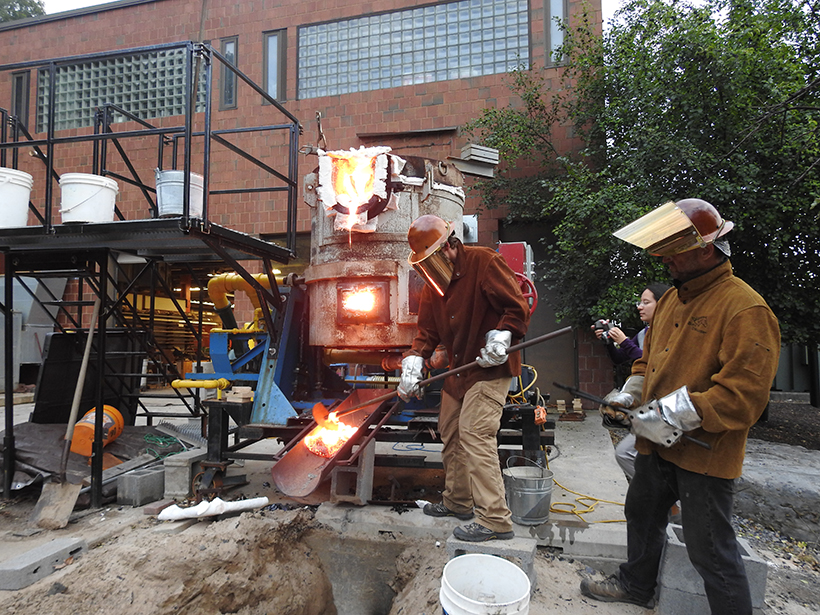
Spatter bombs
Posted inNews

Homemade “Spatter Bombs” Can Reveal Volcanic Secrets

JoAnna Wendel, freelance science writer and illustrator by JoAnna Wendel 23 March 201815 November 2022

Researchers use trial and error to develop a technique to create volcanic lava bombs.

Space poetry
Posted inGeoFIZZ

Lunar and Planetary Science Inspires Out-of-This-World Poetry

JoAnna Wendel, freelance science writer and illustrator by JoAnna Wendel 19 March 201811 January 2022

Writing a haiku to accompany your abstract is a long-standing tradition of the annual Lunar and Planetary Science Conference. Here are some of our favorites from this year’s program.

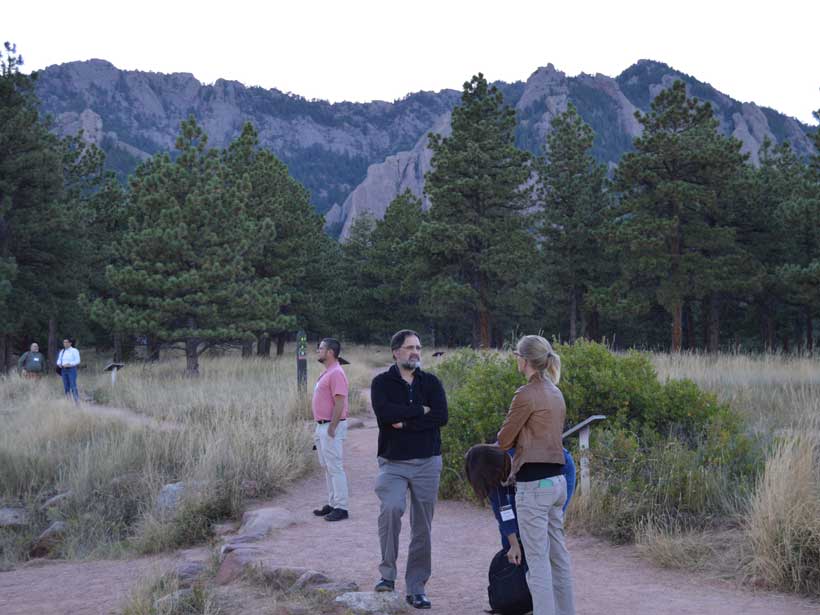
Niwot Ridge Long Term Ecological Research site, Boulder, Colorado
Posted inScience Updates

Modeling Global Change Ecology in a High–Carbon Dioxide World

by S. J. Cheng, N. G. Smith and A. R. Marklein 16 March 201821 March 2022

Ignite-style Session, Ecological Society of America Annual Meeting; Portland, Oregon, 11 August 2017

Fault scarp in Italy's Apennine Mountains
Posted inScience Updates

How Earthquakes Start and Stop

by D. Marsan, G. C. Beroza and Joan Gomberg 14 March 20182 December 2022

Earthquakes: Nucleation, Triggering, Rupture, and Relationships to Aseismic Processes; Cargèse, Corsica, France, 2–6 October 2017

A droplet of water rich in microorganisms clings to a copper-rich stalactite at the Kipuka Kanohina Cave Preserve in Hawaii.
Posted inScience Updates

What Would Earth Be Like Without Life?

by M. A. Chan, H. J. Cleaves II and P. J. Boston 12 March 20185 January 2022

Workshop on a Cosmic Perspective of Earth: A Planet Permeated and Shaped by Life—Implications for Astrobiology; Tokyo, Japan, 13–15 September 2017

Diana Orlandi at the 2017 Virtual Poster Showcase
Posted inAGU News

Virtual Poster Showcase Experienced Steady Growth in 2017

Pranoti Asher, Education and Public Outreach Manager for AGU by P. M. Asher and N. Janick 6 March 20187 March 2023

A pilot project for high schools and a geographic information system map, as well as other embellishments, have enhanced a program that enables students to present research electronically.

Posts pagination

Newer posts 1 … 19 20 21 22 23 … 51 Older posts
Over a dark blue-green square appear the words Special Report: The State of the Science 1 Year On.

Features from AGU Publications

Research Spotlights

How Internal Waves Transport Energy Thousands of Miles Across the Ocean

26 March 202626 March 2026
Editors' Highlights

Revolutionizing Interference Detection to Protect the Silence of the Cosmos

1 April 202626 March 2026
Editors' Vox

The Future of Earth’s Future

24 March 202624 March 2026
Eos logo at left; AGU logo at right

About Eos
ENGAGE
Awards
Contact

Advertise
Submit
Career Center
Sitemap

© 2026 American Geophysical Union. All rights reserved Powered by Newspack