• About
  • Special Reports
  • Topics
    • Climate
    • Earth Science
    • Oceans
    • Space & Planets
    • Health & Ecosystems
    • Culture & Policy
    • Education & Careers
    • Opinions
  • Projects
    • Postcards From the Field
    • ENGAGE
    • Editors’ Highlights
    • Editors’ Vox
    • Eos en Español
    • Eos 简体中文版
    • Print Archive: 2015–2025
  • Policy Tracker
  • Blogs
    • Research & Developments
    • The Landslide Blog
  • Newsletter
  • Submit to Eos
  • AGU.org
  • Career Center
  • Join AGU
  • Give to AGU
  • About
  • Special Reports
  • Topics
    • Climate
    • Earth Science
    • Oceans
    • Space & Planets
    • Health & Ecosystems
    • Culture & Policy
    • Education & Careers
    • Opinions
  • Projects
    • Postcards From the Field
    • ENGAGE
    • Editors’ Highlights
    • Editors’ Vox
    • Eos en Español
    • Eos 简体中文版
    • Print Archive: 2015–2025
  • Policy Tracker
  • Blogs
    • Research & Developments
    • The Landslide Blog
  • Newsletter
  • Submit to Eos
Skip to content
  • AGU.org
  • Career Center
  • Join AGU
  • Give to AGU
Eos

Eos

Science News by AGU

Support Eos
Sign Up for Newsletter
  • About
  • Special Reports
  • Topics
    • Climate
    • Earth Science
    • Oceans
    • Space & Planets
    • Health & Ecosystems
    • Culture & Policy
    • Education & Careers
    • Opinions
  • Projects
    • Postcards From the Field
    • ENGAGE
    • Editors’ Highlights
    • Editors’ Vox
    • Eos en Español
    • Eos 简体中文版
    • Print Archive: 2015–2025
  • Policy Tracker
  • Blogs
    • Research & Developments
    • The Landslide Blog
  • Newsletter
  • Submit to Eos

Space & Planets

Posted inScience Updates

A Suite of Software Analyzes Data on the Sphere

by C. Harig, K. W. Lewis, A. Plattner and F. J. Simons 10 March 201514 January 2022

The software improves data analysis over small portions of a spherical planetary surface. Among other applications, it has helped track Greenland's ice loss over time.

Posted inNews

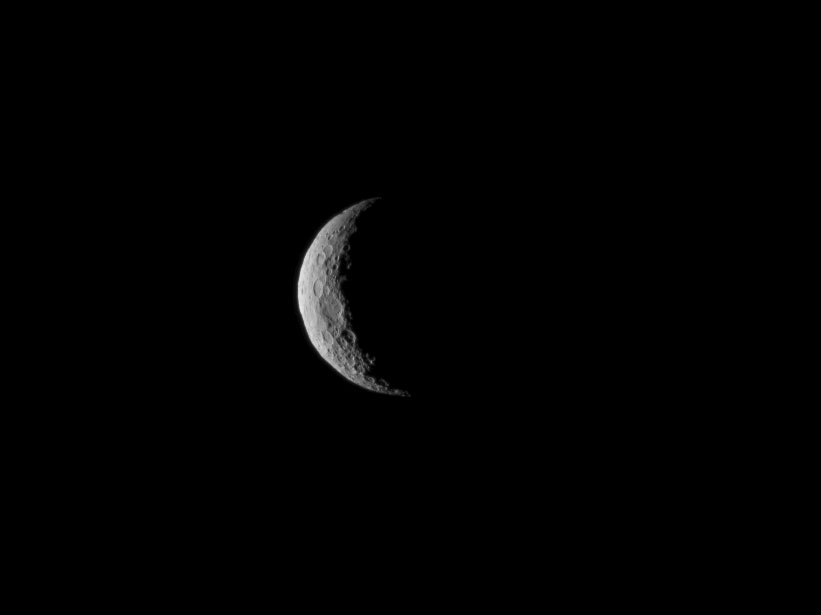
Dawn Spacecraft Enters into Orbit Around Dwarf Planet Ceres

by Randy Showstack 9 March 201517 February 2023

A 16-month investigation of the dwarf planet Ceres could reveal a lot about the most massive body in the asteroid belt and could advance our understanding of the formation of terrestrial planets.

Posted inResearch Spotlights

Satellite Data Yield Detailed Picture of the Lunar Wake

by J. Rosen 9 March 20157 July 2025

Researchers use satellite data to characterize the physical properties of the lunar wake and the processes that govern it.
Posted inResearch Spotlights

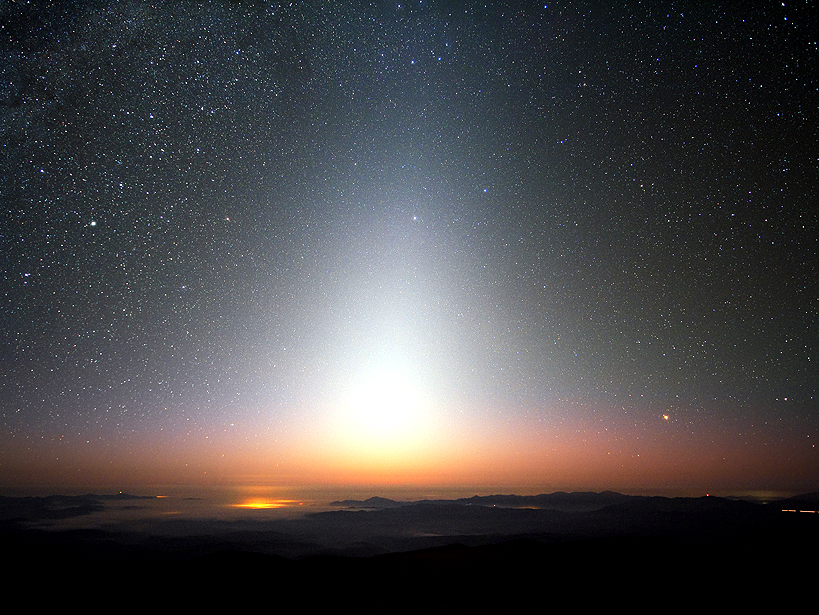
Shooting Stars and Cosmic Dust Help Form Clouds, Fertilize Plankton

by E. Betz 5 March 20157 March 2022

Tons of cosmic dust enter Earth’s atmosphere each day, triggering a range of phenomena that scientists are only just beginning to understand.

Posted inResearch Spotlights

"Knobby Terrain" a Sign of Mars's Explosive Past

by E. Betz 27 February 201517 February 2023

Newly identified knobby terrain related to ancient volcanoes on Mars hint that pyroclastic ash and rock flowed down slopes early in the red planet's history.
Posted inResearch Spotlights

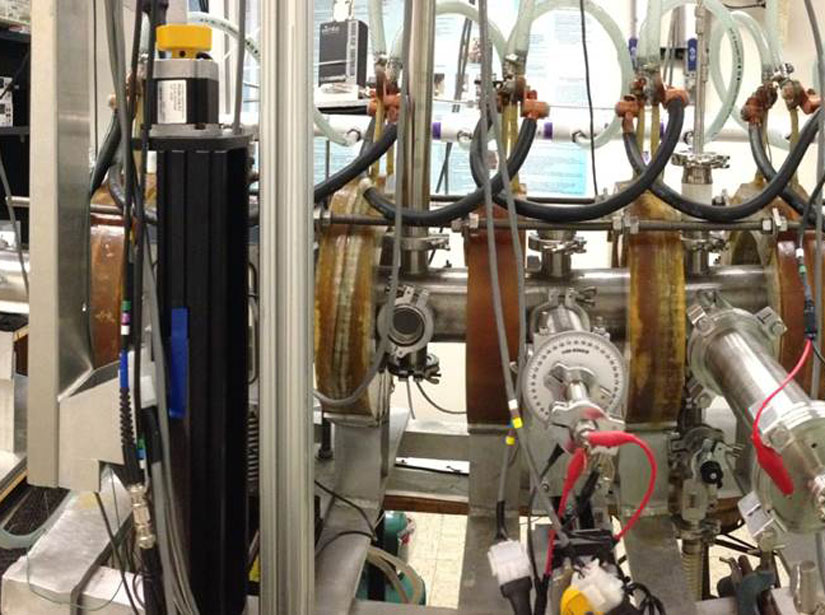
What Causes Broadband Electrostatic Noise in Space?

by J. Orwig 25 February 201519 January 2023

Factors that generate electrostatic noise involve how electric fields compress magnetized plasmas.

Posted inFeatures

Human and Robotic Missions: To the Moon Again and Beyond

by D. A. Kring 20 February 201518 November 2021

Robotic probes could help us collect samples from the Moon, potentially revealing the origins of our solar system.

Posted inFeatures

How Robotic Probes Helped Humans Explore the Moon—And May Again

by D. A. Kring 19 February 201526 January 2022

Robotic probes—including Ranger VIII, launched 50 years ago this week—paved the way for humankind’s giant leap to the Moon. This history may help guide future plans for lunar exploration.
Posted inResearch Spotlights

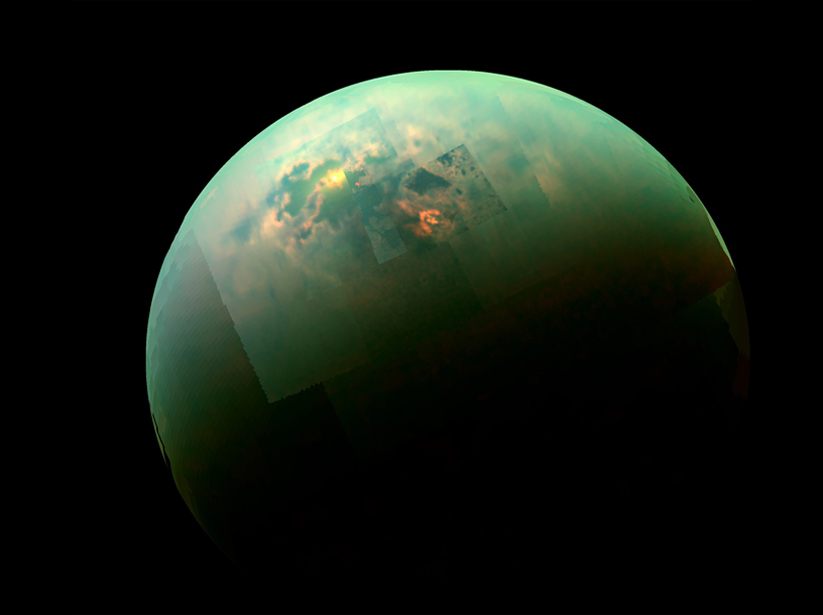
What’s Driving Titan’s Atmosphere?

by E. Betz 11 February 201522 March 2023

A new analysis of Cassini data reveals a major source of heavy hydrocarbons on Saturn’s moon Titan.
Posted inResearch Spotlights

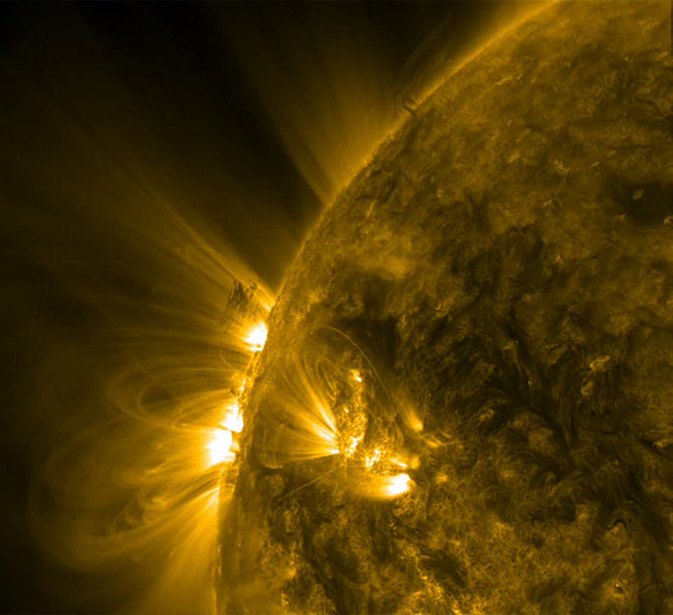
Can Scientists Boost Solar Modeling Despite a Lack of Data?

by C. Schultz 5 February 201515 March 2022

Researchers show that a data processing technique could salvage useful information from raw solar observations, opening the door to improved understanding of the solar dynamo.

Posts pagination

Newer posts 1 … 121 122 123 124 125 Older posts
Over a dark blue-green square appear the words Special Report: The State of the Science 1 Year On.

Features from AGU Publications

Research Spotlights

As Wildfires Increase in the West, So Does Suppression Spending

10 June 202610 June 2026
Editors' Highlights

Multi-Scale Fault Roughness Encapsulated in a Friction Law

11 June 202611 June 2026
Editors' Vox

Small-Scale Indian Ocean Dynamics Underpin Marine Ecology and Climate

4 June 20263 June 2026
Eos logo at left; AGU logo at right

About Eos
ENGAGE
Awards
Contact

Advertise
Submit
Career Center
Sitemap

© 2026 American Geophysical Union. All rights reserved Powered by Newspack