• About
  • Special Reports
  • Topics
    • Climate
    • Earth Science
    • Oceans
    • Space & Planets
    • Health & Ecosystems
    • Culture & Policy
    • Education & Careers
    • Opinions
  • Projects
    • Postcards From the Field
    • ENGAGE
    • Editors’ Highlights
    • Editors’ Vox
    • Eos en Español
    • Eos 简体中文版
    • Print Archive: 2015–2025
  • Policy Tracker
  • Blogs
    • Research & Developments
    • The Landslide Blog
  • Newsletter
  • Submit to Eos
  • AGU.org
  • Career Center
  • Join AGU
  • Give to AGU
  • About
  • Special Reports
  • Topics
    • Climate
    • Earth Science
    • Oceans
    • Space & Planets
    • Health & Ecosystems
    • Culture & Policy
    • Education & Careers
    • Opinions
  • Projects
    • Postcards From the Field
    • ENGAGE
    • Editors’ Highlights
    • Editors’ Vox
    • Eos en Español
    • Eos 简体中文版
    • Print Archive: 2015–2025
  • Policy Tracker
  • Blogs
    • Research & Developments
    • The Landslide Blog
  • Newsletter
  • Submit to Eos
Skip to content
  • AGU.org
  • Career Center
  • Join AGU
  • Give to AGU
Eos

Eos

Science News by AGU

Support Eos
Sign Up for Newsletter
  • About
  • Special Reports
  • Topics
    • Climate
    • Earth Science
    • Oceans
    • Space & Planets
    • Health & Ecosystems
    • Culture & Policy
    • Education & Careers
    • Opinions
  • Projects
    • Postcards From the Field
    • ENGAGE
    • Editors’ Highlights
    • Editors’ Vox
    • Eos en Español
    • Eos 简体中文版
    • Print Archive: 2015–2025
  • Policy Tracker
  • Blogs
    • Research & Developments
    • The Landslide Blog
  • Newsletter
  • Submit to Eos

United States

Posted inEditors' Highlights

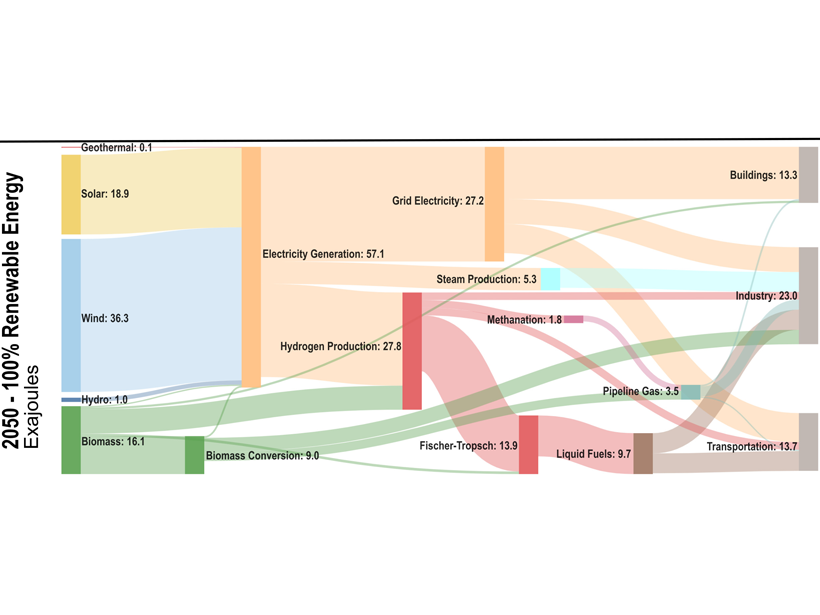
Deep Decarbonization? Yes We Can!

Eric Davidson, president-elect of AGU by Eric Davidson 14 January 20217 July 2025

Modeling the U.S. energy system demonstrates several pathways to net-zero CO2 emissions by 2050. The pathway with the lowest cost, 0.2–1.2% of GDP, relies on >80% contribution of renewables.

Huge plumes of smoke billow behind rural homes in Brian Head, Utah, in 2017.
Posted inNews

Wildfires May Exacerbate Asthma in the Western United States

by A. Gold 18 December 202028 October 2021

A new study predicts that by the 2050s, wildfire smoke will cause the region to spend $850 million more every year to treat asthma.
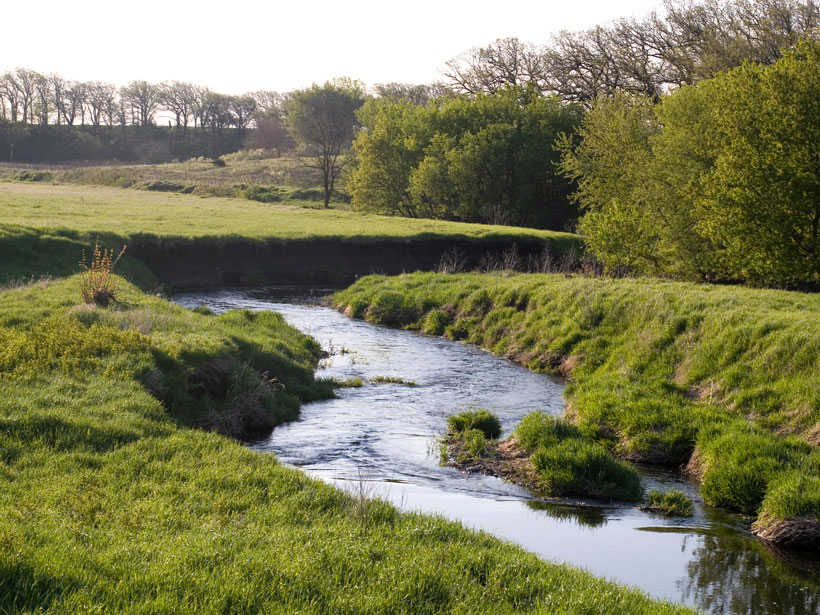
Stream surrounded by grassland.
Posted inNews

Waterways Change as Cities Grow Nearby

Katherine Kornei, Science Writer by Katherine Kornei 17 December 20206 September 2022

Using multidecadal data sets, researchers have traced how urbanization affects streamflow across the continental United States.

Photograph of a river in the Wind River Range, Wyoming
Posted inEditors' Vox

How is Modern Climate Change Affecting Landscape Processes?

by Amy E. East and J. B. Sankey 16 December 202011 February 2022

Landscapes will respond to hydroclimatic changes associated with modern global warming, such as increasing extreme storms and wildfire, but to what extent is physical landscape change already evident?

Wall of dust wells up behind suburban desert homes
Posted inNews

Saving Lives by Predicting Dust Storms

by Jackie Rocheleau 14 December 20202 March 2023

In the southwestern United States, dust storms form suddenly, quickly reducing visibility to zero. A new warning system may allow motorists to avoid these deadly hazards.

A field on a Nebraska farm with a large irrigation arm watering the crop. Grain storage elevators are visible in the background.
Posted inNews

Modeling Groundwater and Crop Production in the U.S. High Plains

by Jady Carmichael 30 November 20208 November 2022

Innovative new research by a team of international scholars borrows modeling methods from ecology and applies them to groundwater sustainability.

A coal ash dump in the foreground with SCI in the background
Posted inFeatures

An Unfought Geoscience Battle in U.S. Prisons

Kimberly M. S. Cartier, News Writing and Production Intern for Eos.org by Kimberly M. S. Cartier 10 November 202018 October 2022

Prisoners, activists, and lawyers are fighting to protect incarcerated people from pollution and the dangers of climate change. There’s a place for geoscientists in the fight too.

Solar powered seismic station surrounded by lightly charred mountain views
Posted inNews

Wildfires Threaten West Coast’s Seismic Network

by Alka Tripathy-Lang 26 October 20206 June 2022

A dense seismic network keeps vigil over the western United States, sensing quakes soon after they begin so people nearby can brace themselves. How do wildfires affect these guardians of the West Coast?

Dead tree and sand in Death Valley, Calif.
Posted inNews

Winter Drought Relief Unlikely in Western U.S.

Kimberly M. S. Cartier, News Writing and Production Intern for Eos.org by Kimberly M. S. Cartier 16 October 202014 February 2022

This year is still on track to be one of the hottest years on record around the globe.

Lightning strike from a thunderstorm
Posted inNews

Decrease in Lightning Recorded over the Lower 48

Katherine Kornei, Science Writer by Katherine Kornei 21 September 20209 September 2022

Researchers mining data from the National Lightning Detection Network found a 32% decrease in lightning counts in May and June 2020 compared with previous years.

Posts pagination

Newer posts 1 … 19 20 21 22 23 … 46 Older posts
Over a dark blue-green square appear the words Special Report: The State of the Science 1 Year On.

Features from AGU Publications

Research Spotlights

How Rising Air Plumes Help Spike Moist Heat

27 August 202627 August 2026
Editors' Highlights

Long-Term Datasets are Essential to Understanding Coastal Change

26 August 202618 August 2026
Editors' Vox

Climate Model Benchmarking: Building Trust and Advancing Science

24 August 202624 August 2026
Eos logo at left; AGU logo at right

About Eos
ENGAGE
Awards
Contact

Advertise
Submit
Career Center
Sitemap

© 2026 American Geophysical Union. All rights reserved Powered by Newspack