
The Landslide Blog is written by Dave Petley, who is widely recognized as a world leader in the study and management of landslides.

I’ve not posted about Landslides in Art much in recent years – the most recent edition was almost two years ago – but loyal readers will know that this is a long running series of posts.
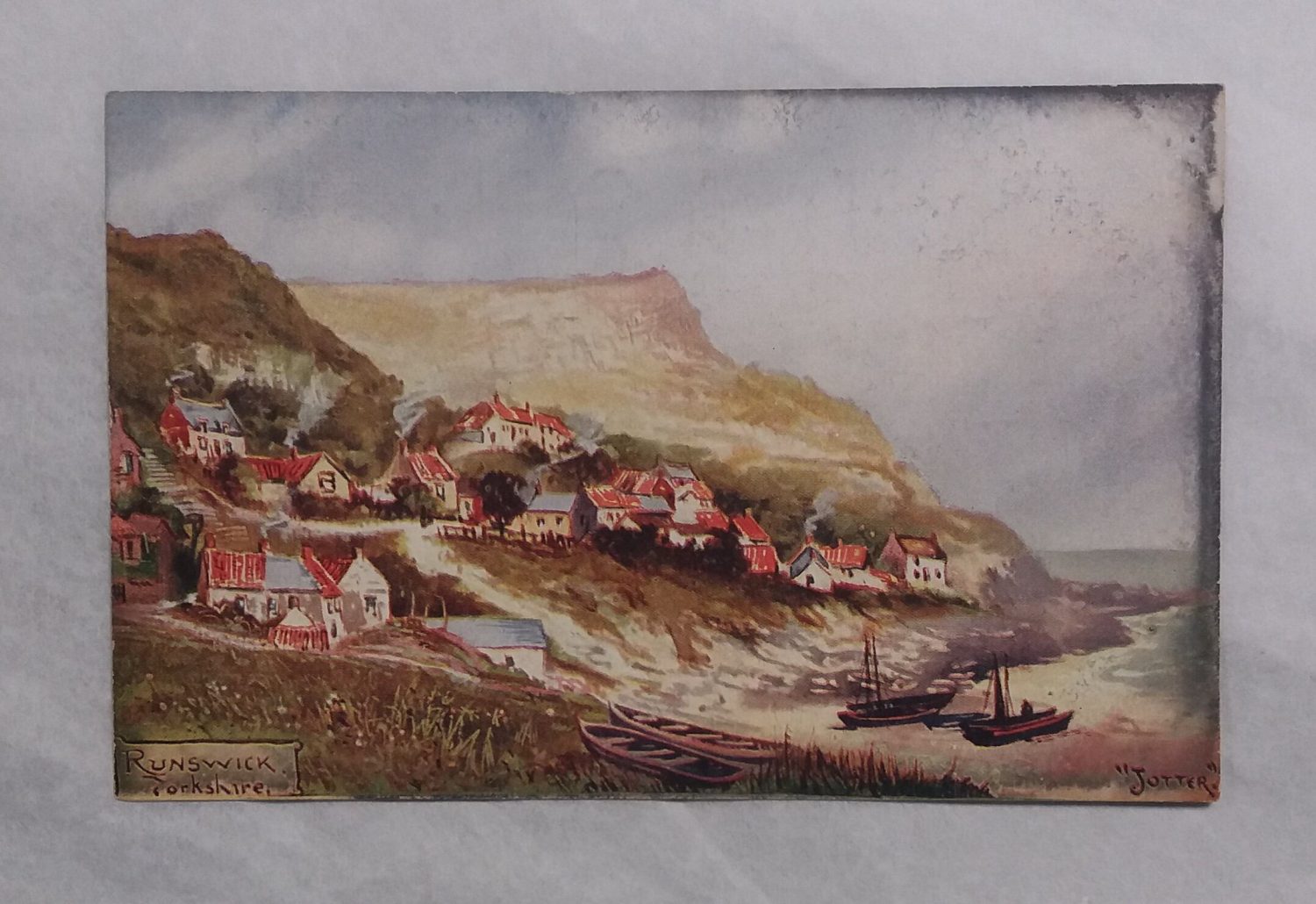
Anyway, I came across a page recently about the major landslide that struck the village of Runswick Bay in North Yorkshire. It includes a painting of the village with the above name, by an artist who signed themselves as “Jotter”. The painting is now in the collection of the Kirkleatham Museum:-
Now, there is a twist in that the landslide actually occurred in 1662, not 1664!
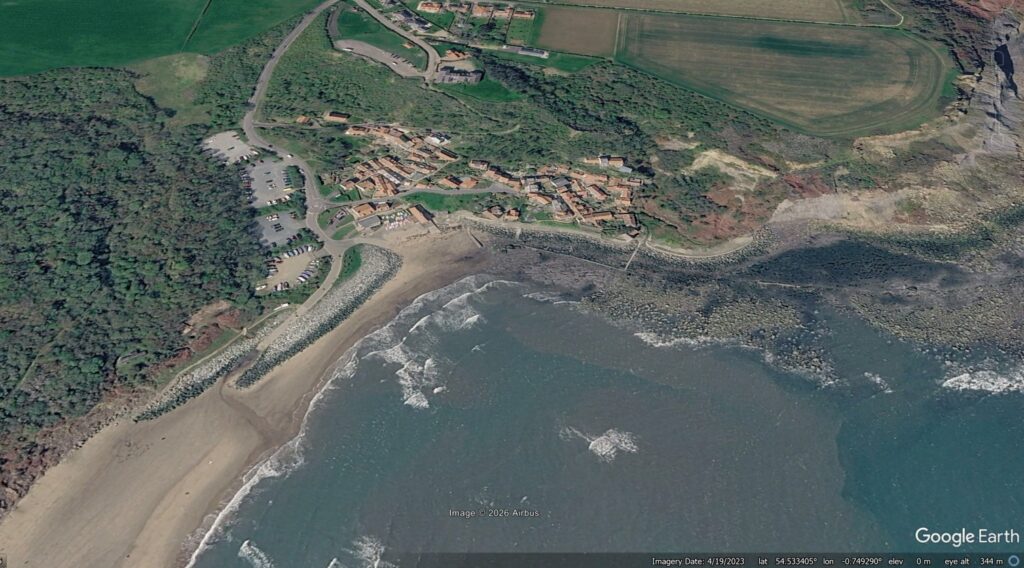
Runswick Bay is a picture postcard village in North Yorkshire of the UK, located at [54.53356, -0.75015]. The coastal part of the village is built on landslide debris, and there has been some movement in recent decades. In the late 1990s a very large scheme was put in place to mitigate the ongoing movement.
This is a Google Earth view of the village:-
The Tees Valley Museums site describes the landslide of 1662, noting that there were two major failure events. It is very fortunate that no-one was killed. The village was essentially destroyed and then rebuilt to the south of the original site.
It is probably true to say that the painting by Jotter is not a classic, but it does capture some interesting aspects of the site. First, it appears that the morphology is that of an existing landslide mass – this was probably a reactivation rather than a first time failure. Second, the toe was actively eroding, so maybe the two phase failure involved a collapse at the toe, which then destabilised the mass upslope? This would fit the eyewitness reports. Finally, note the mass in the background, which is also the result of a series of failure events.
There are many other major landslides along this section of coast – it is a classic area of UK mass movement geology. And it is truly beautiful too – visit if you can.