
Editors’ Highlights are summaries of recent papers by AGU’s journal editors.
Source: AGU Advances
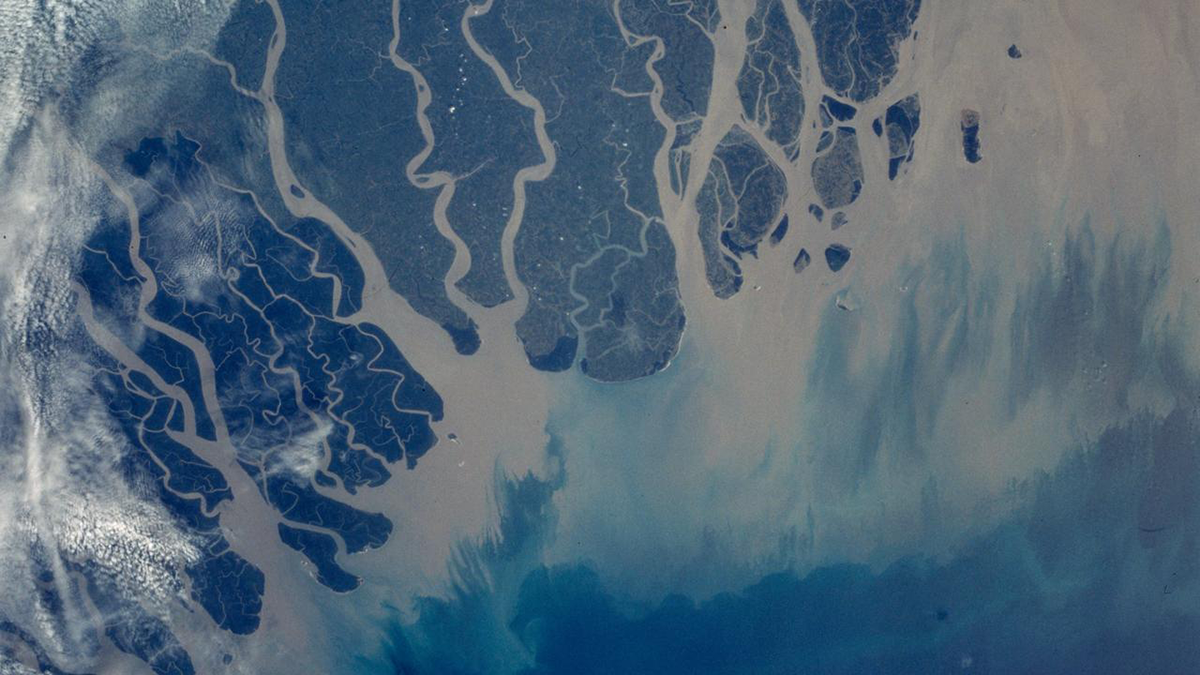
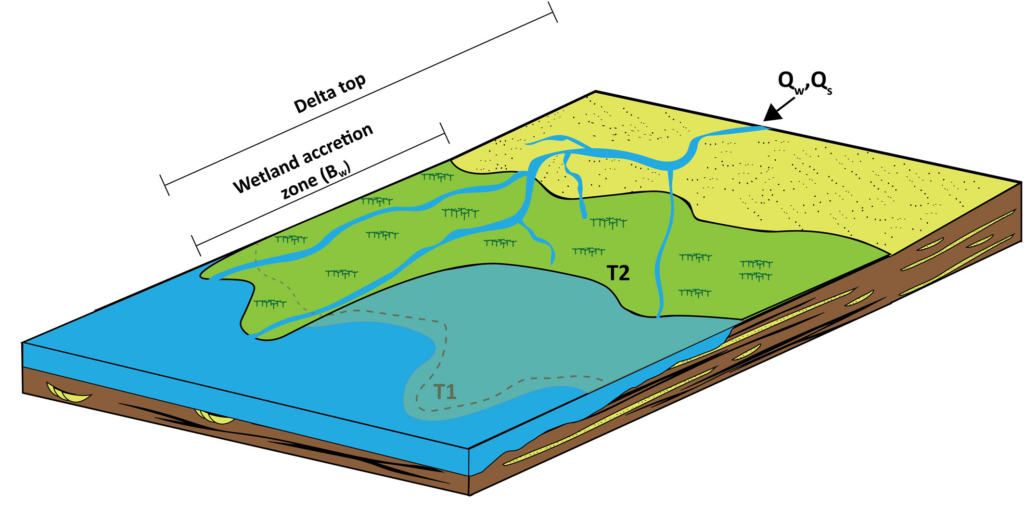
Coastal river deltas are important components of the global carbon cycle, providing significant long-term net carbon sinks. Silvestre et al. [2026] describe an experimental framework that links shoreline migration to preserved organic material in the subsurface coastal marsh. The experimental results provide insights into how natural, self-driven (autogenic) shifts in a coastline create, move, and bury organic-rich, carbon-storing sediments (termed paleo-blue carbon) over time. The control of shoreline migration by autogenic processes results in larger areal subsurface extent of paleo-blue carbon relative to surface wetland area and enhance carbon burial rates. The author’s results allow rates of organic matter accumulation to be constrained, affecting estimates of the relative size of carbon reservoirs in coastal wetlands.
Citation: Silvestre, J. R., Sanks, K. M., Zapp, S. M., Hou, Y., Shaw, J. B., Mukherjee, U., et al. (2026). Autogenic shoreline migration and its effect on the storage of carbon in marginal marine successions. AGU Advances, 7, e2025AV002067. https://doi.org/10.1029/2025AV002067
—Eileen Hofmann, Editor, AGU Advances