Research & Developments is a blog for brief updates that provide context for the flurry of news that impacts science and scientists today.
It’s well-documented that climate change is killing people.
A few months ago, the University of Chicago’s Climate Impact Lab released a report that found that, by 2050, about 10 times as many heat-related deaths would occur in poor countries as in richer ones.
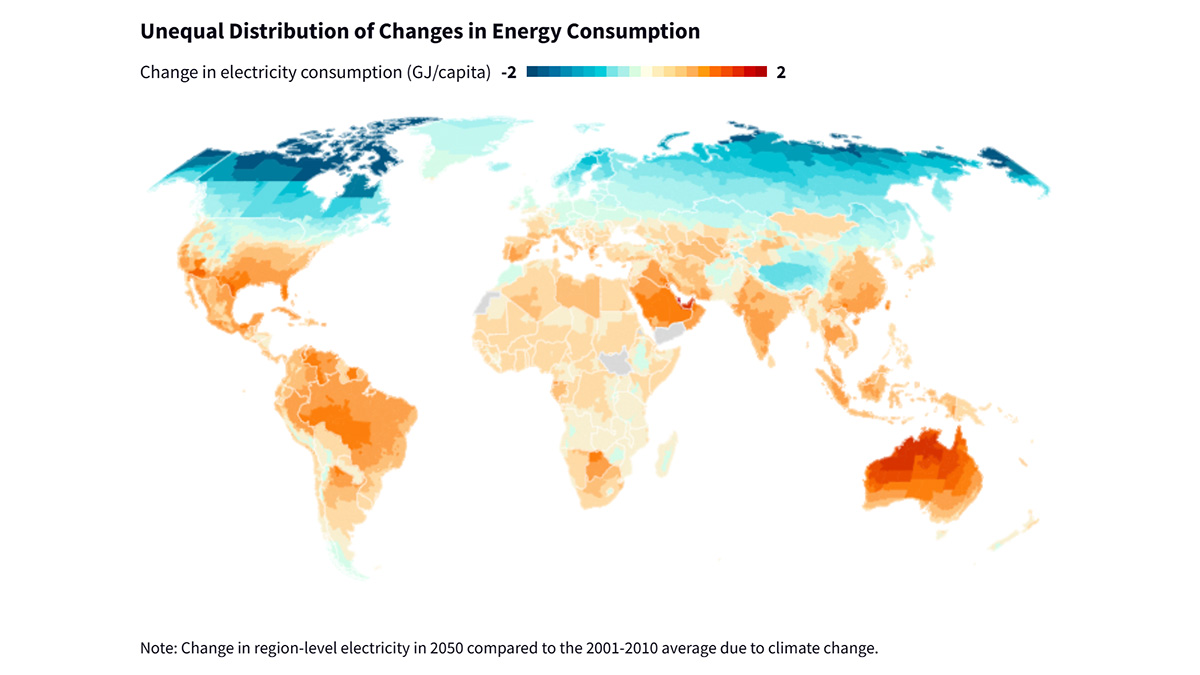
Today, the same lab released a new report. This one found that the regions most affected by extreme heat are also the regions least likely to have increased levels of electricity to power the air conditioning that might provide relief. Use of cooling-related electricity is projected to grow seven times more in middle-income countries than in low-income countries in response to climate change.
“Air conditioning is a life saver, and climate change will no doubt lead to more AC adoption in today’s wealthy countries. Our research finds, however, that in too many countries around the world people will not be able to respond in the same way. The result is one of climate’s great cruelties—lots of death in the very countries that have contributed the least to climate change,” Michael Greenstone, a co-founder of the Climate Impact Lab, said in a statement.
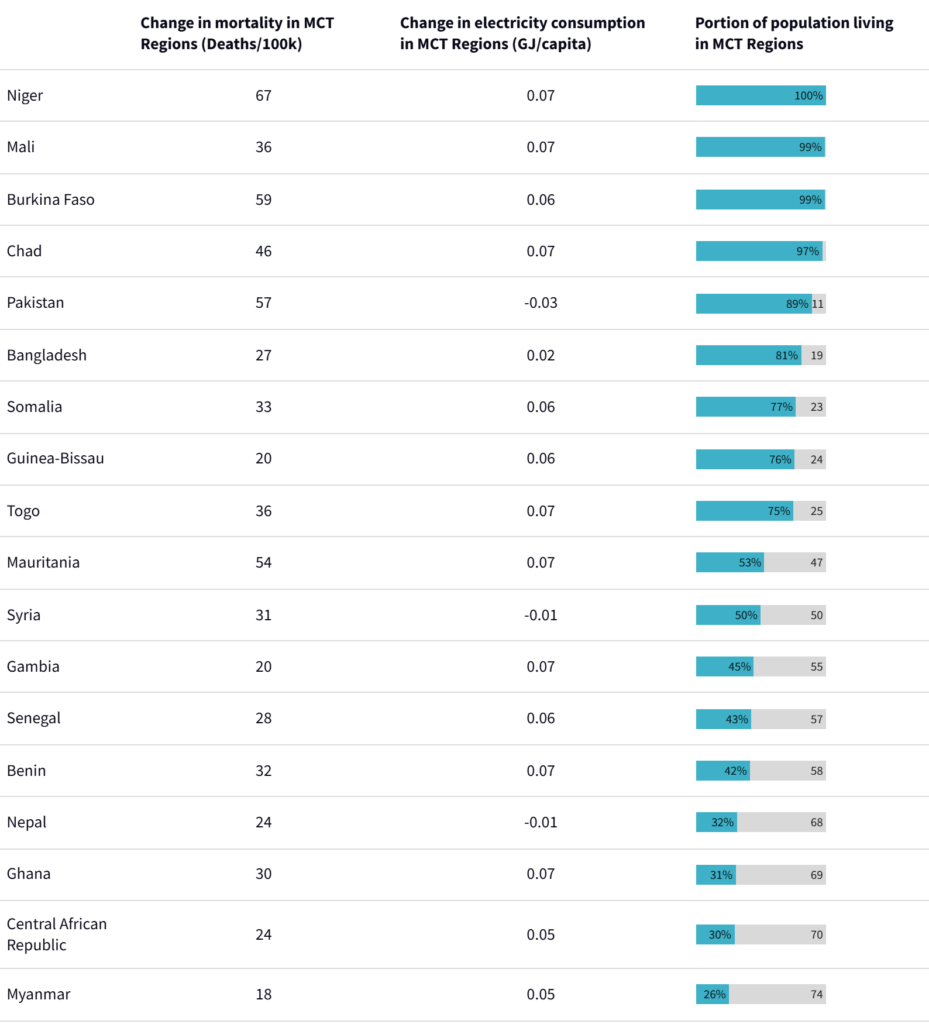
The researchers describe “mortality cooling trap” areas, or locations where increased electricity consumption would most improve human welfare and save lives, but where such increases in consumption are not projected. The 18 identified countries are home to 676 million people, and about 377,000 people in these areas are projected to die each year beginning in 2050, thanks to the combination of hotter temperatures and low projected increases in energy consumption.
Most of the areas are in northern sub-Saharan Africa, in countries such as Burkina Faso, Chad, Mali, and Niger, with others in southern Asia, including Bangladesh, Myanmar, Nepal, and Pakistan.
The analysis accounted for deaths caused explicitly by heat, such as heat stroke, as well as related deaths, such as heat-related disease or cardiovascular stress, Genevieve Maricle, executive director of the Climate Impact Lab, said in an email to Eos.
Maricle told Eos that one of the most striking parts of the report to her was the differences in the death tolls between lower-income and higher-income countries, even when those countries have similar climates. For instance, Saudia Arabia faces high temperatures similar to those in Niger, but the projected increase in electricity use per person is approximately nine times higher in Saudia Arabia than Niger. The report found that by 2050, heat will claim 27,000 more lives per year in Niger than it will in Saudi Arabia.
“The disparity in projected deaths between regions is striking and lays bare how tightly climate resilience and energy are bound together,” Maricle wrote. “The communities facing the most extreme heat are also locked out of the cooling that could protect them – a deadly combination of maximum exposure and minimum defense.”
—Emily Gardner (@emfurd.bsky.social), Deputy Editor
These updates are made possible through information from the scientific community. Do you have a story about science or scientists? Send us a tip at [email protected].