
Editors’ Highlights are summaries of recent papers by AGU’s journal editors.
Source: AGU Advances
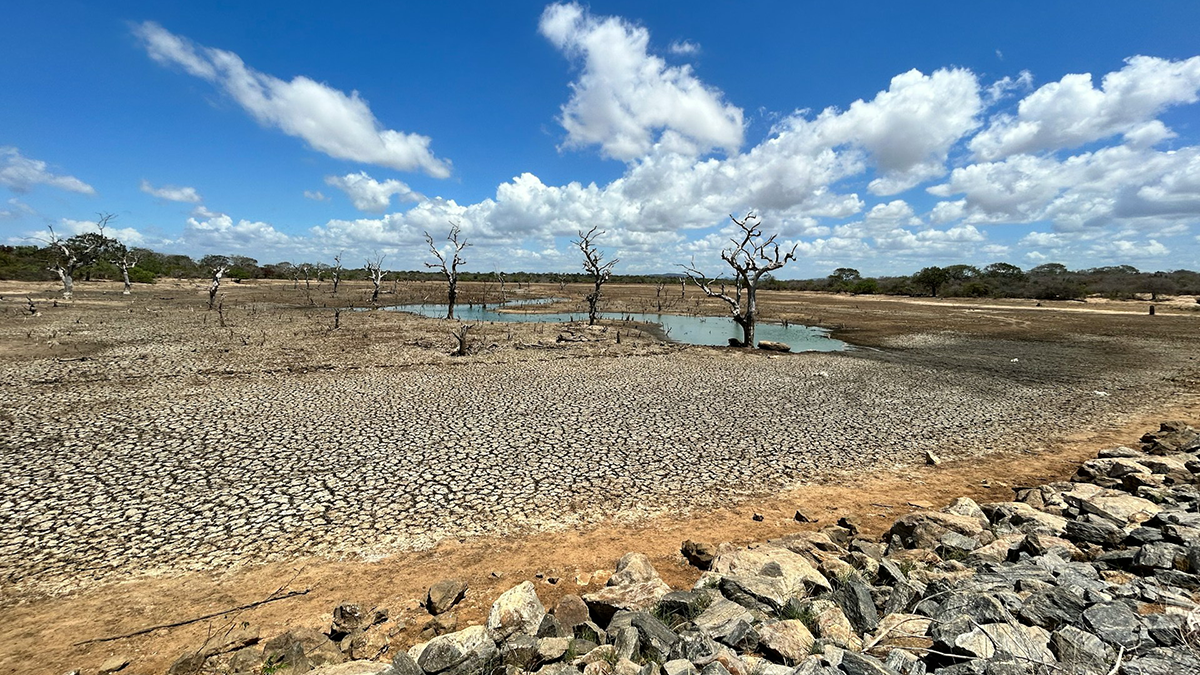
Droughts are becoming an increasing global concern as their impacts intensify. Understanding how climate change affects drought frequency and severity is essential for projecting future drought risk. In this context, the question raised by Helpap et al. [2026]—”are modern droughts unprecedented?”—has a high scientific relevance. Here, 20 ensemble members from a 600-year climate simulation and reanalysis data from the period 1950-2024 are analyzed to place recent droughts in a multi-century context. It is concluded that drought extremes are intensifying more rapidly beyond the range experienced in the past than moderate droughts. Therefore, an increasing likelihood of droughts reaching unprecedented magnitudes is expected in the near future, thus highlighting the urgency for adaptation measures in water resources and environmental management.
Citation: Helpap, P., Brönnimann, S., Hand, R., Franke, J., Raible, C. C., & Stocker, B. D. (2026). Are modern droughts unprecedented? AGU Advances, 7, e2026AV002536. https://doi.org/10.1029/2026AV002536
—Alberto Montanari, Editor-in-Chief, AGU Advances
