• About
  • Special Reports
  • Topics
    • Climate
    • Earth Science
    • Oceans
    • Space & Planets
    • Health & Ecosystems
    • Culture & Policy
    • Education & Careers
    • Opinions
  • Projects
    • Postcards From the Field
    • ENGAGE
    • Editors’ Highlights
    • Editors’ Vox
    • Eos en Español
    • Eos 简体中文版
    • Print Archive: 2015–2025
  • Policy Tracker
  • Blogs
    • Research & Developments
    • The Landslide Blog
  • Newsletter
  • Submit to Eos
  • AGU.org
  • Career Center
  • Join AGU
  • Give to AGU
  • About
  • Special Reports
  • Topics
    • Climate
    • Earth Science
    • Oceans
    • Space & Planets
    • Health & Ecosystems
    • Culture & Policy
    • Education & Careers
    • Opinions
  • Projects
    • Postcards From the Field
    • ENGAGE
    • Editors’ Highlights
    • Editors’ Vox
    • Eos en Español
    • Eos 简体中文版
    • Print Archive: 2015–2025
  • Policy Tracker
  • Blogs
    • Research & Developments
    • The Landslide Blog
  • Newsletter
  • Submit to Eos
Skip to content
  • AGU.org
  • Career Center
  • Join AGU
  • Give to AGU
Eos

Eos

Science News by AGU

Support Eos
Sign Up for Newsletter
  • About
  • Special Reports
  • Topics
    • Climate
    • Earth Science
    • Oceans
    • Space & Planets
    • Health & Ecosystems
    • Culture & Policy
    • Education & Careers
    • Opinions
  • Projects
    • Postcards From the Field
    • ENGAGE
    • Editors’ Highlights
    • Editors’ Vox
    • Eos en Español
    • Eos 简体中文版
    • Print Archive: 2015–2025
  • Policy Tracker
  • Blogs
    • Research & Developments
    • The Landslide Blog
  • Newsletter
  • Submit to Eos

Bjarne S. G. Almqvist

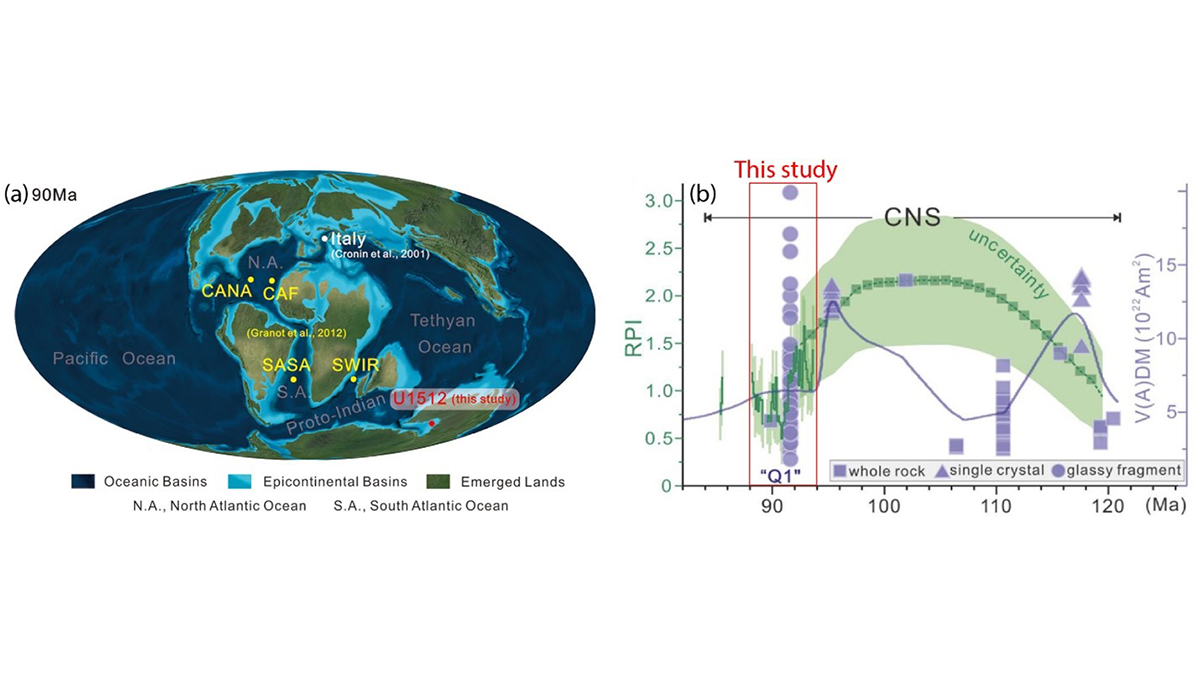
A map and graph from the paper.
Posted inEditors' Highlights

The Not-So-Quiet Cretaceous Quiet Zone

by Bjarne S. G. Almqvist 4 June 20243 June 2024

A new study finds that Earth’s magnetic field intensity varied significantly during the Cretaceous Normal Superchron, providing insights into the operation of the geodynamo during superchrons.

Series of global maps showing virtual geomagnetic pole paths as calculated from the Black Sea paleomagnetic directional record
Posted inEditors' Highlights

The Restless Geomagnetic Field Over the Past 70,000 Years

by Bjarne S. G. Almqvist 25 September 202030 September 2022

Detailed paleomagnetic records from Black Sea sediments reveal intricate changes in the field during geomagnetic excursions.

Photomicrographs in backscatter electron image mode of tholeiitic basalt samples
Posted inEditors' Highlights

A Thermochemical Recording Mechanism of Earth’s Magnetic Field

by Bjarne S. G. Almqvist 27 September 201910 November 2021

A laboratory study assesses thermochemical remanence as a reliable paleointensity recorder, which could open new venues for studying Earth’s ancient magnetic field.
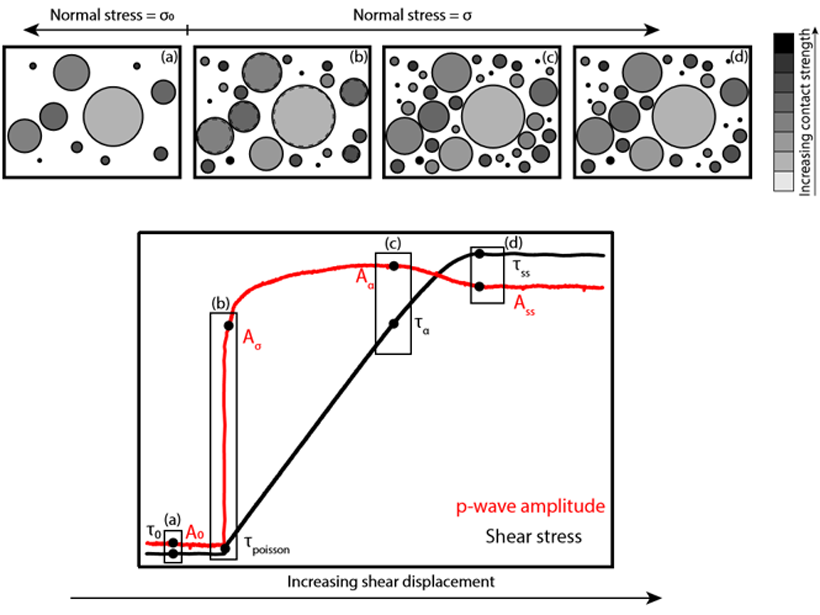
Shear contact strength and shear stress as a function of a step increase in normal stress
Posted inEditors' Highlights

Laboratory Study Probes Triggering Mechanisms of Earthquakes

by Bjarne S. G. Almqvist 3 July 20196 October 2021

A new experimental technique traces the state of a shearing fault gouge and shows for the first time how friction of a fault surface can change as a function of varying normal stress.

Posted inEditors' Highlights

Seismic Anisotropy Due to a Compositionally Layered Mantle

by Bjarne S. G. Almqvist 8 March 20198 July 2024

Investigating the role of layered rocks and compositional banding on mineral scale in generating seismic anisotropy in the mantle.
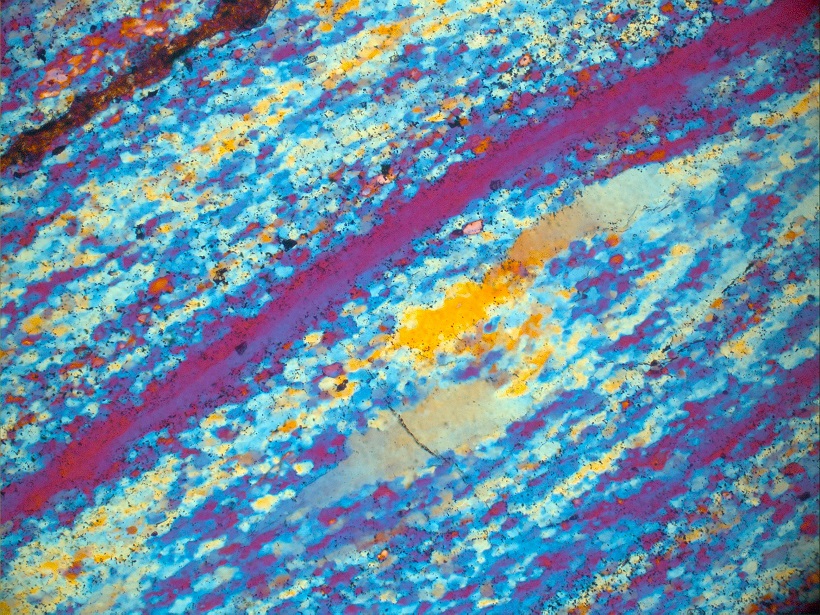
Optical photo taken with gypsum plate and a petrological microscope.
Posted inEditors' Vox

The Earth’s Elastic Crust

by Bjarne S. G. Almqvist and D. Mainprice 22 June 201729 September 2022

A recent paper in Reviews of Geophysics discussed how the mineral composition and microfabric of the continental crust influences its seismic properties.

Over a dark blue-green square appear the words Special Report: The State of the Science 1 Year On.

Features from AGU Publications

Research Spotlights

How Internal Waves Transport Energy Thousands of Miles Across the Ocean

26 March 202626 March 2026
Editors' Highlights

Using Distributed Acoustic Sensing (DAS) to Improve Lunar Seismic Monitoring

6 April 20261 April 2026
Editors' Vox

The Future of Earth’s Future

24 March 202624 March 2026
Eos logo at left; AGU logo at right

About Eos
ENGAGE
Awards
Contact

Advertise
Submit
Career Center
Sitemap

© 2026 American Geophysical Union. All rights reserved Powered by Newspack