• About
  • Special Reports
  • Topics
    • Climate
    • Earth Science
    • Oceans
    • Space & Planets
    • Health & Ecosystems
    • Culture & Policy
    • Education & Careers
    • Opinions
  • Projects
    • Postcards From the Field
    • ENGAGE
    • Editors’ Highlights
    • Editors’ Vox
    • Eos en Español
    • Eos 简体中文版
    • Print Archive: 2015–2025
  • Policy Tracker
  • Blogs
    • Research & Developments
    • The Landslide Blog
  • Newsletter
  • Submit to Eos
  • AGU.org
  • Career Center
  • Join AGU
  • Give to AGU
  • About
  • Special Reports
  • Topics
    • Climate
    • Earth Science
    • Oceans
    • Space & Planets
    • Health & Ecosystems
    • Culture & Policy
    • Education & Careers
    • Opinions
  • Projects
    • Postcards From the Field
    • ENGAGE
    • Editors’ Highlights
    • Editors’ Vox
    • Eos en Español
    • Eos 简体中文版
    • Print Archive: 2015–2025
  • Policy Tracker
  • Blogs
    • Research & Developments
    • The Landslide Blog
  • Newsletter
  • Submit to Eos
Skip to content
  • AGU.org
  • Career Center
  • Join AGU
  • Give to AGU
Eos

Eos

Science News by AGU

Support Eos
Sign Up for Newsletter
  • About
  • Special Reports
  • Topics
    • Climate
    • Earth Science
    • Oceans
    • Space & Planets
    • Health & Ecosystems
    • Culture & Policy
    • Education & Careers
    • Opinions
  • Projects
    • Postcards From the Field
    • ENGAGE
    • Editors’ Highlights
    • Editors’ Vox
    • Eos en Español
    • Eos 简体中文版
    • Print Archive: 2015–2025
  • Policy Tracker
  • Blogs
    • Research & Developments
    • The Landslide Blog
  • Newsletter
  • Submit to Eos

L. D. Wright

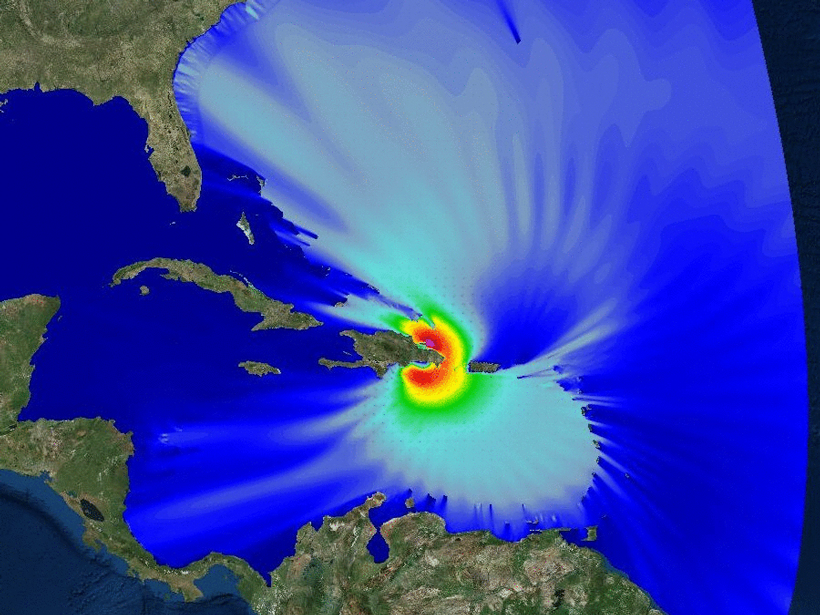
This visualization shows water level changes as Hurricane Georges moves into the Caribbean Sea in 1998.
Posted inScience Updates

A Test Bed for Coastal and Ocean Modeling

by R. A. Luettich Jr., L. D. Wright, C. R. Nichols, R. Baltes, M. A. M. Friedrichs, A. Kurapov, A. van der Westhuysen, K. Fennel and E. Howlett 4 August 201710 December 2022

An ocean modeling program is improving our ability to predict circulation along the U.S. West Coast, dead zones and other coastal ecosystem responses, and storm surges in island environments.

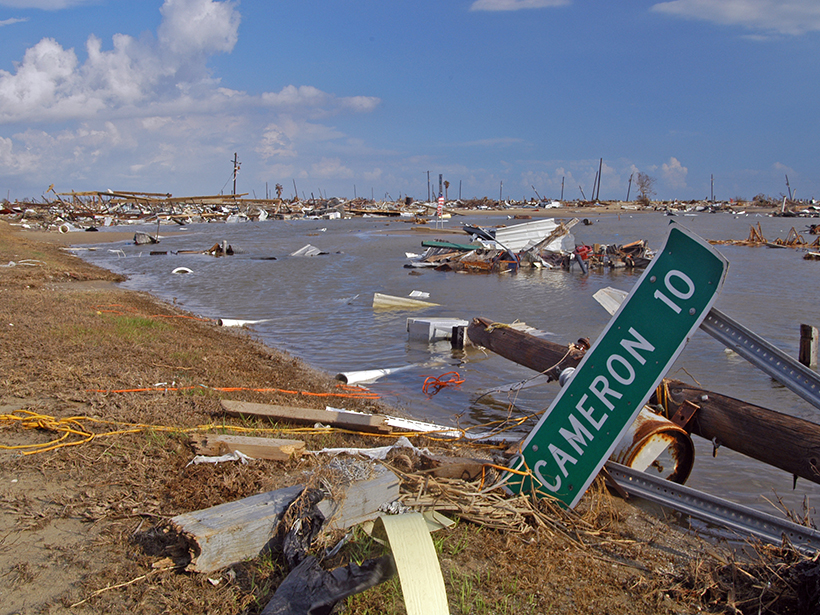
3 October 2005 photo showing the extent of the destruction from Hurricane Rita in Holly Beach, a coastal community of 300 residents in Louisiana’s Cameron Parish.
Posted inOpinions

Collaboration to Enhance Coastal Resilience

by L. D. Wright, C. R. Nichols, A. G. Cosby and C. F. D’Elia 29 August 201625 August 2022

Integrating models from the social and natural sciences could generate a more holistic approach to climate change response planning in coastal communities.

Over a dark blue-green square appear the words Special Report: The State of the Science 1 Year On.

Features from AGU Publications

Research Spotlights

A Road Map to Truly Sustainable Water Systems in Space

9 February 20269 February 2026
Editors' Highlights

Why Are Thunderstorms More Intense Over Land Than Ocean?

9 February 20269 February 2026
Editors' Vox

A Double-Edged Sword: The Global Oxychlorine Cycle on Mars

10 February 202610 February 2026
Eos logo at left; AGU logo at right

About Eos
ENGAGE
Awards
Contact

Advertise
Submit
Career Center
Sitemap

© 2026 American Geophysical Union. All rights reserved Powered by Newspack