• About
  • Special Reports
  • Topics
    • Climate
    • Earth Science
    • Oceans
    • Space & Planets
    • Health & Ecosystems
    • Culture & Policy
    • Education & Careers
    • Opinions
  • Projects
    • Postcards From the Field
    • ENGAGE
    • Editors’ Highlights
    • Editors’ Vox
    • Eos en Español
    • Eos 简体中文版
    • Print Archive: 2015–2025
  • Policy Tracker
  • Blogs
    • Research & Developments
    • The Landslide Blog
  • Newsletter
  • Submit to Eos
  • AGU.org
  • Career Center
  • Join AGU
  • Give to AGU
  • About
  • Special Reports
  • Topics
    • Climate
    • Earth Science
    • Oceans
    • Space & Planets
    • Health & Ecosystems
    • Culture & Policy
    • Education & Careers
    • Opinions
  • Projects
    • Postcards From the Field
    • ENGAGE
    • Editors’ Highlights
    • Editors’ Vox
    • Eos en Español
    • Eos 简体中文版
    • Print Archive: 2015–2025
  • Policy Tracker
  • Blogs
    • Research & Developments
    • The Landslide Blog
  • Newsletter
  • Submit to Eos
Skip to content
  • AGU.org
  • Career Center
  • Join AGU
  • Give to AGU
Eos

Eos

Science News by AGU

Support Eos
Sign Up for Newsletter
  • About
  • Special Reports
  • Topics
    • Climate
    • Earth Science
    • Oceans
    • Space & Planets
    • Health & Ecosystems
    • Culture & Policy
    • Education & Careers
    • Opinions
  • Projects
    • Postcards From the Field
    • ENGAGE
    • Editors’ Highlights
    • Editors’ Vox
    • Eos en Español
    • Eos 简体中文版
    • Print Archive: 2015–2025
  • Policy Tracker
  • Blogs
    • Research & Developments
    • The Landslide Blog
  • Newsletter
  • Submit to Eos

Nathaniel Scharping

一只头上绑着天线的海豹坐在草丛中,对着镜头微笑。
Posted inResearch Spotlights

海豹帮助科学家在南极洲别林斯高晋海取得新发现

by Nathaniel Scharping 1 July 20241 July 2024

研究人员通过分析海豹和水下滑翔机收集的水文信息,发现了新的融水流,以及一个新的海底槽。

A red and white ship on an icy ocean is headed toward another ship with the same colors in the distance.
Posted inResearch Spotlights

Radioactive Isotopes Trace Hidden Arctic Currents

by Nathaniel Scharping 24 June 202413 September 2025

Tracing anthropogenic radionuclides shows researchers how water from the Atlantic flows into and mingles with Arctic currents.

Soil eroding from a field as a result of rainfall
Posted inNews

Agricultural Lands Are Losing Topsoil—Here’s How Bad It Could Get

by Nathaniel Scharping 11 June 202411 June 2024

A new study says topsoil erosion is likely to increase under climate change, though policy changes now could help stem the loss.

A seal with an antenna strapped to its head sits in a patch of grass and beams at the camera.
Posted inResearch Spotlights

Seals Help Scientists Make Discoveries in Antarctica’s Bellingshausen Sea

by Nathaniel Scharping 4 June 20242 July 2024

By analyzing hydrographic information gathered by seals and an undersea glider, researchers found new meltwater currents, as well as a new seafloor trough.

Two men wearing backpacks sit in a grass field in front of an estuary. One man is taking a photo of something on the ground, and the other is writing in a notebook.
Posted inResearch Spotlights

Tsunami Sands Help Scientists Assess Cascadia Earthquake Models

by Nathaniel Scharping 30 May 202430 May 2024

With evidence from new sediment cores, researchers tested the performance of various models of the 1700 CE megathrust earthquake.
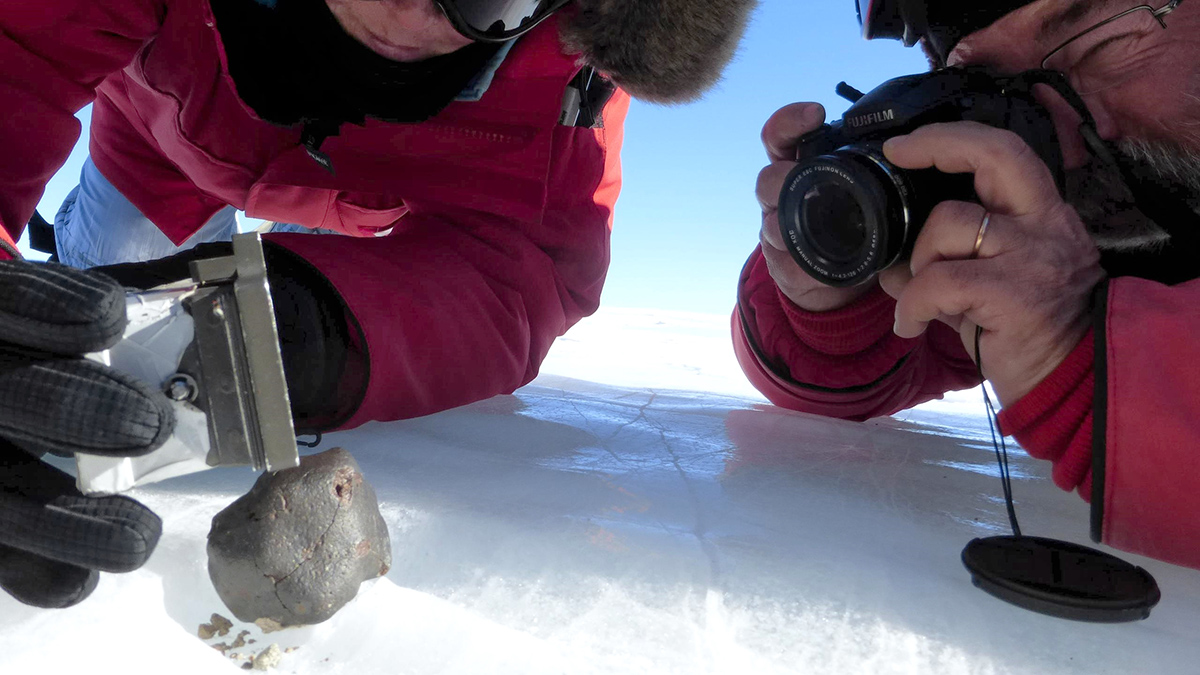
Close-up of two people in red parkas collecting a black rock on ice
Posted inENGAGE, News

Antarctic Meteorites Are Going, Going, May Soon Be Gone

by Nathaniel Scharping 2 May 20242 May 2024

If warming ice gobbles up meteorites, science may lose a cheap source of space rocks.
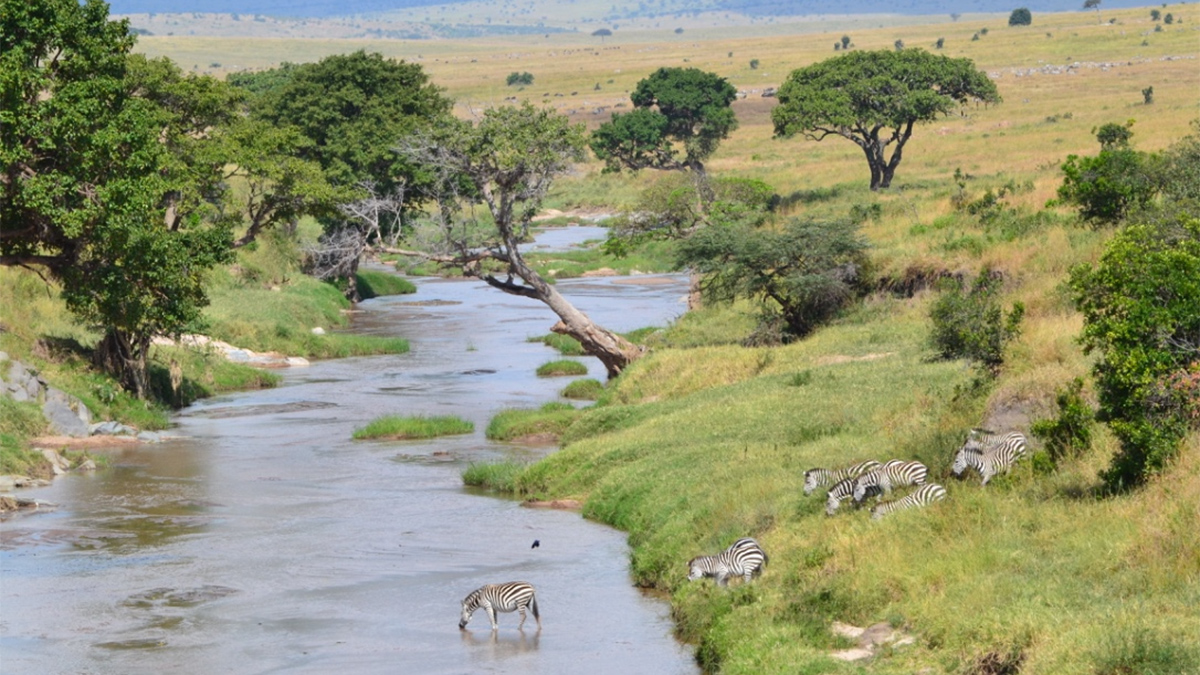
An overhead shot of a group of zebras approaching a waterhole surrounded by greenery.
Posted inResearch Spotlights

Animals Deserve to Be Included in Global Carbon Cycle Models, Too

by Nathaniel Scharping 16 April 202416 April 2024

Because they are far less plentiful than plants and microbes, animals have typically been excluded from examinations of carbon exchange in the atmosphere. But new research shows they may have a considerable influence on carbon cycle dynamics.
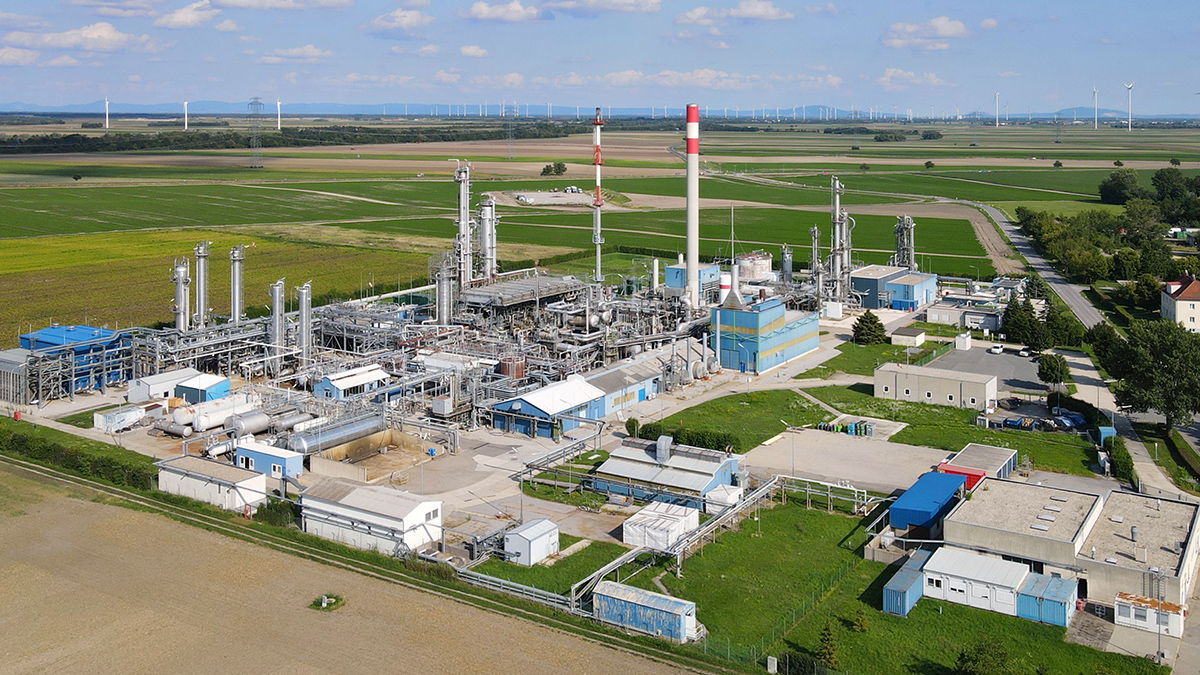
A natural gas processing facility in Austria
Posted inNews

Methane Emissions from the Oil and Gas Industry Are Triple Current Estimates

by Nathaniel Scharping 15 April 202415 April 2024

A new study using aerial data reveals that fossil fuel extraction and processing are responsible for far more methane than previously believed.

A simulated image of Earth with Antarctica at the center. Swirls and waves in the ocean represent the speed and direction of currents and eddies.
Posted inResearch Spotlights

Verifying the Mathematics Behind Ocean Modeling

by Nathaniel Scharping 11 April 202415 April 2024

A series of test cases designed to confirm the accuracy of ocean models could help improve our understanding of large-scale climate processes.

Three views of a stone point made during the Middle Stone Age
Posted inNews

Stone Age Humans Chose Their Rocks with Care

by Nathaniel Scharping 19 March 202426 March 2024

Ancient humans possessed sophisticated knowledge of the properties of the stones they used to make tools.

Posts pagination

Newer posts 1 … 7 8 9 10 11 12 Older posts
Over a dark blue-green square appear the words Special Report: The State of the Science 1 Year On.

Features from AGU Publications

Research Spotlights

The Experiments Improving Our Understanding of Volcanic Tsunamis

12 November 202612 November 2026
Editors' Highlights

Disappearing Moon Craters

9 November 2026
Editors' Vox

Announcing the New AGU Publications Editors-in-Chief Starting in 2027

6 November 20266 November 2026
Eos logo at left; AGU logo at right

About Eos
ENGAGE
Awards
Contact

Advertise
Submit
Career Center
Sitemap

© 2026 American Geophysical Union. All rights reserved Powered by Newspack