


Researchers working in Chile’s Atacama Desert have collected thousands of “atacamaites” that suggest a meteorite struck the region roughly 8 million years ago.
News

Posted inNews
Las mujeres aún no son escuchadas en la conversación sobre política climática
Un estudio de caso en Brasil apunta a una profunda brecha de género que aún debe abordarse en el debate sobre la formulación de políticas.

Posted inNews
Where Moons Are Made

The young, growing planet PDS 70 c has enough material swirling around it to make at least three Moon-sized moons.
Posted inNews
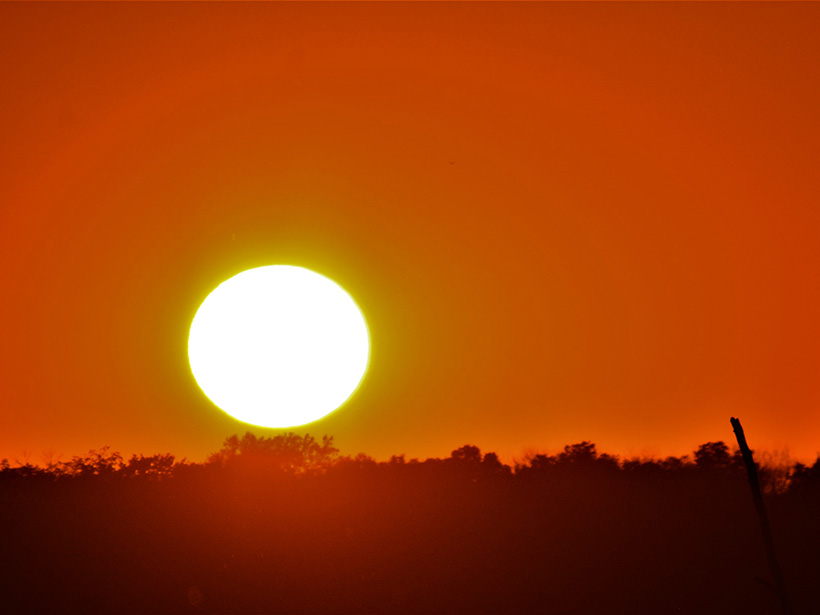
Rapidly Increasing Chance of Record-Shattering Heat Extremes
A new study warns that we need to expect and prepare for unprecedented heat waves in the near future.

Posted inNews
In a Twist, a Greek Volcano Ruled by the Sea

Move over Hephaestus, Poseidon’s got this one.
Posted inNews
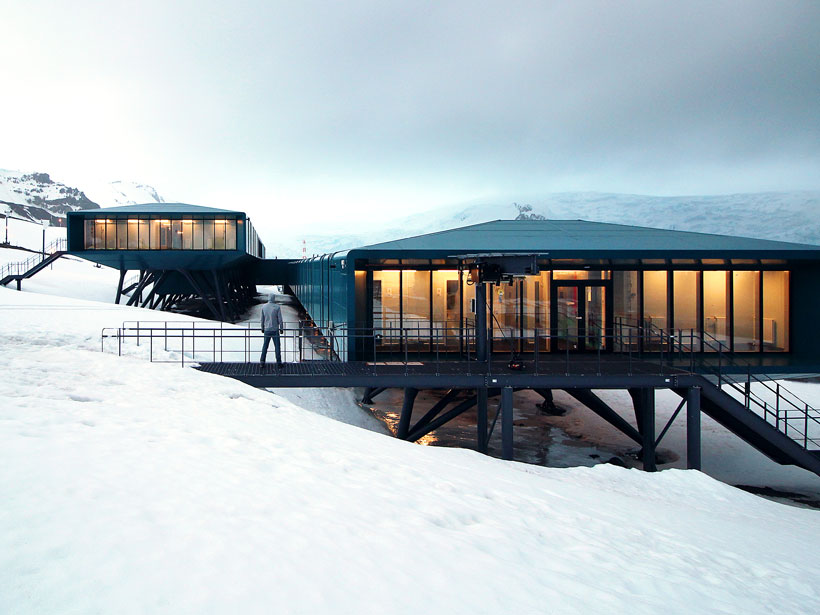
Brazil’s Antarctic Station Rises from the Ashes
The sophisticated new research station will allow for better science on the icy continent.
Posted inNews
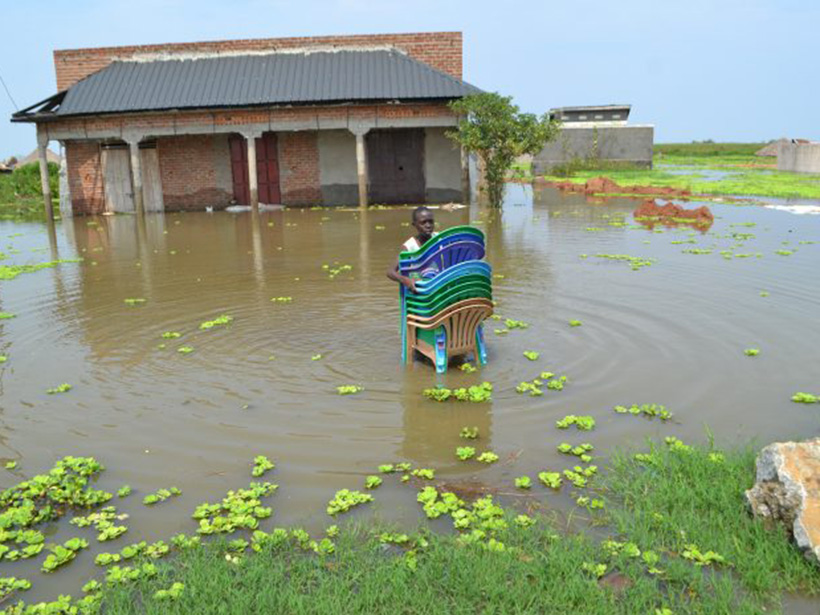
Soil Saturation Dictates Africa’s Flood Severity
The most complete hydrological data set for the African continent reveals a surprise: Soil moisture, not heavy precipitation, best explains the timing of Africa’s most severe floods.

Posted inNews
Eddy Killing in the Ocean
Solving the case of ocean eddy death could help climate modelers better represent the effect of wind.
Posted inNews
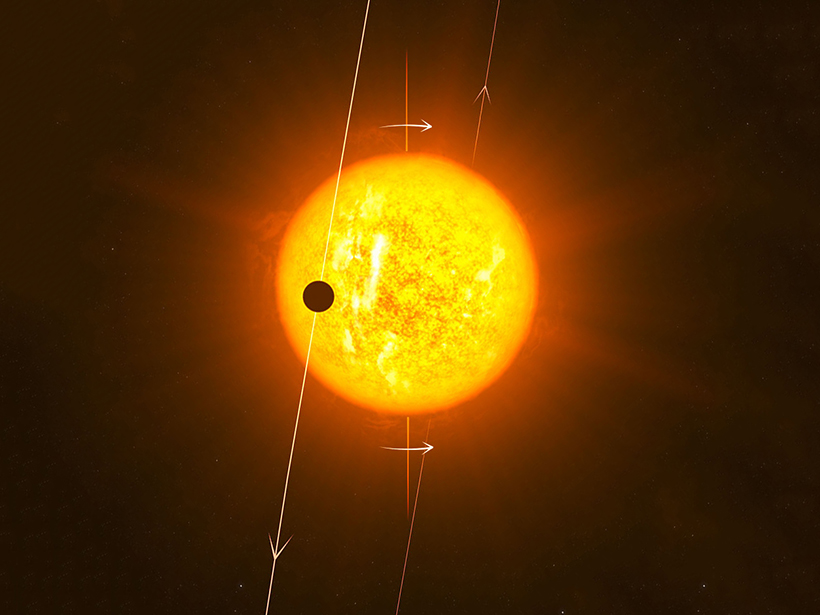
Peculiar Planets Prefer Perpendicular Paths
Some exoplanets orbit their stars from pole to pole instead of across the equator. Why do they do that?
Posted inNews
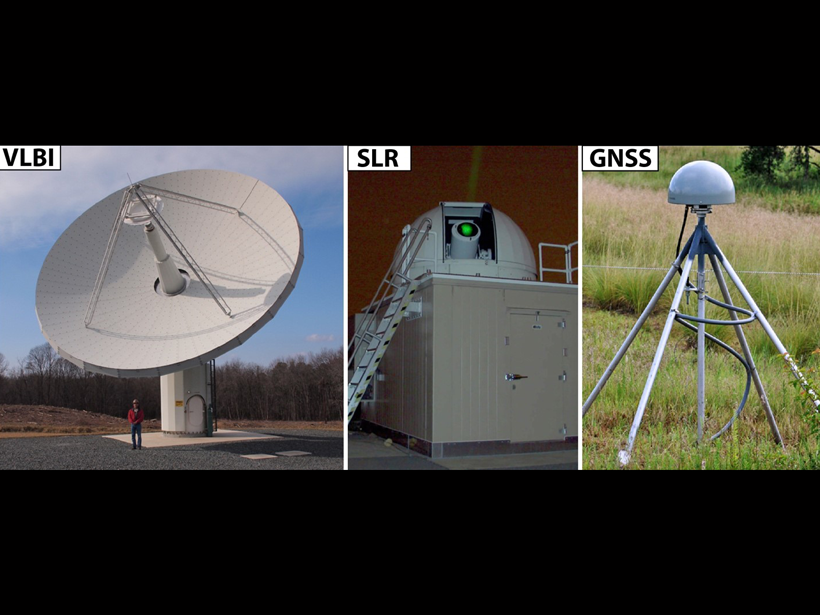
Evolving the Geodetic Infrastructure
Enhancements to the largely invisible framework will enable researchers to investigate pressing questions about our planet’s future.