
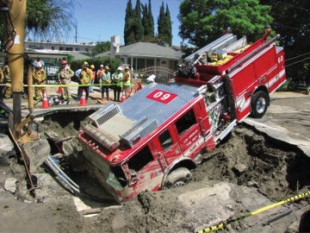
How are broken water pipes like fatalities in a heat wave? Researchers look to an epidemiological model to better care for infrastructure.
AGU copyright 2014
Posted inResearch Spotlights
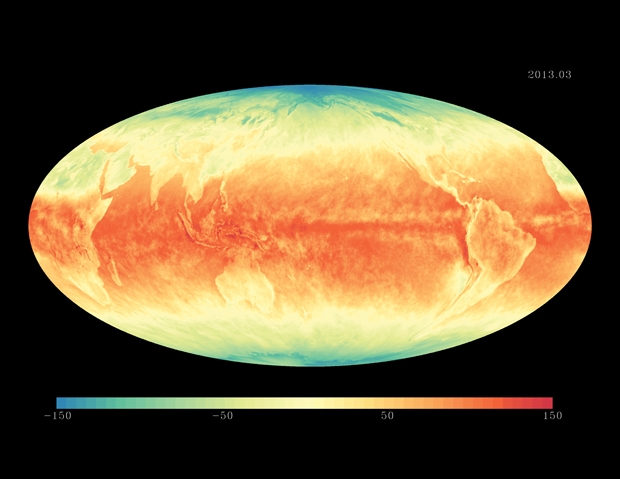
Changes in Earth’s Radiation Balance Between 1985 and 2012
A comparison of shortwave and longwave radiation in the atmosphere shows Earth’s heating rate is increasing even though temperatures are rising at a slower rate now than 30 years ago.
Posted inAGU News
Earth and Space Scientists Converge on Capitol Hill

Earth and space scientists traveled to Washington, D. C., to participate in Geosciences Congressional Visits Day.

Posted inResearch Spotlights
Is the Recent Increase in Earthquakes Random?
A statistical analysis cannot prove with high confidence that the recent global increase in large (M≥5.6) earthquakes could not have happened by random chance.
Posted inScience Updates
Exploring the Origin of High-Energy Particle Beams in the Atmosphere
Thunderstorms and Elementary Particle Acceleration; Yerevan, Armenia, 22–26 September 2014
Posted inNews
Tectonic Events May Have Triggered the Cambrian Explosion

A researcher proposes a tectonic mechanism that could have helped drive one of the biggest evolutionary events in history: the Cambrian Explosion.
Posted inNews
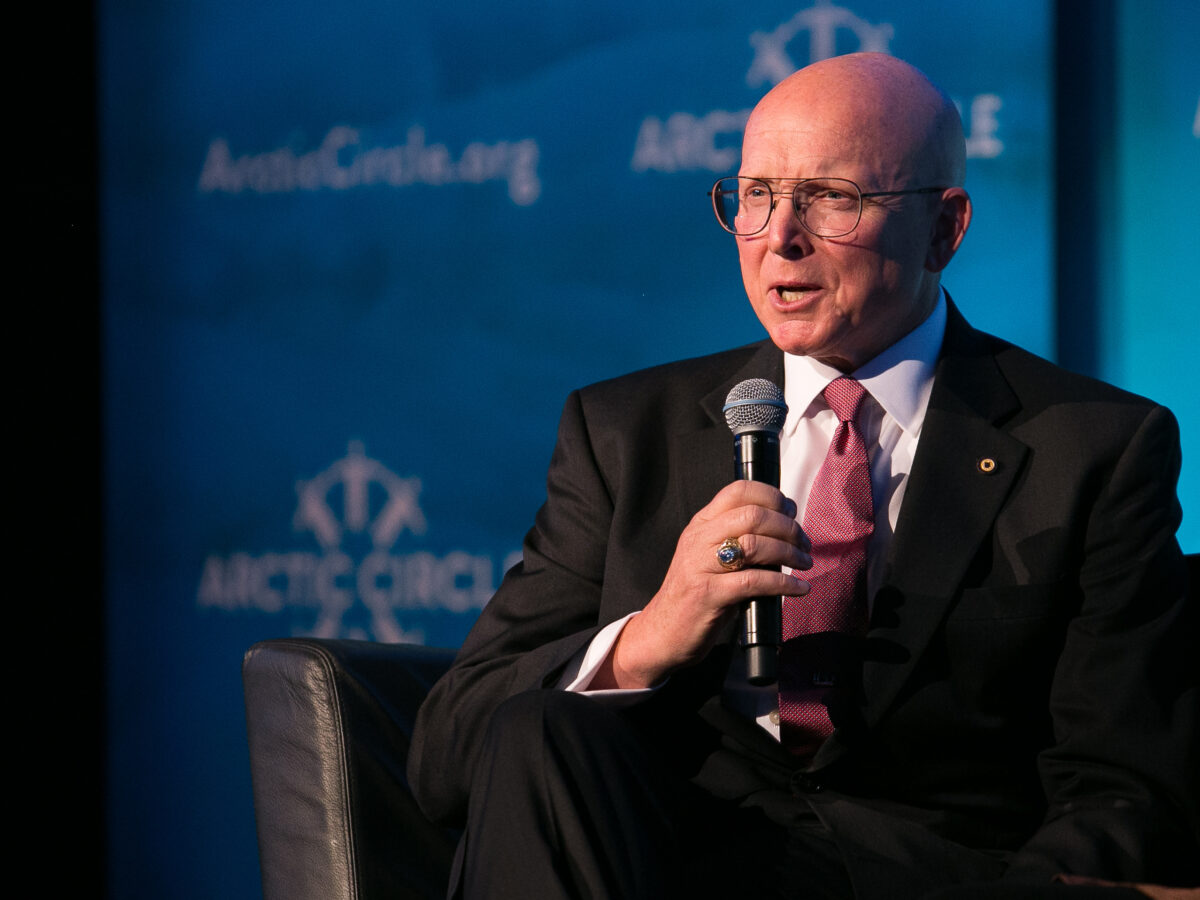
U.S. Readies “Aggressive” Arctic Council Agenda

U.S. special Arctic representative focuses on key regional issues including environment and economic development.
Posted inNews
Six of the L’Aquila Seven Acquitted in Appeal
Six of the accused L’Aquila seven acquitted.
Posted inFeatures
Time-Lapse Imaging in Polar Environments
New techniques are speeding up the slowest-changing landscapes on Earth.